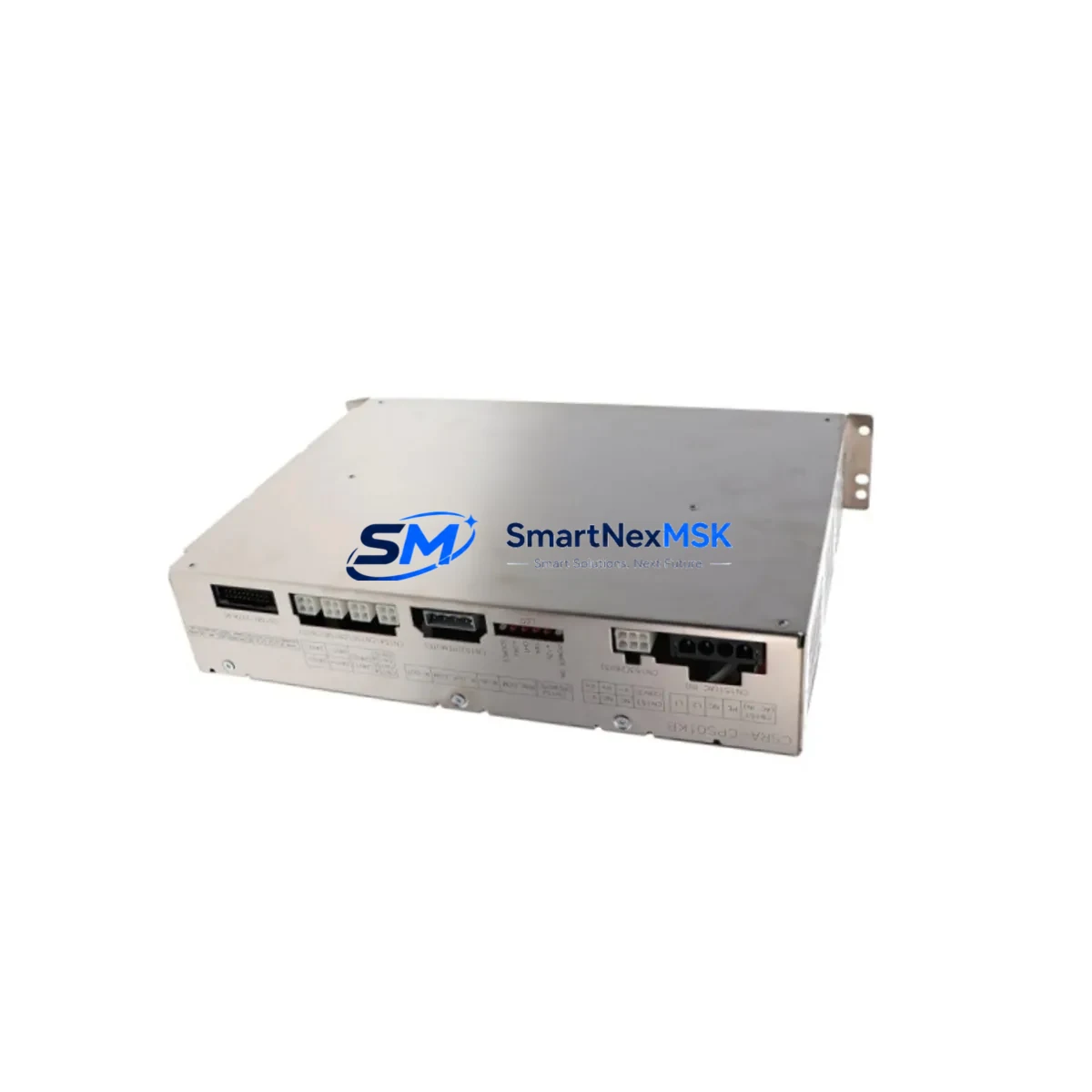
Yaskawa YRC1000-CSRA-CPS01KA Spare for YRC1000 Automation: Spare Replacement & Industrial Downtime Risk Control
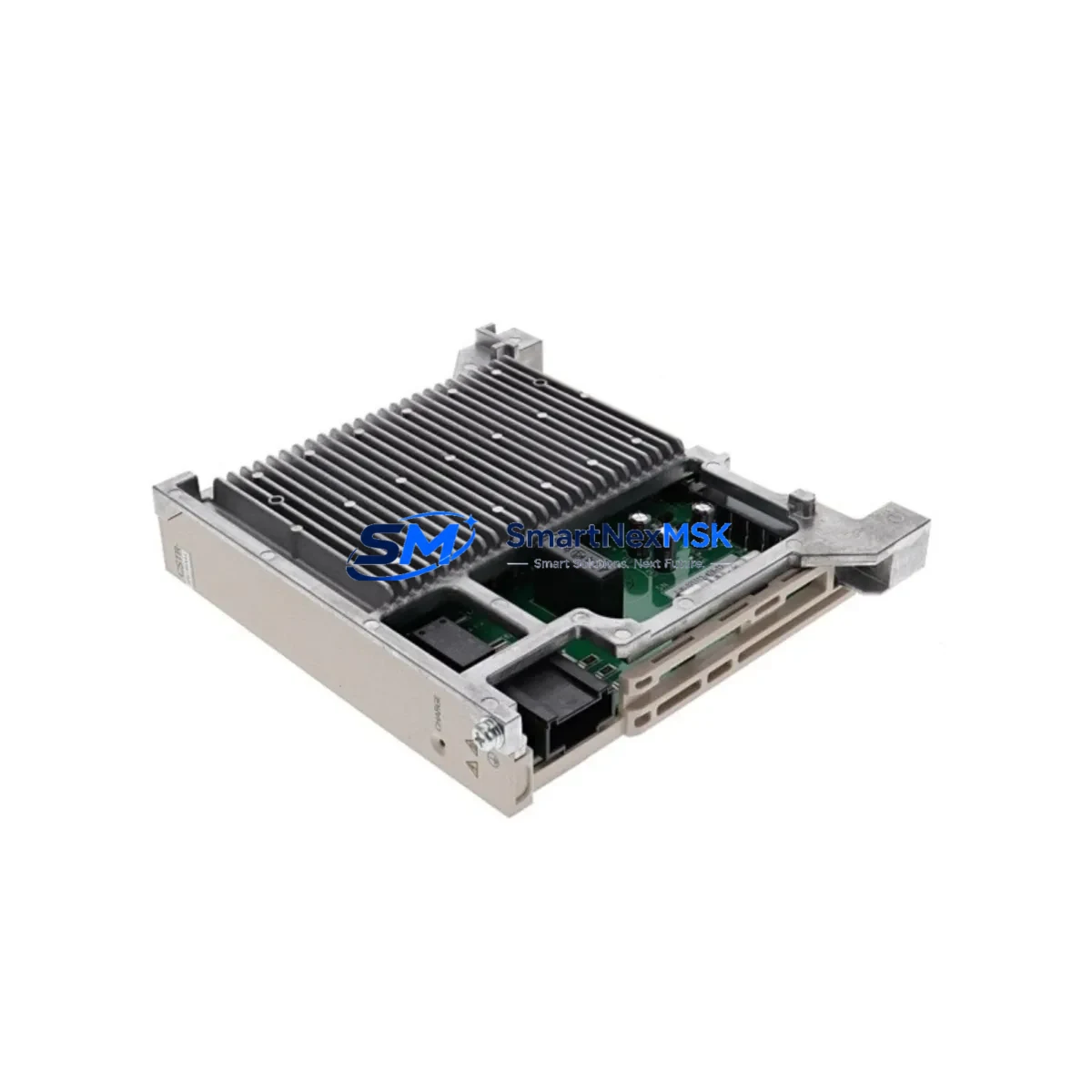
The Yaskawa YRC1000-CSRA-CPS01KA is the dedicated power supply module (PSU) for the YRC1000 series robot controller — one of Yaskawa’s most widely deployed motion control platforms in arc welding, material handling, and general-purpose industrial automation. When this module fails or degrades, the entire robot cell loses power regulation, triggering an immediate and unplanned production stoppage. Sourcing a verified original replacement quickly is the single most effective action a maintenance or procurement engineer can take to restore uptime.
This listing provides an original Yaskawa YRC1000-CSRA-CPS01KA power supply module, sourced from authorized supply channels, fully tested prior to shipment, and backed by a 12-month warranty. Each unit is inspected for output voltage stability, connector integrity, and thermal performance before dispatch. Whether you are executing a planned overhaul, responding to an emergency fault, or building a strategic spare parts buffer, this module ships ready for direct installation into your YRC1000 controller cabinet.
Spare Maintenance Table
| Parameter | Specification / Detail |
|---|---|
| Part Number / SKU | YRC1000-CSRA-CPS01KA |
| Manufacturer | Yaskawa Electric Corporation |
| Compatible Controller | YRC1000 Series Robot Controller |
| Module Function | Internal Power Supply Unit (PSU) for YRC1000 control cabinet |
| Origin | Japan (OEM) |
| Applicable Robot Series | Motoman GP, MH, MA, AR series robots paired with YRC1000 |
| Installation Position | YRC1000 controller cabinet, CSRA board slot |
| Condition | Original spare — new or refurbished-to-spec, tested before shipment |
| Compatibility Verification | Cross-referenced against YRC1000 BOM and CSRA board revision |
| Pre-shipment Testing | Output voltage, load regulation, thermal cycling, connector check |
| Warranty | 12 Months from date of shipment |
| Lead Time | In-stock units ship within 1–3 business days; DHL/FedEx express available |
| Maintenance Interval | Inspect every 12–18 months; replace at first sign of output instability |
| Operating Environment | Industrial control cabinet; ambient 0–45°C, humidity ≤90% non-condensing |
| Recommended Spare Qty | Minimum 1 unit on-shelf per YRC1000 cell; 2+ for multi-robot lines |
Maintenance Planning for Continuous Operation
A power supply failure in the YRC1000 controller rarely occurs in isolation. When the YRC1000-CSRA-CPS01KA shows signs of degradation — such as intermittent alarm codes, unstable servo enable signals, or unexpected controller resets — experienced maintenance engineers treat it as a trigger for a broader cabinet inspection. The following components share the same power rail or are directly affected by PSU instability and should be evaluated concurrently:
The JANCD-YCP01-E CPU board is the first component to check after a PSU event, as voltage transients can corrupt firmware or damage logic circuits. The JANCD-YIF01-3E interface board governs I/O communication between the controller and external devices; a degraded power supply can cause intermittent I/O faults that are misdiagnosed as field wiring issues. The JZNC-YRK01-1E robot control board manages servo amplifier coordination and should be inspected for fault logs that predate the PSU failure.
On the power distribution side, the 24VDC internal power supply rail and associated terminal blocks should be checked for voltage drop and loose connections. The JZRCR-YPU01-1 servo amplifier unit is sensitive to input voltage quality; if the PSU has been running degraded, the servo amplifier may have accumulated thermal stress. Fuse blocks and circuit breakers within the YRC1000 cabinet should be tested and replaced as part of any PSU swap procedure.
For systems with external communication, the JANCD-YEW01-E Ethernet communication board and any DeviceNet or PROFIBUS gateway modules installed in the controller should be verified for stable operation after power restoration. Signal isolators on analog I/O channels — particularly those connected to welding power sources or vision systems — should be re-calibrated if the PSU fault caused a voltage spike. The YRC1000 teach pendant cable (DX200/YRC1000 compatible) and pendant itself should also be tested, as pendant communication faults are a common secondary symptom of PSU instability.
Procurement engineers building a spare parts list for a YRC1000-based production line should consider stocking the CPS01KA alongside the CPU board, at least one servo amplifier unit, and a set of terminal block fuses as a minimum viable spare kit. This approach ensures that a single cabinet fault can be resolved within one maintenance shift without waiting for multiple part deliveries.
Site Replacement Workflow
Step 1 — Fault Confirmation: Before ordering or installing a replacement YRC1000-CSRA-CPS01KA, retrieve the controller alarm history via the teach pendant. Alarms in the 4xxx series (power system faults) and unexpected servo-off events are the primary indicators of PSU failure. Measure output voltages at the CSRA board test points if accessible.
Step 2 — Safe Isolation: Follow Yaskawa’s lockout/tagout procedure for the YRC1000. Disconnect main power, wait for capacitor discharge (minimum 5 minutes), and verify zero voltage before opening the cabinet.
Step 3 — Module Removal: Document all cable and connector positions with photographs before disconnecting. The CPS01KA module uses keyed connectors; note the orientation of each harness. Remove the module by releasing the retention clips and sliding it from the CSRA slot.
Step 4 — Compatibility Verification: Confirm the replacement unit’s part number and hardware revision matches the removed module. Check the YRC1000 software version to ensure firmware compatibility — this is particularly important for controllers that have received software updates since original installation.
Step 5 — Installation and Test: Install the replacement module, reconnect all harnesses in documented order, and restore power. Perform a controlled power-on sequence per Yaskawa’s commissioning checklist. Verify all alarm codes are cleared, servo enable is stable, and robot axes respond correctly to jog commands before returning the cell to production.
Step 6 — Documentation: Record the replacement in the equipment maintenance log, including the old module’s serial number, fault symptoms, date of replacement, and the new module’s serial number and warranty start date. This record supports future maintenance planning and warranty claims.
Spare Parts Support FAQ
Q1: Is this YRC1000-CSRA-CPS01KA unit an original Yaskawa part or a third-party replacement?
This is an original Yaskawa spare part sourced from authorized industrial supply channels. It is not a third-party copy or reverse-engineered substitute. Each unit carries the Yaskawa part number and is traceable to OEM manufacturing. We do not supply counterfeit or unbranded alternatives for safety-critical automation components.
Q2: How do I verify compatibility with my specific YRC1000 controller revision?
Provide your controller’s serial number and software version (visible on the teach pendant under System > Version) when placing your order. Our technical team will cross-reference the CSRA board revision and confirm compatibility before shipment. For most standard YRC1000 installations manufactured from 2016 onward, the CPS01KA is a direct fit.
Q3: What does the 12-month warranty cover, and how is a warranty claim processed?
The 12-month warranty covers manufacturing defects, premature failure under normal operating conditions, and DOA (dead on arrival) units. It does not cover damage caused by incorrect installation, overvoltage events, or physical impact. To initiate a warranty claim, contact [email protected] with your order number, fault description, and photographs of the installed unit. Replacement or refund is processed within 5 business days of claim approval.
Q4: Can I order multiple units for a spare parts buffer, and what is the recommended stock level?
Yes, bulk orders are supported with volume pricing available for quantities of 3 or more units. For production lines with 2–5 YRC1000 controllers, we recommend maintaining a minimum of 2 CPS01KA units on-shelf. For larger installations or lines where downtime cost exceeds USD 5,000/hour, a standing stock of 3–5 units is advisable. Contact us for a spare parts program tailored to your fleet size and maintenance cycle.
© 2026 SMARTNEXMSK. All rights reserved.
Original Source: https://smartnexmsk.com
Contact: [email protected] | +86 18259474341