
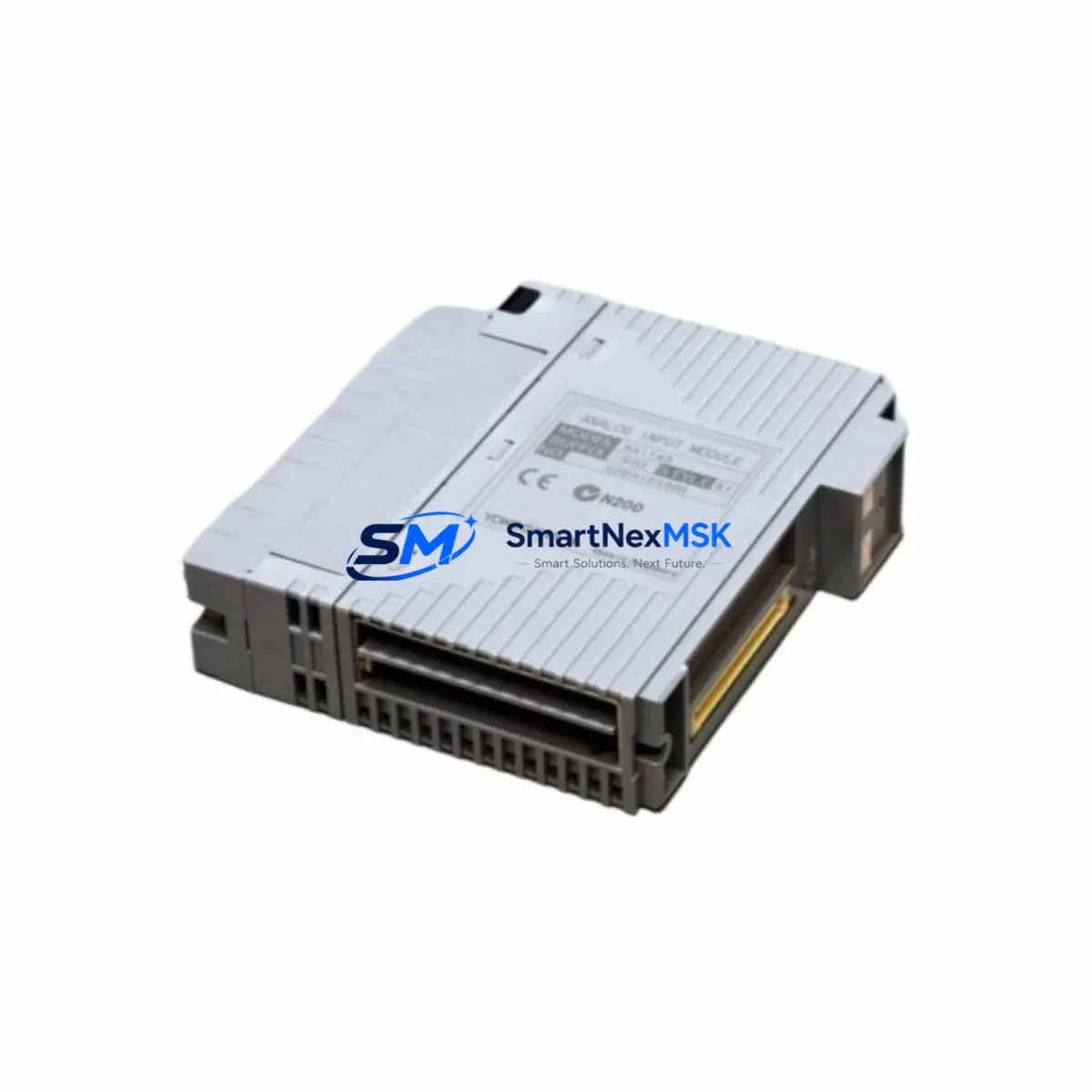
YOKOGAWA AAI143-S00 S1 Retrofit-Ready HART AI for CENTUM VP
The YOKOGAWA AAI143-S00 S1 is a 16-channel HART-enabled Analog Input module designed for the CENTUM VP distributed control system and its predecessor, the CENTUM CS 3000. As aging DCS installations face the dual pressure of discontinued spare parts and escalating maintenance costs, the AAI143-S00 S1 stands out as a proven retrofit solution that allows facilities to extend the operational life of their existing control architecture without committing to a full platform migration. Whether you are replacing a failed module in an active production environment or building a strategic retrofit inventory ahead of a planned shutdown, this module delivers the electrical and protocol compatibility your engineering team requires.
The AAI143-S00 S1 accepts 4–20 mA analog signals across all 16 channels and supports HART communication for field device diagnostics and configuration — a critical capability in modern process plants where smart transmitters are standard. Its direct compatibility with the CENTUM VP field control station (FCS) backplane means no hardware modifications are required during installation. Engineers can slot the replacement module into the existing I/O nest, restore the channel configuration from the CENTUM VP engineering environment, and return the loop to service with minimal disruption to the surrounding control logic.
Upgrade Compatibility Table
| Parameter | Specification / Notes |
|---|---|
| SKU | AAI143-S00 S1 |
| Brand / Series | YOKOGAWA / CENTUM VP, CS 3000 |
| Module Type | 16-Channel HART Analog Input |
| Signal Range | 4–20 mA (HART-enabled) |
| Backplane Interface | CENTUM VP / CS 3000 I/O nest — direct drop-in |
| Wiring Compatibility | Retains existing field terminal wiring; no rewiring required |
| Communication | HART protocol (simultaneous with 4–20 mA) |
| Replaces / Upgrades | AAI143-S00, AAI141, AAI135 (with engineering verification) |
| Installation Environment | Control cabinet / FCS I/O nest; DIN rail not applicable |
| Commissioning Requirement | Channel address restoration via CENTUM VP engineering tool |
| Origin | Japan |
| Warranty | 12-Month Warranty — tested before shipment |
Retrofit Planning for Existing Automation Systems
A successful retrofit of the AAI143-S00 S1 begins well before the module arrives on site. Maintenance and procurement engineers should treat this replacement as part of a broader control cabinet audit rather than an isolated swap. Start by verifying the FCS power supply module — typically a PW481 or PW482 — is delivering stable 24 VDC to the I/O nest. An undersized or aging power supply is a common root cause of intermittent AI module faults and should be inspected or replaced in parallel.
Next, review the field terminal assembly (FTA) connected to the AAI143-S00 S1. The FTA carries the physical wiring from field transmitters to the module, and its condition directly affects signal integrity. Inspect terminal blocks for corrosion, loose connections, and correct shielding continuity. If the FTA is a legacy model, consider upgrading to a current-generation terminal assembly to ensure long-term reliability.
On the communication side, confirm that the ESB bus coupler connecting the FCS node to the control network is functioning correctly. CENTUM VP systems rely on the Vnet/IP or legacy V-net communication backbone, and any degradation in the bus coupler or optical fiber link will affect the entire node — not just the replaced AI module. Similarly, if the plant uses HART pass-through for asset management, verify that the HART multiplexer or the CENTUM VP HART interface card is correctly configured to scan the new module’s channels after replacement.
For facilities running CENTUM CS 3000 alongside CENTUM VP in a hybrid architecture, the AAI143-S00 S1 can serve both platforms, but engineers must confirm the FCS firmware version supports the module variant. Pull the FCS system log from the CENTUM VP HIS (Human Interface Station) before the replacement to capture the baseline alarm and event history. This record is invaluable for post-commissioning comparison and for satisfying plant safety audit requirements.
Procurement teams building a retrofit spare parts list should also consider stocking the AAI543 (analog output module), ABI133 (bus interface module), and relevant signal conditioners or signal isolators for loops where field devices are located in hazardous areas. Having these components available in the same maintenance cycle reduces the risk of secondary failures extending the planned outage.
Downtime Control During System Migration
Minimizing downtime during a CENTUM VP module replacement requires a structured pre-outage preparation protocol. Before taking the FCS node offline, export the current FCS configuration from the CENTUM VP engineering environment and store a verified backup on a dedicated engineering workstation. Confirm that the replacement AAI143-S00 S1 has been bench-tested and that its firmware revision is compatible with the target FCS node.
During the physical swap, follow YOKOGAWA’s hot-standby procedures if the FCS is configured in redundant mode — the redundant FCS node should take control before the primary is powered down. For non-redundant installations, coordinate with the process control team to place affected loops in manual mode at the DCS operator station (HIS) before removing the module. This prevents spurious alarms and protects downstream actuators from responding to invalid input signals during the transition.
After installing the AAI143-S00 S1, restore the channel configuration using the CENTUM VP engineering tool and perform a loop check on each of the 16 channels before returning the FCS to automatic control. Verify HART communication on each channel using the HART communicator or the CENTUM VP asset management interface. Document the as-found and as-left readings for each loop as part of the maintenance record. A well-executed replacement of this module can typically be completed within a two-to-four-hour maintenance window, keeping production impact to a minimum.
Retrofit Support FAQ
Q1: Is the AAI143-S00 S1 a direct drop-in replacement for the original AAI143-S00?
Yes. The AAI143-S00 S1 is the current production variant of the AAI143-S00 and is fully backward-compatible with the CENTUM VP and CS 3000 I/O nest. No hardware modifications or wiring changes are required. Channel configuration is restored through the CENTUM VP engineering environment after installation.
Q2: Can this module replace older YOKOGAWA AI modules such as the AAI141 or AAI135?
In many cases, yes — but engineering verification is required. The AAI143-S00 S1 supports HART communication, which the AAI141 does not. If the existing FTA and wiring are compatible with the AAI143 form factor, the upgrade is straightforward. Consult the CENTUM VP hardware manual or contact our technical team to confirm compatibility for your specific FCS configuration.
Q3: What pre-shipment testing is performed on the AAI143-S00 S1?
Every unit undergoes functional testing prior to shipment, including power-on verification, channel signal integrity checks, and HART communication validation. Units are shipped with a test report and are covered by a 12-month warranty from the date of delivery. If a unit fails within the warranty period, we provide a replacement or full refund.
Q4: How quickly can the AAI143-S00 S1 be delivered for an emergency shutdown situation?
We maintain stock of the AAI143-S00 S1 and can arrange expedited shipping for urgent maintenance requirements. Contact our team at [email protected] or +86 18259474341 to confirm current availability and arrange priority dispatch. Most in-stock orders can be shipped within 24–48 hours of order confirmation.
© 2026 SMARTNEXMSK. All rights reserved.
Original Source: https://smartnexmsk.com
Contact: [email protected] | +86 18259474341



