
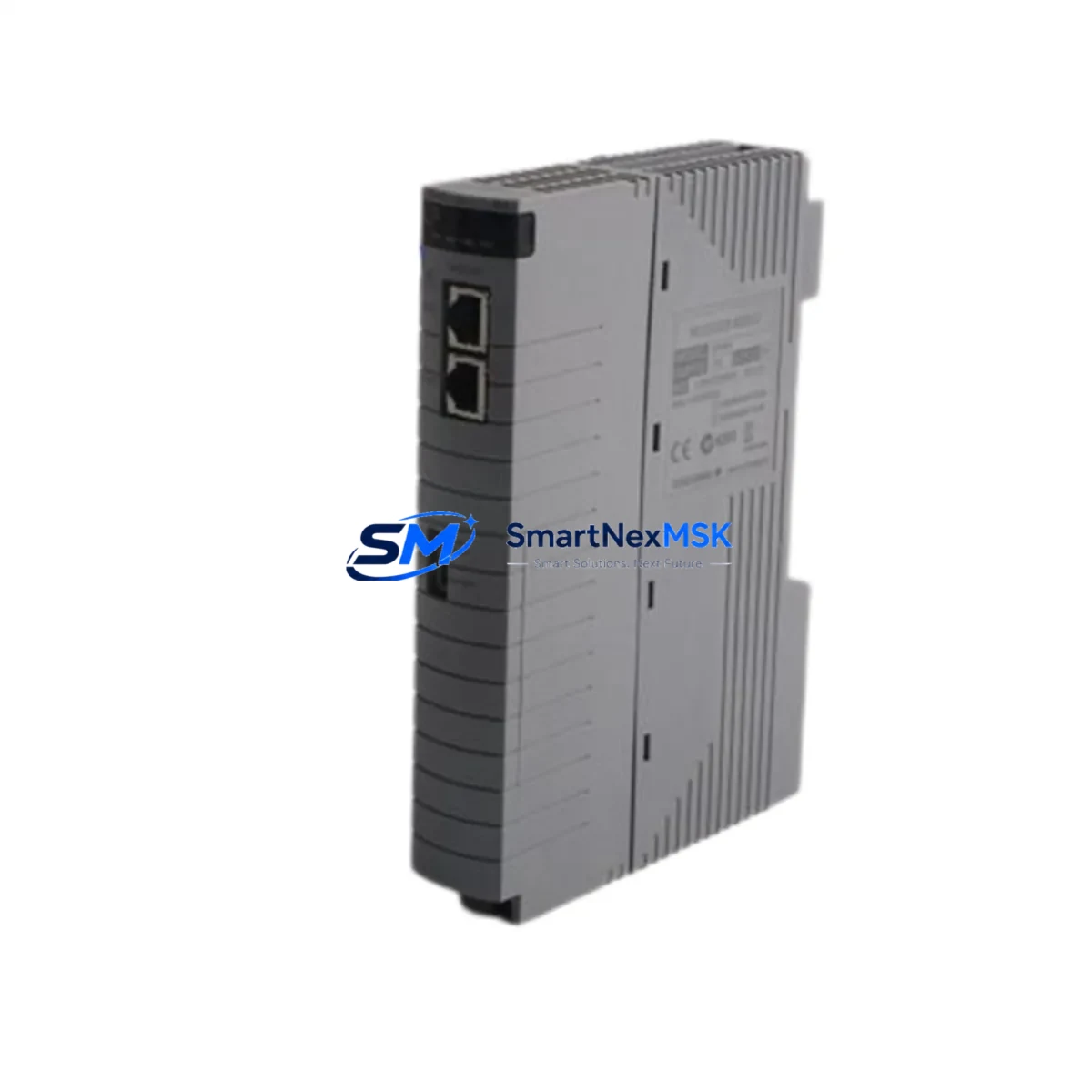
YOKOGAWA CP451-50 S2 Maintenance-Ready Spare for CENTUM CS3000 Automation
The YOKOGAWA CP451-50 S2 is a central processor module designed for the CENTUM CS3000 distributed control system — one of the most widely deployed DCS platforms in refining, petrochemical, power generation, and continuous process industries. As a maintenance-ready original spare, the CP451-50 S2 is held in stock, tested before shipment, and backed by a 12-month warranty, enabling maintenance and procurement engineers to execute rapid replacements and restore system availability with minimal downtime risk.
Unplanned processor failures in a CENTUM CS3000 cabinet can cascade into full-loop shutdowns. Holding a verified CP451-50 S2 spare on-site — or securing a confirmed supply channel — is a fundamental element of any serious spare parts strategy for aging CS3000 installations. This module supports direct hot-swap replacement within compatible CS3000 field control stations, preserving existing I/O wiring, loop configurations, and communication topology without requiring system-wide reconfiguration.
Spare Maintenance Table
| Parameter | Specification / Detail |
|---|---|
| Part Number / SKU | CP451-50 S2 |
| Brand | YOKOGAWA |
| Series / Platform | CENTUM CS3000 |
| Module Type | DCS Central Processor Module |
| Origin | Japan |
| Compatibility | CENTUM CS3000 Field Control Station (FCS); compatible with CS3000 R3 and later revisions |
| Installation | Direct backplane insertion into CS3000 FCS chassis; no additional wiring required |
| Operating Environment | Industrial control room / field cabinet; standard DCS environmental ratings |
| Condition | Original, new or refurbished-to-spec; tested before shipment |
| Pre-shipment Testing | Functional power-on and communication verification performed |
| Warranty | 12 Months from date of shipment |
| Lead Time | In stock — typically ships within 1–3 business days |
| Long-term Supply | Ongoing sourcing support for legacy CS3000 installations |
Maintenance Planning for Continuous Operation
When a CP451-50 S2 processor module is flagged for replacement during a planned shutdown or emergency callout, experienced maintenance engineers treat the event as a trigger for a broader cabinet inspection. The processor is the computational core of the field control station, but its failure — or the conditions leading to it — often indicate stress on adjacent components that share the same power rail, backplane, or communication bus.
Start with the power supply modules feeding the FCS chassis. YOKOGAWA CS3000 installations commonly use dedicated power supply units such as the PW481 or PW482 series; a degraded power supply can cause intermittent processor resets that mimic software faults. Inspect and measure output voltages under load before reinstalling a new CP451-50 S2 to avoid repeat failures.
Next, verify the communication bus modules and V-net / Vnet/IP interface cards within the same FCS. The CP451-50 S2 relies on stable Vnet communication to exchange data with the HIS (Human Interface Station) and other FCS nodes. A degraded CP451 communication coupler or a faulty ESB bus interface can prevent a replacement processor from coming online correctly even when the module itself is fully functional.
I/O sub-modules connected to the FCS — including AAI141 analog input modules, AAI543 analog output modules, and ADV151 digital input modules — should be inspected for loose terminal connections, moisture ingress, and calibration drift during the same maintenance window. Replacing the processor without auditing the I/O layer leaves latent faults that can surface under production load.
For installations where the CS3000 FCS communicates with third-party systems via ALF111 fieldbus communication modules or ACF11 serial communication modules, confirm that communication parameters and node addresses are correctly restored after the processor swap. Configuration data should be backed up from the CS3000 builder environment before any processor replacement is attempted.
Where the CS3000 system interfaces with a YOKOGAWA CENTUM VP migration layer or a hybrid architecture, also verify the integrity of SCP451 safety controller modules and any associated relay output modules in the same cabinet. Procurement engineers sourcing a CP451-50 S2 replacement are advised to simultaneously review stock levels for the above companion modules to avoid secondary procurement delays during the same outage window.
Site Replacement Workflow
Step 1 — Pre-replacement backup: Using the CENTUM CS3000 System Builder, export the full FCS configuration, including loop parameters, tag assignments, and communication settings. Store the backup on an isolated engineering workstation.
Step 2 — Safe shutdown: Place all control loops in manual mode at the HIS. Coordinate with operations to confirm process stability before de-energizing the FCS chassis.
Step 3 — Module extraction: With the chassis de-energized, remove the faulty CP451-50 S2 by releasing the front-panel locking levers. Note the slot position and any DIP switch or jumper settings on the outgoing module.
Step 4 — Replacement installation: Insert the new CP451-50 S2 into the same slot. Confirm backplane connector seating. Restore power to the chassis and observe the module status LEDs for normal initialization sequence.
Step 5 — Configuration restore: Download the backed-up FCS configuration from the System Builder. Verify all I/O tags, loop parameters, and Vnet communication links are restored correctly.
Step 6 — Loop verification: Return loops to automatic mode one by one, confirming process variable readings and control outputs match pre-maintenance baselines. Document the replacement in the site maintenance log.
This workflow minimizes downtime, preserves system compatibility, and ensures the replacement CP451-50 S2 is fully validated before returning the unit to production service.
Spare Parts Support FAQ
Q1: Is the CP451-50 S2 compatible with all CENTUM CS3000 revisions?
The CP451-50 S2 is designed for the CENTUM CS3000 platform. Compatibility is confirmed for CS3000 R3 and later field control station configurations. For earlier revisions or hybrid CS3000/CENTUM VP environments, please contact our technical team with your FCS model and software revision before ordering to ensure full compatibility.
Q2: What pre-shipment testing is performed on each unit?
Every CP451-50 S2 unit undergoes functional power-on testing and communication verification before dispatch. Units are inspected for physical integrity, connector condition, and firmware revision. A test report is available upon request for quality-critical procurement processes.
Q3: What is the warranty coverage and what does it include?
All CP451-50 S2 modules are covered by a 12-month warranty from the date of shipment. The warranty covers manufacturing defects and functional failures under normal operating conditions. It does not cover damage resulting from incorrect installation, overvoltage events, or environmental conditions outside the module’s rated specifications.
Q4: Can you support long-term or repeat supply for legacy CS3000 installations?
Yes. We maintain ongoing sourcing channels for YOKOGAWA CENTUM CS3000 spare parts, including the CP451-50 S2 and related FCS components. For sites managing extended lifecycle programs or planning multi-year maintenance contracts, we can discuss framework supply agreements and reserved stock arrangements. Contact our team to discuss your site’s specific requirements.
© 2026 SMARTNEXMSK. All rights reserved.
Original Source: https://smartnexmsk.com
Contact: [email protected] | +86 18259474341



