
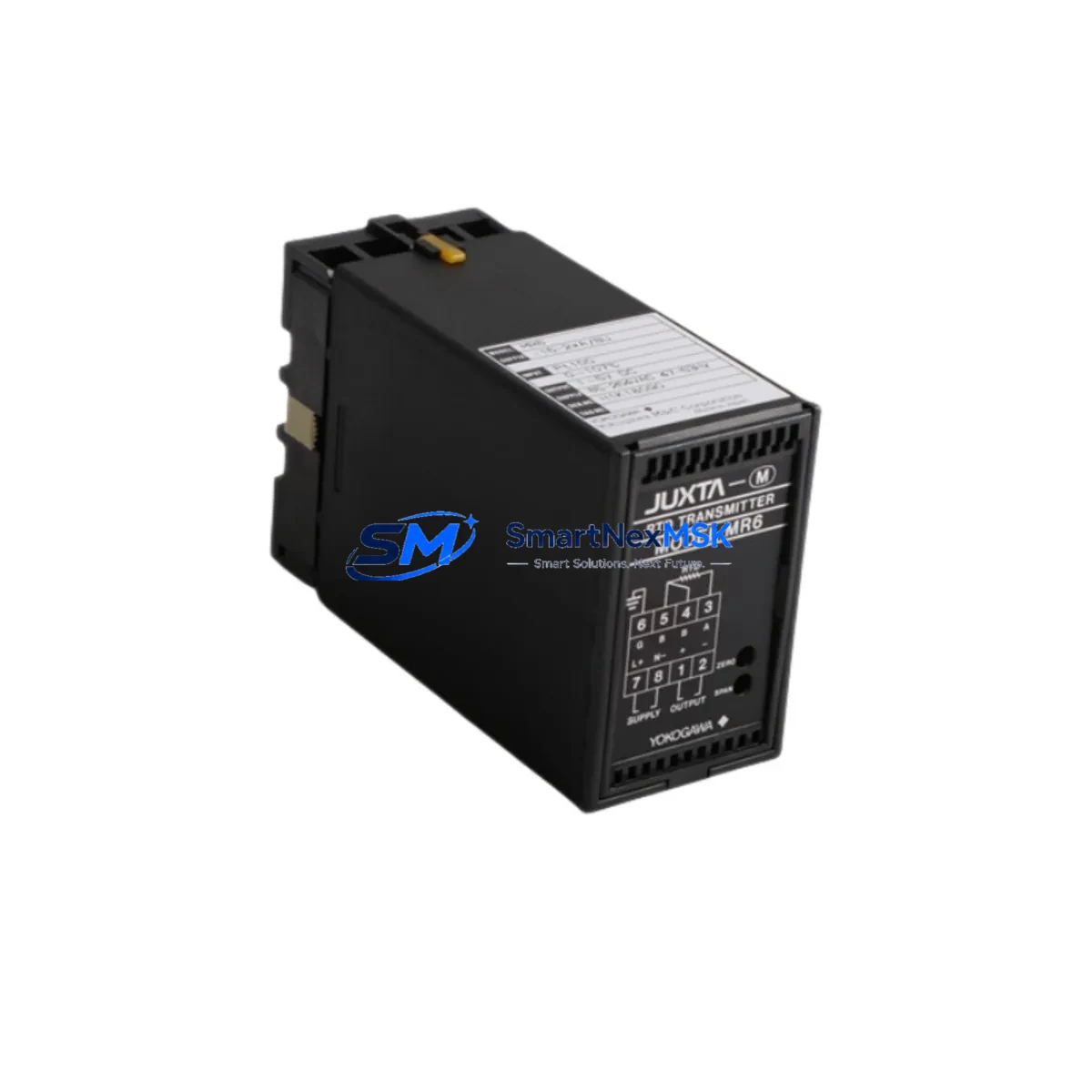
Yokogawa MR6-16-2*A/BU Spare for MR6 Automation: Precision RTD Input for DCS Downtime Recovery
The Yokogawa MR6-16-2*A/BU is a 16-channel RTD (Resistance Temperature Detector) input module designed for the Yokogawa MR6 Series distributed control system. In process industries — refining, petrochemical, power generation, and pharmaceutical manufacturing — temperature measurement accuracy is non-negotiable. A failed RTD input module can trigger a cascade of process alarms, force manual override, and ultimately result in unplanned shutdown. Stocking a verified replacement MR6-16-2*A/BU is one of the most cost-effective decisions a maintenance engineer can make for any facility running Yokogawa MR6-based control architecture.
This module supports 16 independent RTD input channels, providing high-density temperature signal acquisition within the MR6 I/O subsystem. It is engineered for direct integration into existing MR6 backplane assemblies without firmware reconfiguration, making it a true drop-in replacement for aging or failed units. Each unit supplied by SMARTNEXMSK is sourced from verified industrial channels, inspected for physical integrity, and functionally tested prior to shipment. A 12-month warranty is included as standard.
Spare Maintenance Table
| Parameter | Specification |
|---|---|
| Part Number | MR6-16-2*A/BU |
| Brand | Yokogawa |
| Series | MR6 |
| Module Type | RTD Input Module |
| Input Channels | 16 Channels |
| Input Signal Type | RTD (Resistance Temperature Detector) |
| Compatible System | Yokogawa MR6 Series DCS |
| Backplane Compatibility | MR6 Series I/O Backplane |
| Origin | Japan |
| Application Environment | Industrial Process Control, DCS Architecture |
| Installation | Direct module slot replacement, no firmware change required |
| Pre-Shipment Testing | Yes — functional inspection before dispatch |
| Warranty | 12 Months |
| Condition | Original Spare / New Old Stock / Refurbished (confirmed at order) |
Maintenance Planning for Continuous Operation
When a maintenance or reliability engineer schedules a planned inspection or responds to an RTD channel fault alarm on a Yokogawa MR6 DCS, the MR6-16-2*A/BU is rarely the only component that warrants attention. A thorough control cabinet inspection should extend to the full signal chain and power distribution architecture.
Begin with the MR6 Series power supply module — voltage sag or ripple on the 24 VDC bus is a common root cause of intermittent RTD reading errors that are misdiagnosed as module failure. Verify the MR6 backplane bus connector integrity; oxidized or loose backplane contacts can cause single-channel or multi-channel dropout that mimics module failure. The field terminal block and wiring associated with each RTD channel should be inspected for insulation degradation, moisture ingress, and loose terminations — particularly in high-vibration or high-humidity environments.
Signal isolation is another critical consideration. If the RTD inputs share a common reference with other analog signals, a signal isolator or barrier on affected channels can prevent ground loop interference from corrupting temperature readings. For facilities running mixed I/O configurations, the adjacent MR6 analog output module and MR6 digital I/O module should be checked for alarm status during the same maintenance window — a single cabinet visit is an opportunity to validate the health of the entire I/O cluster.
Communication integrity between the MR6 I/O subsystem and the central controller should also be verified. The MR6 communication module or bus coupler connecting the I/O nest to the DCS highway is a wear item in long-running systems; a degraded communication link can cause the controller to report false module faults. If the facility uses a Yokogawa CENTUM VP or CS 3000 platform, the engineering workstation connection and I/O map should be validated after any module replacement to confirm channel assignment integrity.
For older MR6 installations approaching end-of-support lifecycle, it is advisable to maintain a minimum of one spare MR6-16-2*A/BU per control room, alongside spares for the MR6 power supply, MR6 communication module, and at least one MR6 analog input module covering thermocouple inputs. This multi-module spare strategy reduces mean time to repair (MTTR) from days to hours in the event of concurrent failures during a process upset.
Site Replacement Workflow
Step 1 — Fault Confirmation: Verify the fault is isolated to the MR6-16-2*A/BU module via the DCS engineering console. Check for channel-specific alarms versus module-level communication loss to distinguish between wiring faults and module failure.
Step 2 — Safe Isolation: Follow site LOTO (Lockout/Tagout) procedures. De-energize the affected I/O nest or confirm hot-swap capability per your MR6 system configuration. Yokogawa MR6 systems may support online module replacement depending on firmware version and system configuration — confirm with your site DCS engineer before proceeding.
Step 3 — Module Extraction: Release the module locking mechanism, disconnect field wiring terminal blocks, and extract the MR6-16-2*A/BU from the backplane slot. Inspect the backplane connector pins for damage or contamination before inserting the replacement unit.
Step 4 — Replacement Installation: Insert the new MR6-16-2*A/BU into the same slot position. Reconnect field terminal blocks in the correct channel sequence. Restore power and observe the DCS console for module recognition and channel status confirmation.
Step 5 — Functional Verification: Compare live RTD readings against reference thermometers or known-good channels. Confirm all 16 channels are reporting within expected engineering unit ranges. Document the replacement in the site maintenance management system (CMMS).
This workflow applies equally to emergency replacement during unplanned downtime and to scheduled module swap during planned maintenance windows. The MR6-16-2*A/BU supplied by SMARTNEXMSK is tested before shipment to minimize the risk of introducing a second fault during the replacement process.
Spare Parts Support FAQ
Q1: Is the MR6-16-2*A/BU compatible with all MR6 Series backplanes?
The MR6-16-2*A/BU is designed for the Yokogawa MR6 Series I/O architecture. Compatibility depends on the specific backplane model and system firmware version in your installation. We recommend confirming your backplane part number and DCS version before ordering. Our technical team can assist with compatibility verification based on your system documentation.
Q2: What is the warranty coverage and what does it include?
All MR6-16-2*A/BU units supplied by SMARTNEXMSK carry a 12-month warranty from the date of shipment. The warranty covers functional defects identified under normal operating conditions. Each unit undergoes pre-shipment functional inspection. In the event of a warranty claim, we provide replacement or repair support with priority handling to minimize your downtime exposure.
Q3: Can you supply multiple units for a spare parts inventory program?
Yes. SMARTNEXMSK supports both single-unit emergency orders and multi-unit blanket orders for planned spare parts inventory programs. For facilities managing multiple MR6-based control systems, we recommend establishing a standing spare parts agreement to ensure availability of MR6-16-2*A/BU and associated modules such as power supplies, communication modules, and analog I/O cards without lead time risk.
Q4: How long does shipment take and what documentation is provided?
Standard shipment is processed within 1–3 business days of order confirmation. Each unit is shipped with a packing list and test confirmation record. Export documentation, including commercial invoice and country of origin certificate (Japan), is provided for international shipments. Expedited shipment options are available for emergency downtime situations — contact our sales team directly for urgent requirements.
© 2026 SMARTNEXMSK. All rights reserved.
Original Source: https://smartnexmsk.com
Contact: [email protected] | +86 18259474341



