
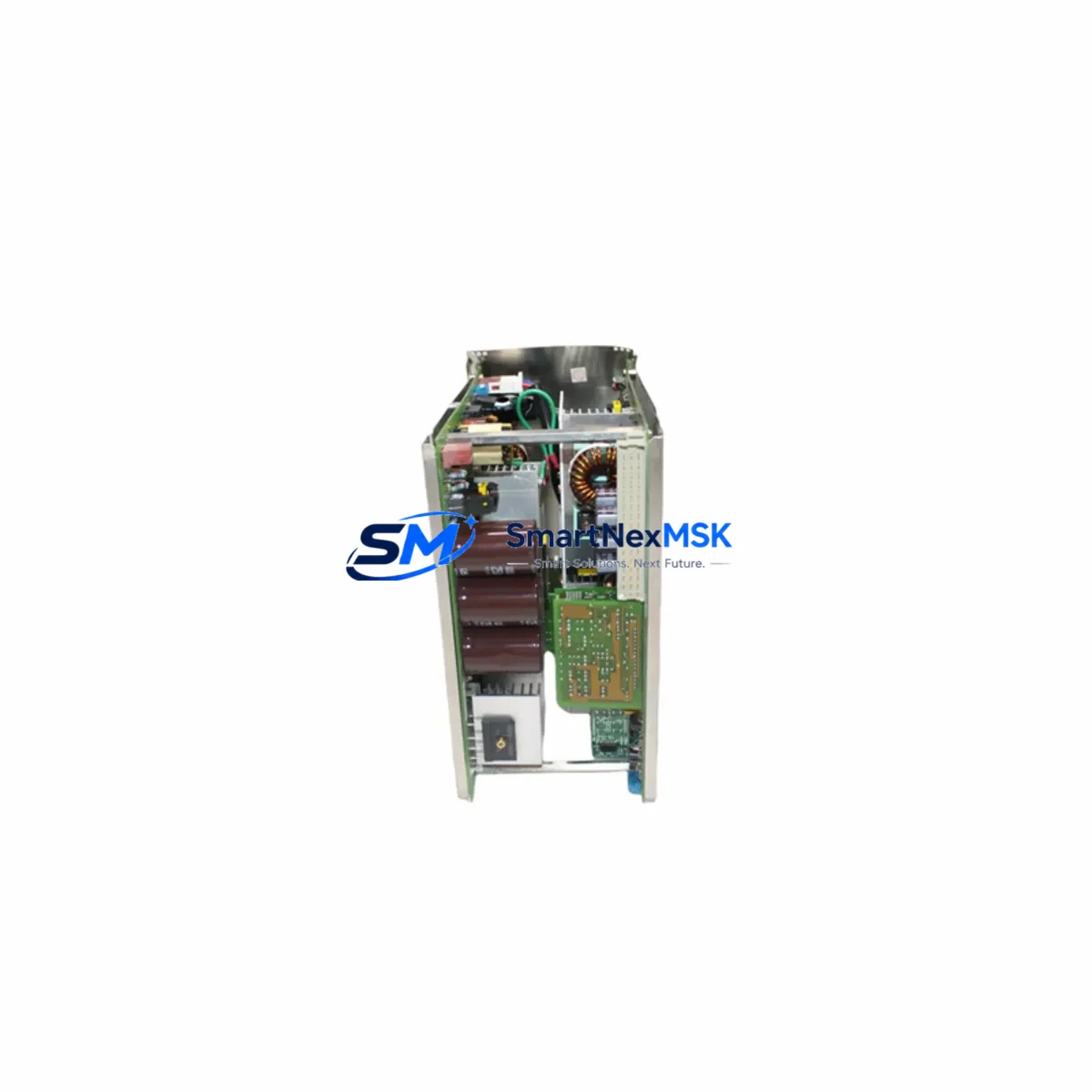
YOKOGAWA PW102 Retrofit-Ready DCS Power Supply for CENTUM Control Systems
The YOKOGAWA PW102 is a DC power supply module engineered for seamless integration into CENTUM VP and CENTUM CS series distributed control systems. As legacy CENTUM installations age and OEM support windows close, the PW102 has become one of the most sought-after retrofit components for engineers tasked with modernizing existing control infrastructure without full system replacement. Whether you are managing a planned upgrade cycle or responding to an unplanned power module failure, the PW102 delivers the electrical stability and form-factor compatibility required to restore and sustain continuous process control.
SMARTNEXMSK maintains verified stock of the PW102 with full functional testing prior to shipment. Each unit is covered by a 12-month warranty and ships with documentation supporting installation, commissioning, and compliance verification.
Upgrade Compatibility Table
| Parameter | Details |
|---|---|
| Compatible Series | CENTUM VP, CENTUM CS 1000, CENTUM CS 3000 |
| Module Type | DCS Power Supply Module |
| Installation Format | Direct backplane slot insertion; no mechanical modification required |
| Backplane Interface | Compatible with standard CENTUM field control station (FCS) backplanes |
| Communication Compatibility | Passive power role; no protocol configuration required |
| Replacement Recommendation | Direct drop-in replacement for legacy PW102 units; verify rack slot assignment before installation |
| Commissioning Notes | Confirm output voltage tolerance, redundancy pairing with secondary PSU, and alarm relay wiring |
| Warranty | 12 months from date of shipment; covers manufacturing defects and functional failure |
Retrofit Planning for Existing Automation Systems
Replacing a power supply module in an operational CENTUM system requires careful pre-work to avoid disrupting live process loops. Before removing the existing PW102, engineers should audit the full power distribution architecture of the field control station. In a typical CENTUM VP FCS cabinet, the power bus feeds not only the controller node but also I/O modules such as the AAI141 analog input module and ADV151 digital input module. Any voltage sag during the swap can trigger spurious alarms or cause the ACF11 communication module to drop its Vnet/IP link momentarily.
Where the system uses a redundant power configuration, the secondary power supply module — often a paired unit installed in the adjacent slot — must be confirmed as healthy before the primary PW102 is pulled. Engineers should also verify that the ESB10D or equivalent bus coupler is not drawing excess current that could stress the replacement unit during initial energization.
For sites migrating from CENTUM CS 3000 to CENTUM VP, the PW102 retrofit is frequently part of a broader hardware refresh that includes replacing the CP345 or CP451 processor module and re-mapping I/O assignments in the CENTUM VP engineering environment. During this process, the BCV11 bus converter and associated terminal assemblies should be inspected for corrosion or loose terminations that could introduce ground faults after the new power module is installed.
Sites operating with Modbus RTU or FOUNDATION Fieldbus segments should also confirm that the ALF111 fieldbus communication module and its associated segment power conditioner remain within specification after the power supply swap. A brief load test using the CENTUM VP diagnostic tools is recommended before returning the FCS to automatic control mode.
For installations where the control cabinet also houses a STARDOM FCN node or a third-party HMI panel connected via OPC, the HMI tag database should be backed up before any power interruption. This ensures that display faceplates, trend groups, and alarm setpoints can be restored immediately if the HMI loses its connection to the FCS during the module exchange.
SMARTNEXMSK supplies the PW102 alongside a broad range of compatible CENTUM components, enabling customers to consolidate procurement and reduce lead times across multi-module retrofit projects. All units are functionally tested and shipped with inspection records.
Downtime Control During System Migration
Minimizing unplanned downtime is the primary concern for any power module replacement in a live DCS environment. The recommended approach is to schedule the PW102 swap during a planned maintenance window and to pre-stage all replacement hardware, tools, and documentation at the cabinet before the process unit is taken offline.
Where hot-swap capability is supported by the installed CENTUM configuration, the replacement can be performed with the redundant power path active, eliminating the need to shut down the FCS entirely. Engineers should confirm this capability in the CENTUM VP hardware manual for the specific cabinet generation before proceeding.
Prior to the swap, a full backup of the FCS control database — including function block definitions, loop tuning parameters, and interlock logic — should be saved to the CENTUM VP engineering workstation. This backup serves as the recovery baseline if the new PW102 triggers any unexpected behavior during the first power-on cycle. After installation, the system should be held in manual control mode for a minimum observation period before returning to cascade or automatic operation, allowing the engineering team to confirm that all I/O modules are communicating normally and that no latent wiring faults have been exposed by the power cycle.
SMARTNEXMSK’s pre-shipment functional test protocol verifies output voltage, ripple, and load regulation for every PW102 unit before dispatch, reducing the risk of a repeat failure immediately after installation. Units are packaged with anti-static protection and shock-absorbing materials to maintain integrity during international freight.
Retrofit Support FAQ
Q1: Is the PW102 a direct replacement for the original YOKOGAWA PW102 installed in my CENTUM CS 3000 system?
Yes. The PW102 is a form-fit-function replacement for the original module. Verify the slot address and redundancy configuration in your FCS hardware layout before installation to ensure correct seating and alarm relay wiring.
Q2: What commissioning steps are required after installing the PW102?
After physical installation, confirm output voltage at the backplane test points, verify that the redundancy status LED indicates normal pairing with the secondary power module, and check that no power-related alarms are active in the CENTUM VP HIS alarm summary. A 30-minute observation period under normal load is recommended before returning the FCS to automatic control.
Q3: Can the PW102 be used in a CENTUM VP system that has been upgraded from CENTUM CS 3000?
Yes, provided the cabinet backplane and bus architecture are compatible with the CENTUM VP hardware generation. Consult the CENTUM VP hardware migration guide or contact SMARTNEXMSK for a compatibility confirmation based on your specific cabinet model and revision.
Q4: What does the 12-month warranty cover, and what is the return process?
The 12-month warranty covers manufacturing defects and functional failure under normal operating conditions. If a unit fails within the warranty period, contact SMARTNEXMSK at [email protected] with your order reference and a description of the fault. A replacement or repair will be arranged with priority handling to minimize your system downtime.
© 2026 SMARTNEXMSK. All rights reserved.
Original Source: https://smartnexmsk.com
Contact: [email protected] | +86 18259474341



