
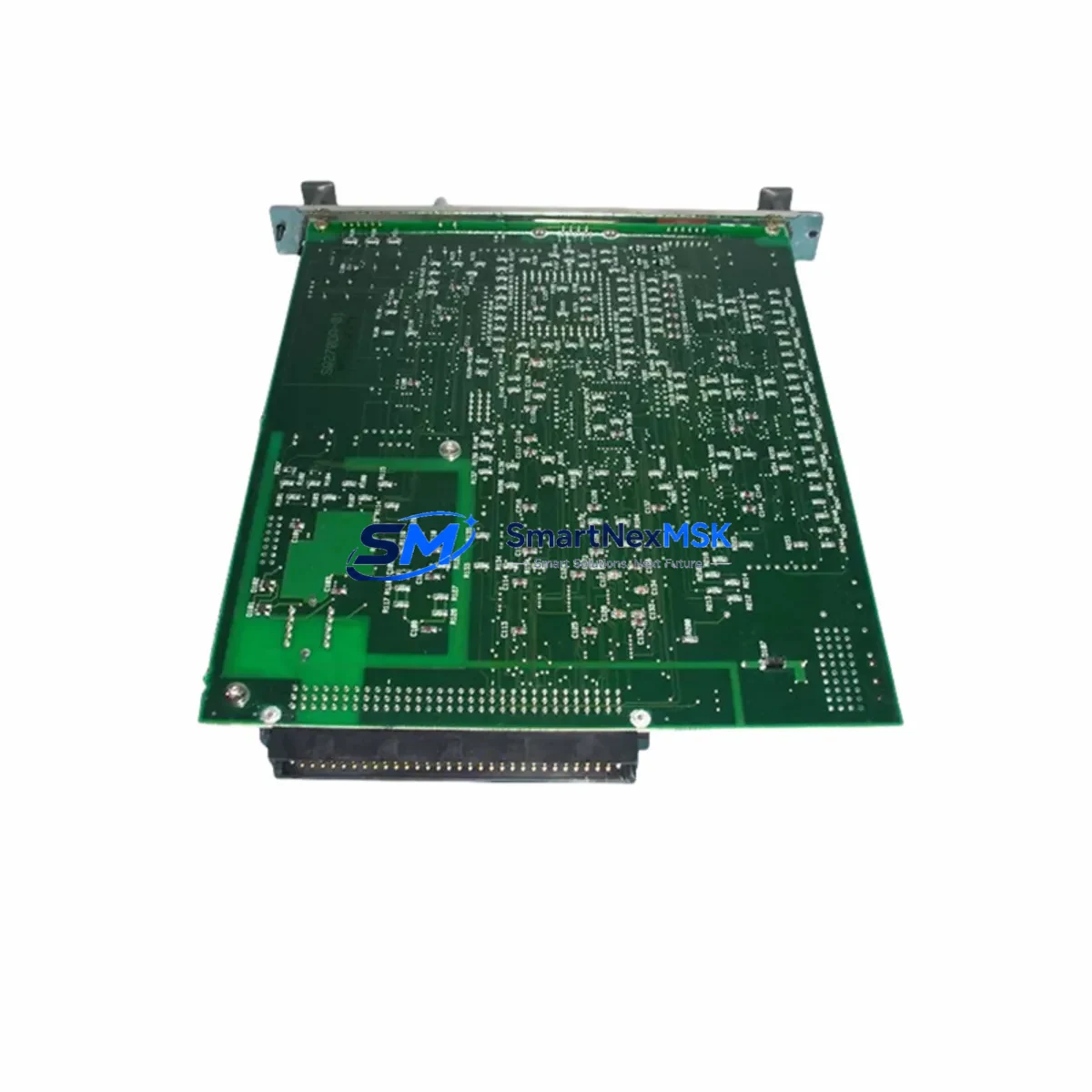
YOKOGAWA RB401-S2 Maintenance-Ready Spare CENTUM VP
The YOKOGAWA RB401-S2 is an original RIO (Remote I/O) Bus Interface Module designed for CENTUM VP and ProSafe-RS distributed control systems. In industrial facilities where continuous process control is non-negotiable, maintaining a verified spare of the RB401-S2 is a cornerstone of any credible maintenance strategy. Whether you are managing a petrochemical plant, a power generation facility, or a large-scale manufacturing line, the RIO bus interface layer is the communication backbone between your field I/O stations and the central controller. A failed RB401-S2 can isolate entire I/O segments, triggering unplanned shutdowns that cost far more than the module itself.
This listing provides a tested, original YOKOGAWA RB401-S2 spare module, inspected prior to shipment and backed by a 12-month warranty. Each unit is verified for signal integrity, bus communication handshake, and physical connector condition before dispatch. Fast worldwide shipping ensures your maintenance team can restore system operation with minimal downtime.
Spare Maintenance Table
| Parameter | Specification / Detail |
|---|---|
| Part Number / SKU | RB401-S2 |
| Brand | YOKOGAWA |
| Series Compatibility | CENTUM VP, ProSafe-RS |
| Module Type | RIO Bus Interface Module |
| Communication Bus | RIO (Remote I/O) Bus |
| Mounting | DIN rail / backplane slot (CENTUM VP field control station) |
| Power Supply Requirement | Supplied via field control station backplane (24 VDC bus) |
| Operating Temperature | 0°C to 55°C (standard industrial environment) |
| Origin | Japan |
| Condition | Original, tested before shipment |
| Warranty | 12 Months |
| Application Environment | Process automation, safety instrumented systems, DCS field stations |
| Maintenance Recommendation | Replace as matched pair with RIO bus cable; inspect backplane connectors on installation |
| Shipping | Worldwide express; ESD-safe packaging |
Maintenance Planning for Continuous Operation
When a maintenance or procurement engineer schedules replacement of the RB401-S2, the scope of inspection should extend well beyond the module itself. The RIO bus interface sits at the intersection of power distribution, field wiring, and digital communication — meaning a single degraded component in the surrounding circuit can cause recurring faults even after a new module is installed.
Begin with the field control station power supply module (such as the YOKOGAWA PW481 or equivalent 24 VDC supply card). Verify output voltage stability under load before inserting the replacement RB401-S2, as voltage sag or ripple on the backplane bus is a common root cause of interface module failures. Next, inspect the RIO bus cable and termination resistors — degraded shielding or loose BNC/coaxial terminations introduce reflections that corrupt bus communication and can damage a new module within weeks of installation.
The field control unit (FCU) processor card (e.g., CP451 or CP461 series) should be checked for firmware version compatibility with the RB401-S2 hardware revision. Mismatched firmware can prevent the bus from initializing correctly. While the cabinet is open, inspect adjacent analog input/output modules (such as AAI141, AAI543, or AAB841 series) for signs of corrosion on the backplane connector pins — these share the same power rail and environmental exposure as the RB401-S2.
For safety-instrumented system installations running ProSafe-RS alongside CENTUM VP, also verify the status of the safety communication module and any associated Vnet/IP network interface cards. A degraded network interface can mask RIO bus faults during diagnostics, leading to misdiagnosis of the root cause. If the facility uses HART multiplexers or signal isolators on field instrument loops connected through this RIO segment, those should be bench-tested as part of the corrective maintenance cycle.
Finally, review the terminal block assemblies and field wiring marshalling panels connected to the I/O modules downstream of the RB401-S2. Loose terminations and insulation breakdown in aging field cables are frequently overlooked during module-level replacements, only to surface as intermittent faults after the system is returned to service. A complete corrective maintenance pass — covering the power supply, bus cabling, processor firmware, I/O modules, network interfaces, and field wiring — ensures the replacement RB401-S2 delivers its full service life.
Site Replacement Workflow
Replacing the RB401-S2 on a live CENTUM VP system requires a structured approach to minimize process impact. Where hot-swap capability is supported by the field control station configuration, the module can be replaced without a full station shutdown — confirm this against your specific FCU hardware revision and system builder documentation before proceeding.
Step 1 — Pre-replacement verification: Download the current system configuration from the HIS (Human Interface Station) and confirm the RIO bus segment map. Identify all I/O modules assigned to the affected RIO bus and notify process operators of the planned maintenance window.
Step 2 — Power and bus isolation: If hot-swap is not supported, isolate the field control station power supply and discharge the backplane bus. Label all field wiring before disconnection.
Step 3 — Module extraction and inspection: Remove the failed RB401-S2 and inspect the backplane slot connector for bent pins or contamination. Clean with appropriate contact cleaner before inserting the replacement unit.
Step 4 — Replacement installation: Insert the new RB401-S2, restore power, and observe the module status LEDs. A solid RUN indicator confirms successful bus initialization. Monitor the CENTUM VP alarm console for any residual I/O communication faults.
Step 5 — Post-replacement validation: Perform a loop check on all I/O points assigned to the restored RIO bus segment. Confirm signal values against field instrument readings before returning the system to automatic control.
This workflow is equally applicable when upgrading from an older RB401 (non-S2) revision, ensuring backward compatibility is maintained within the CENTUM VP field station architecture.
Spare Parts Support FAQ
Q1: Is the RB401-S2 compatible with both CENTUM VP and ProSafe-RS systems?
Yes. The RB401-S2 is designed for use in YOKOGAWA field control stations that serve both CENTUM VP process control and ProSafe-RS safety instrumented system architectures. Always confirm the hardware revision against your system builder documentation to ensure compatibility with your specific FCU generation.
Q2: What pre-shipment testing is performed on each RB401-S2 unit?
Each module undergoes functional verification of RIO bus communication handshake, power-on self-test completion, LED status confirmation, and physical connector inspection. Units are shipped in ESD-safe packaging with a test record. The 12-month warranty covers manufacturing defects and functional failures under normal operating conditions.
Q3: How should the RB401-S2 be stored as a long-term spare?
Store in a climate-controlled environment at 15°C–30°C with relative humidity below 70% (non-condensing). Keep in the original ESD bag inside a sealed anti-static container. Avoid storage near strong magnetic fields or vibration sources. Inspect connector pins annually and perform a power-on test every 12–18 months to confirm readiness.
Q4: Can the RB401-S2 replace older RB401 revisions without reconfiguration?
In most CENTUM VP installations, the RB401-S2 is backward compatible with earlier RB401 hardware revisions at the bus protocol level. However, firmware updates to the FCU processor may be required to fully utilize S2-revision features. Consult your YOKOGAWA system integrator or the FCU release notes for your installed firmware version before substitution.
—
© 2026 SMARTNEXMSK. All rights reserved.
Original Source: https://smartnexmsk.com
Contact: [email protected] | +86 18259474341



