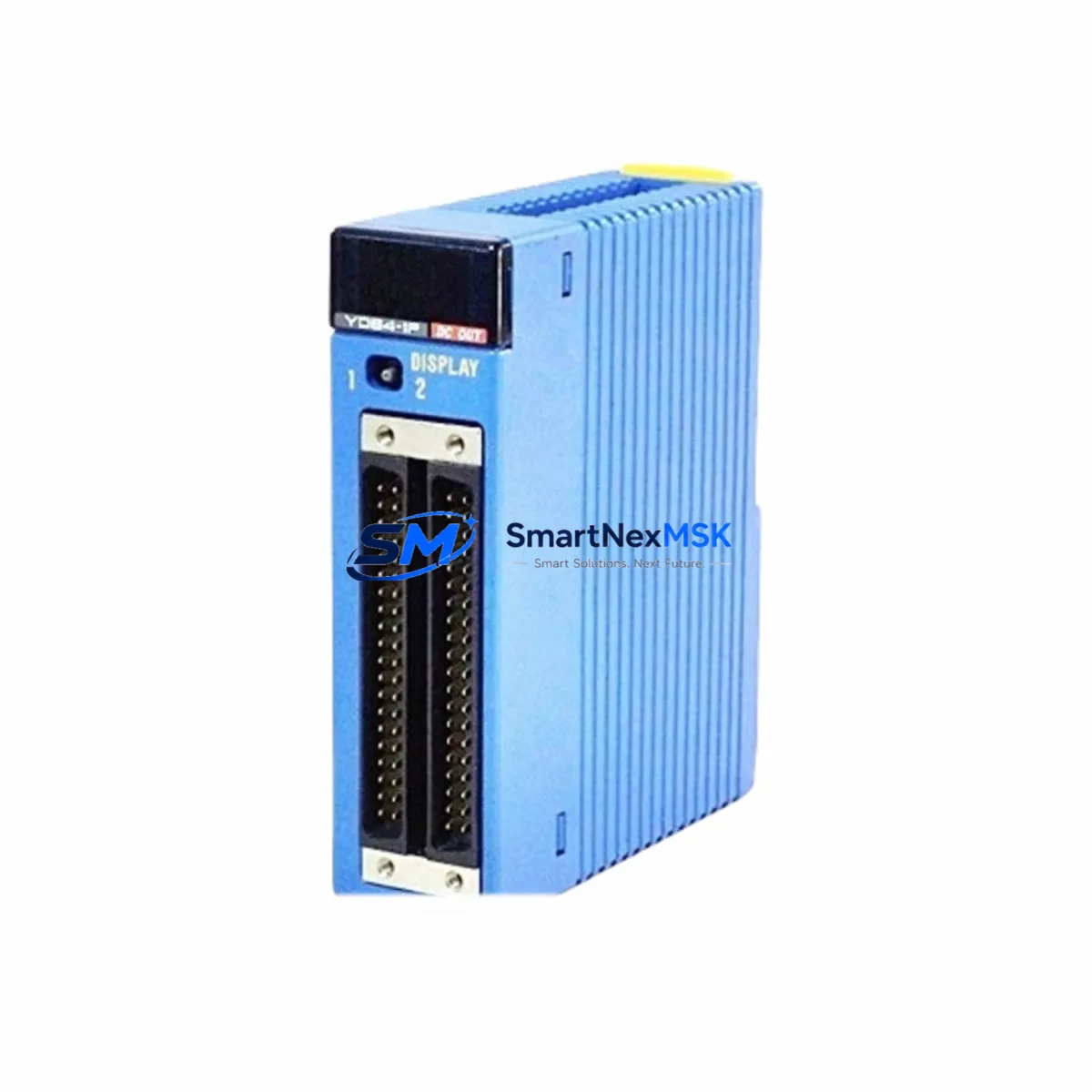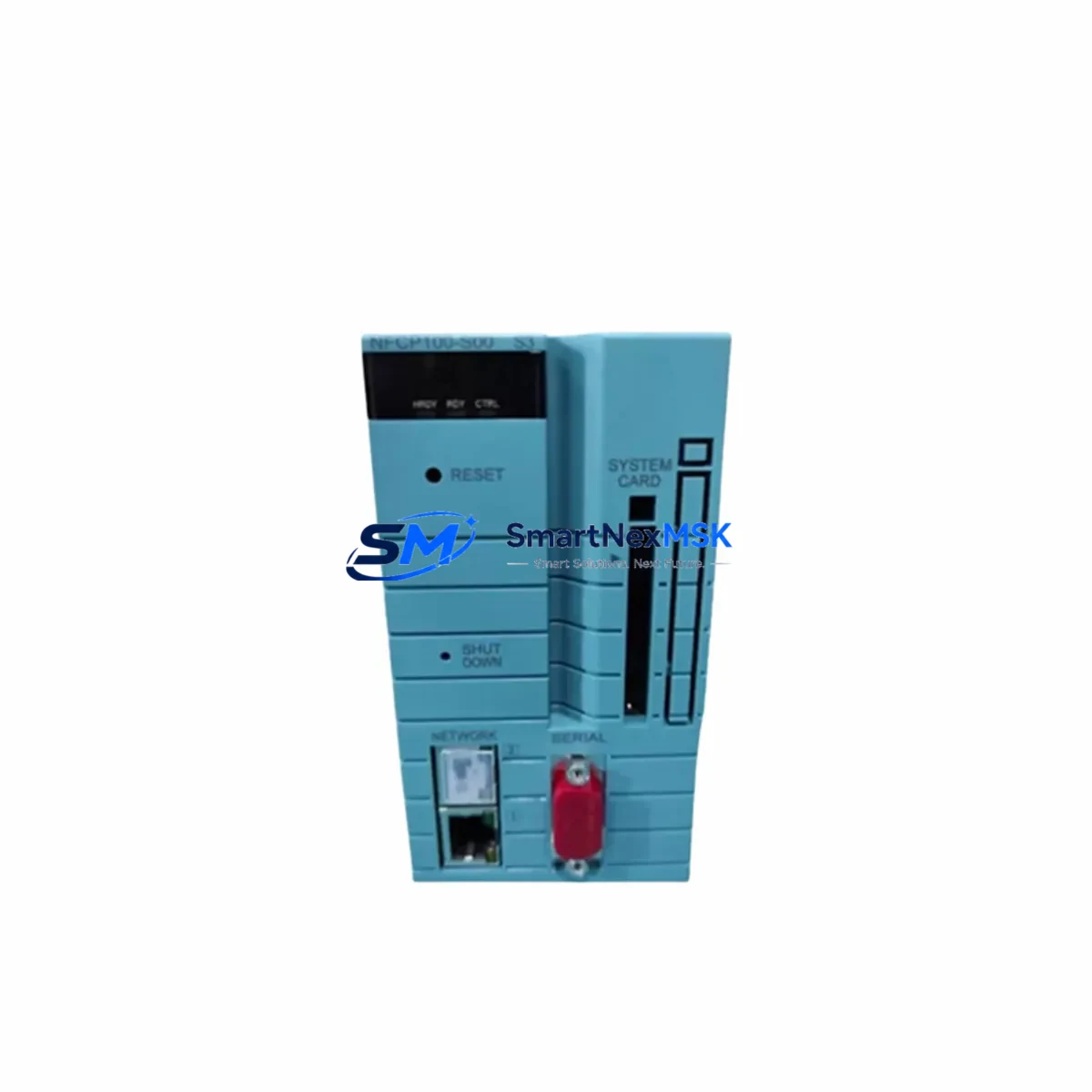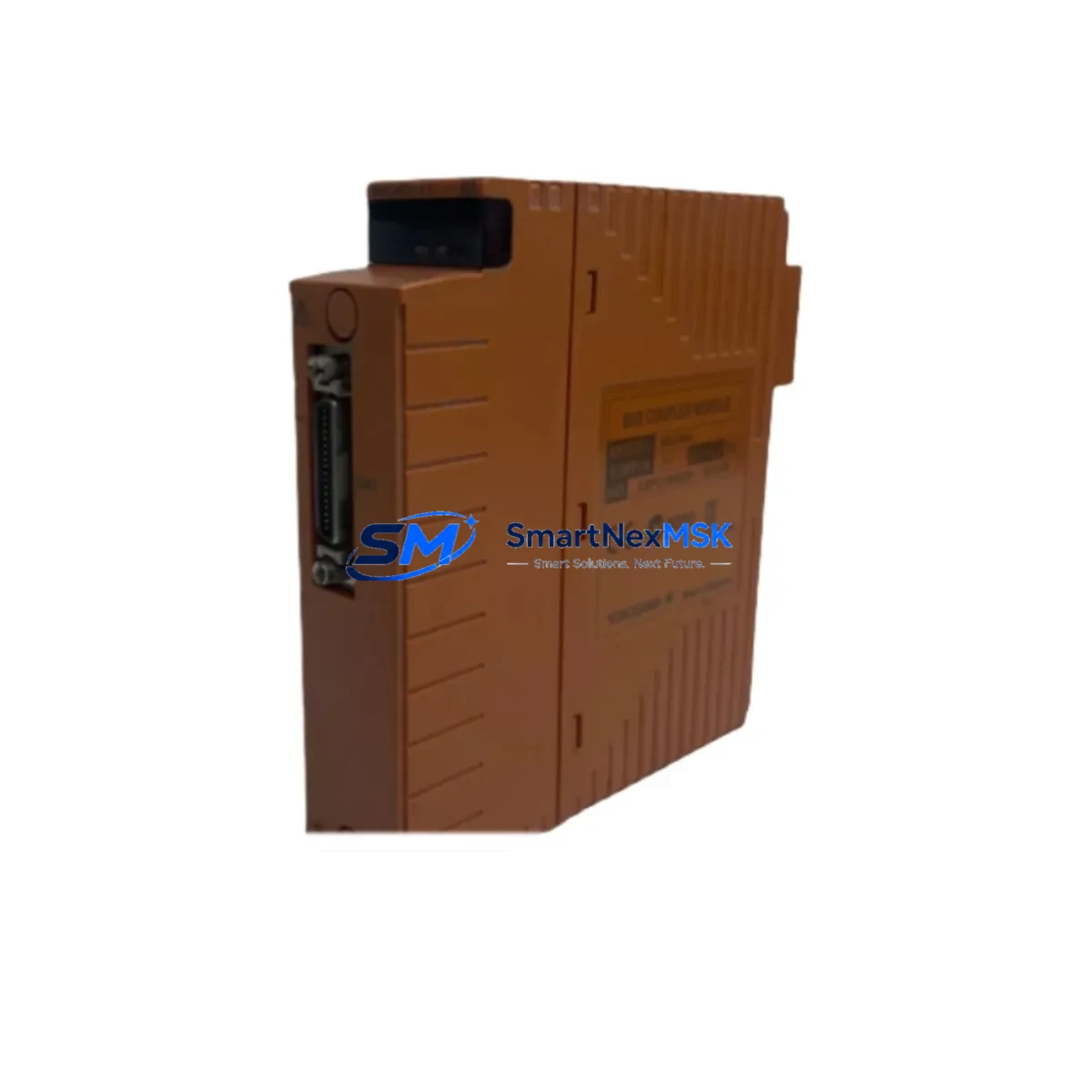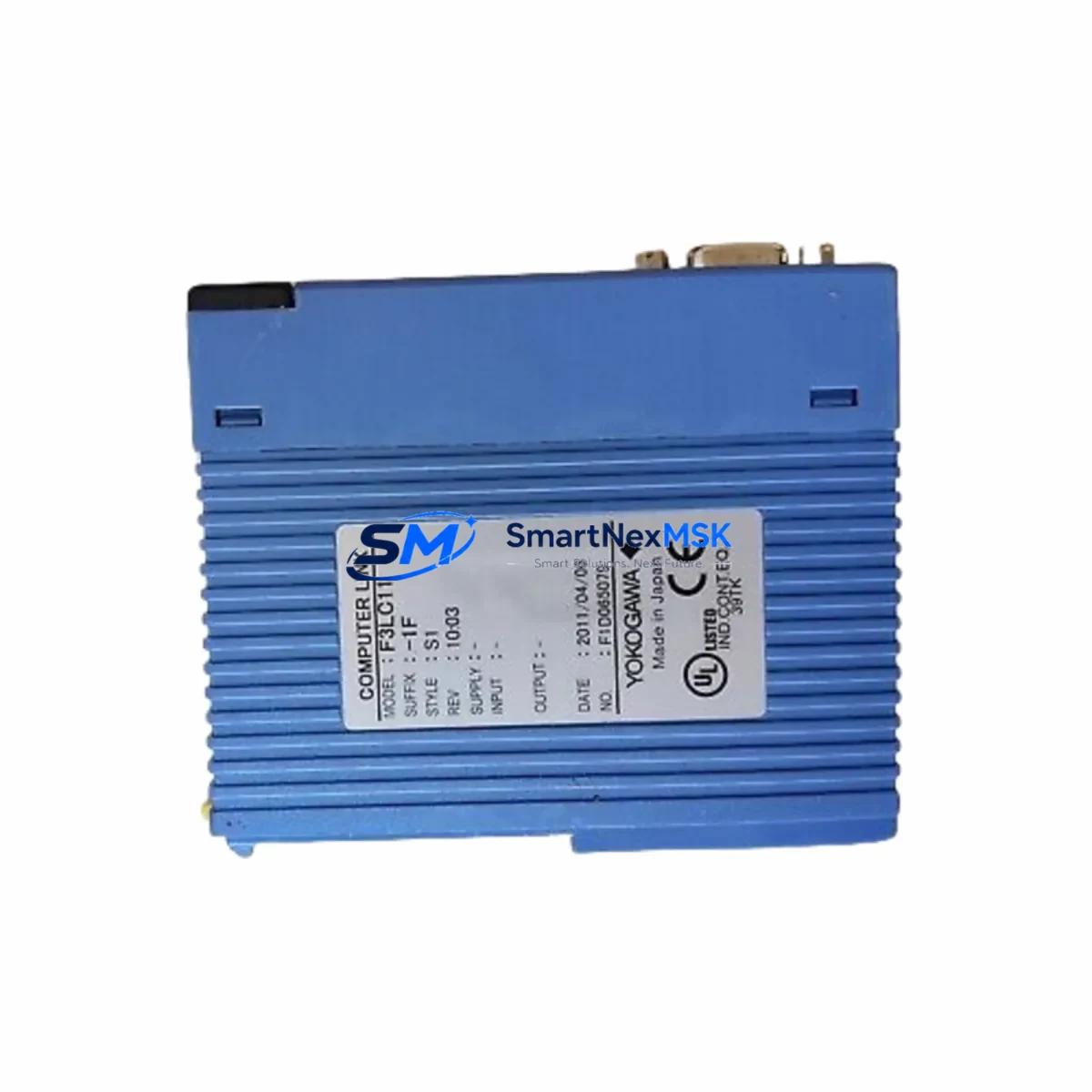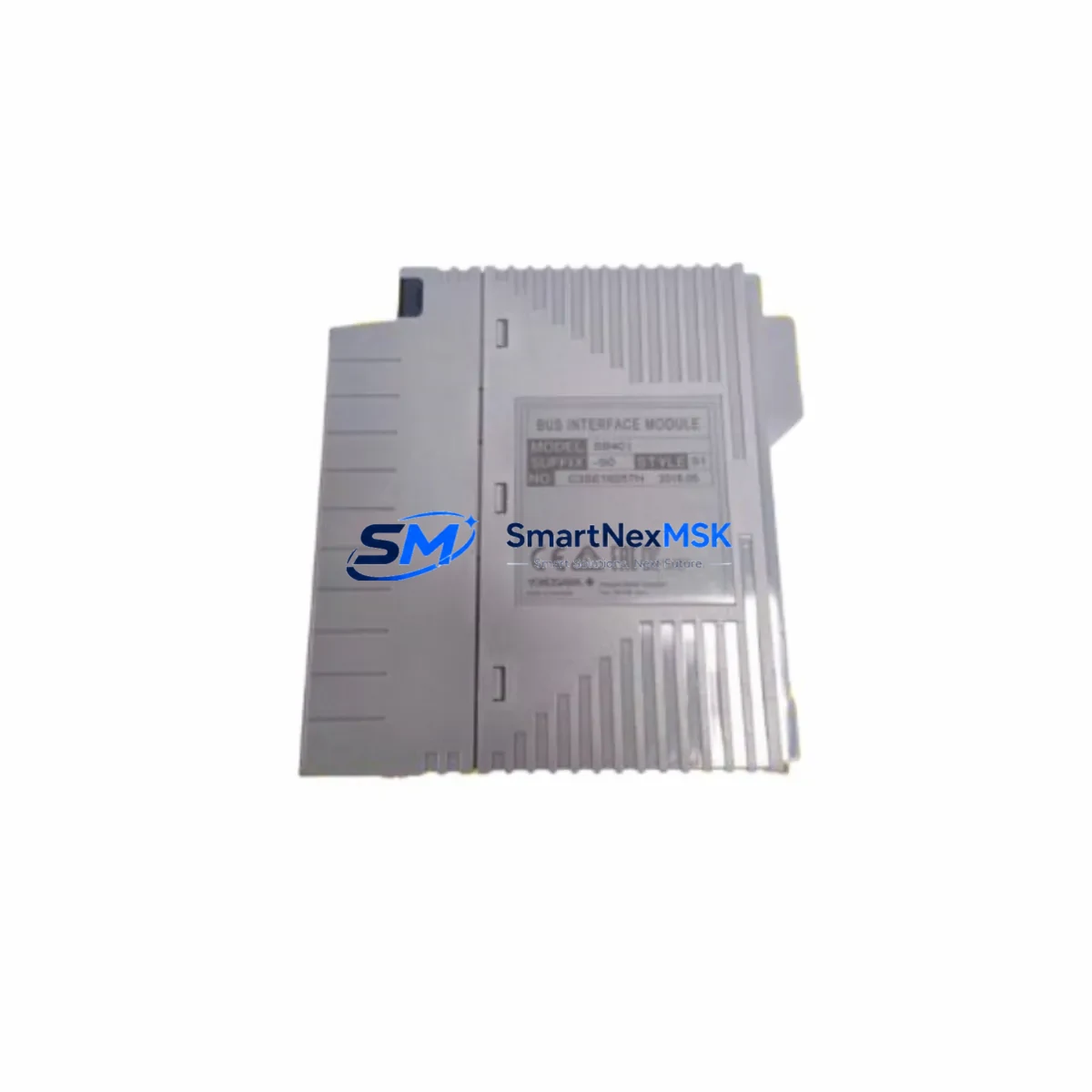
YOKOGAWA SB401-50 S1: Safety-Enhanced Bus Interface Module for Harsh Industrial Control Sites
The YOKOGAWA SB401-50 S1 is a ruggedized bus interface module engineered for the CENTUM VP Distributed Control System (DCS) platform, purpose-built to sustain reliable communication and control integrity in the most demanding industrial environments. Designed to operate continuously in high-load, high-interference, and safety-critical applications, the SB401-50 S1 serves as a hardened communication bridge between field devices and the central control architecture — ensuring that process data flows without interruption even under extreme electrical and environmental stress.
In continuous production facilities such as petrochemical refineries, power generation plants, metallurgical smelters, and water treatment infrastructure, control system uptime is not optional — it is a safety imperative. The SB401-50 S1 addresses this directly by providing robust signal isolation, surge suppression, and EMI/RFI rejection that prevent communication faults from propagating into the control loop. When paired with YOKOGAWA’s ACM11 Advanced Control Module and ESB Bus architecture, the SB401-50 S1 maintains deterministic data throughput even when adjacent equipment generates high-frequency electrical noise or when power supply transients occur during load switching.
Control cabinet integrity depends on every module performing within specification under thermal cycling, vibration, and humidity exposure. The SB401-50 S1 is rated for extended temperature ranges and sealed against particulate ingress, making it suitable for installation in outdoor control enclosures, mine-site switchrooms, and port terminal automation panels. Its compatibility with the YOKOGAWA FCS (Field Control Station) and CENTUM VP R6 software environment means that replacement and commissioning can be completed without reconfiguration of the broader control strategy — a critical advantage when minimizing planned downtime windows in continuous process plants.
Power supply stability is a foundational requirement for bus interface reliability. The SB401-50 S1 is designed to operate within the regulated DC bus supplied by YOKOGAWA’s PW481 and PW482 Power Supply Modules, which provide redundant power paths and automatic switchover. This redundancy ensures that a single power supply fault does not interrupt bus communication or trigger spurious control outputs. In safety instrumented systems (SIS) and critical interlock loops, this level of power integrity is essential to prevent unsafe process states from developing during electrical disturbances.
Signal integrity across the ESB bus is maintained through the SB401-50 S1’s internal termination and impedance-matching design, which eliminates reflections and data corruption that can occur in long cable runs or when multiple nodes share a common bus segment. This is particularly important in large-scale DCS installations where the YOKOGAWA EB401 ESB Bus Master Module coordinates communication across multiple I/O nests, and where any bus fault could affect dozens of I/O channels simultaneously. The SB401-50 S1 acts as a protective node, isolating faults and maintaining bus continuity for the remaining segments.
For facilities operating under IEC 61511 functional safety requirements or equivalent national standards, the SB401-50 S1 supports the documentation and traceability requirements of safety lifecycle management. Its stable, well-documented interface with the CENTUM VP platform allows safety engineers to validate communication paths as part of the overall SIL verification process. When used alongside YOKOGAWA ProSafe-RS Safety Controllers in hybrid DCS/SIS architectures, the SB401-50 S1 contributes to a coherent, auditable safety instrumented function (SIF) design.
Spare parts availability and long-term supply continuity are critical concerns for asset-intensive industries. SMARTNEXMSK maintains verified stock of the SB401-50 S1 and related CENTUM VP components including the SB301 Bus Interface Module, ALR111 Alarm Module, and ADV151 Analog Input Module, ensuring that emergency replacement orders can be fulfilled without extended lead times. Each unit undergoes pre-shipment functional verification to confirm communication integrity, power consumption within specification, and physical connector condition before dispatch.
Safety Reliability Table
| Parameter | Specification / Rating |
|---|---|
| Part Number | SB401-50 S1 |
| Brand | YOKOGAWA |
| Series | CENTUM VP / ESB Bus |
| Module Type | Bus Interface Module |
| Bus Architecture | ESB (Enhanced Serial Bus) |
| Compatible Platform | CENTUM VP R4 / R5 / R6 DCS |
| Operating Temperature | 0°C to +60°C (standard); extended range per installation class |
| Storage Temperature | -20°C to +70°C |
| Humidity | 5% to 95% RH, non-condensing |
| EMI/RFI Protection | Compliant with IEC 61000-4 series |
| Surge Protection | Internal transient suppression on bus lines |
| Power Supply Compatibility | YOKOGAWA PW481 / PW482 redundant power modules |
| Signal Isolation | Optical isolation on bus interface |
| Mounting | DIN rail / CENTUM VP I/O nest |
| Weight | Approx. 500 g |
| Country of Origin | Japan |
| Warranty | 12 Months — covers manufacturing defects and functional failure under normal operating conditions |
| Pre-Shipment Test | Full functional verification performed before dispatch |
| Stock Status | In Stock — available for immediate shipment |
Control Cabinet Protection Strategy
A robust CENTUM VP control cabinet deployment requires coordinated protection across power, communication, I/O, and safety layers. The SB401-50 S1 anchors the bus communication layer, but its effectiveness is amplified when the surrounding cabinet architecture is properly specified. Redundant power delivery through the YOKOGAWA PW481 Power Supply Module ensures that bus voltage remains stable during mains fluctuations, while the PW482 provides automatic hot-standby switchover without interrupting bus traffic. Upstream surge protection devices on the incoming AC feed prevent high-energy transients from reaching the DCS backplane.
At the I/O level, analog input modules such as the YOKOGAWA ADV151 and digital output modules like the YOKOGAWA ADV551 rely on the SB401-50 S1 to maintain clean, low-latency communication with the FCS. Any degradation in bus signal quality — caused by cable impedance mismatch, connector oxidation, or electromagnetic coupling from adjacent VFDs or contactors — can introduce scan cycle jitter that affects PID loop performance and alarm response time. The SB401-50 S1’s internal termination network actively mitigates these effects, maintaining bus integrity across the full I/O nest.
For installations where the CENTUM VP system interfaces with field instruments via FOUNDATION Fieldbus or HART, the YOKOGAWA AFV10 Fieldbus Communication Module operates in conjunction with the SB401-50 S1 to bridge field-level diagnostics into the DCS historian. This integration supports predictive maintenance workflows by surfacing device health data — valve travel, sensor drift, and loop resistance — before they escalate into process upsets. In safety interlock applications, the YOKOGAWA ProSafe-RS F3SP28-3N Safety Controller communicates with the CENTUM VP via a dedicated safety bus, with the SB401-50 S1 providing the physical interface layer that maintains separation between the safety and basic process control domains.
Cabinet thermal management is equally critical. Excessive heat accelerates connector degradation and increases the risk of bus communication errors. Proper specification of cabinet cooling — whether forced-air or air-conditioned enclosures — combined with correct module spacing per YOKOGAWA installation guidelines, ensures that the SB401-50 S1 and adjacent modules including the EB401 ESB Bus Master operate within their rated thermal envelope throughout the plant lifecycle.
Critical Industrial Safety Applications
Petrochemical and Refinery Plants: In continuous distillation, hydrocracking, and gas processing units, the SB401-50 S1 supports the CENTUM VP DCS in maintaining precise control of temperature, pressure, and flow loops. Bus communication faults in these environments can trigger emergency shutdowns or, worse, mask process deviations that lead to unsafe conditions. The SB401-50 S1’s surge-hardened design protects against the high-energy transients generated by large motor starts and transformer switching events common in refinery electrical systems.
Power Generation: Thermal and hydroelectric power stations rely on CENTUM VP for turbine governor control, boiler management, and auxiliary system supervision. The SB401-50 S1 ensures that I/O data from critical sensors — including turbine speed, steam pressure, and generator excitation — reaches the FCS without latency or corruption, supporting the fast response times required for load-following and grid stability applications.
Mining and Mineral Processing: Underground and surface mining operations expose control equipment to vibration, dust, and wide temperature swings. The SB401-50 S1’s ruggedized construction and sealed connector interface make it suitable for deployment in mine-site control rooms and remote I/O panels, where replacement logistics are complex and unplanned downtime carries significant production cost.
Water and Wastewater Treatment: Municipal and industrial water treatment facilities operate continuously, with strict regulatory requirements for process monitoring and alarm management. The SB401-50 S1 supports reliable communication between field instruments — flow meters, pH analyzers, and level transmitters — and the CENTUM VP control system, ensuring that dosing and treatment processes remain within compliance parameters.
Metallurgy and Steel Production: Electric arc furnaces, rolling mills, and continuous casting lines generate extreme electromagnetic interference. The SB401-50 S1’s EMI rejection capability ensures that bus communication remains stable even in close proximity to high-current switching equipment, protecting the integrity of temperature and position control loops that are critical to product quality and equipment safety.
Safety and Quality FAQ
Q: What does the 12-month warranty cover for the SB401-50 S1?
A: The warranty covers all manufacturing defects and functional failures under normal operating conditions for 12 months from the date of shipment. This includes bus communication failures, power interface faults, and connector integrity issues. Units that fail within the warranty period are repaired or replaced at no charge, with priority processing to minimize your site downtime.
Q: What pre-shipment testing is performed on each SB401-50 S1 unit?
A: Every unit undergoes a full functional verification before dispatch, including bus communication integrity testing, power consumption measurement within YOKOGAWA specification, visual inspection of all connectors and PCB surfaces, and firmware version confirmation. A test record is available upon request for quality documentation purposes.
Q: Is the SB401-50 S1 compatible with all CENTUM VP versions?
A: The SB401-50 S1 is designed for the CENTUM VP platform and is compatible with R4, R5, and R6 releases. Compatibility with specific FCS hardware generations and I/O nest configurations should be verified against your system’s hardware revision. Our technical team can assist with compatibility confirmation based on your existing system documentation.
Q: Can you guarantee long-term supply and replacement support for the SB401-50 S1?
A: Yes. SMARTNEXMSK maintains ongoing stock of the SB401-50 S1 and a broad range of CENTUM VP spare parts to support both planned maintenance programs and emergency replacement requirements. We work with verified supply channels to ensure continued availability even for modules that have reached end-of-production status with the OEM, providing our customers with a reliable long-term spare parts strategy.
© 2026 SMARTNEXMSK. All rights reserved.
Original Source: https://smartnexmsk.com
Contact: [email protected] | +86 18259474341