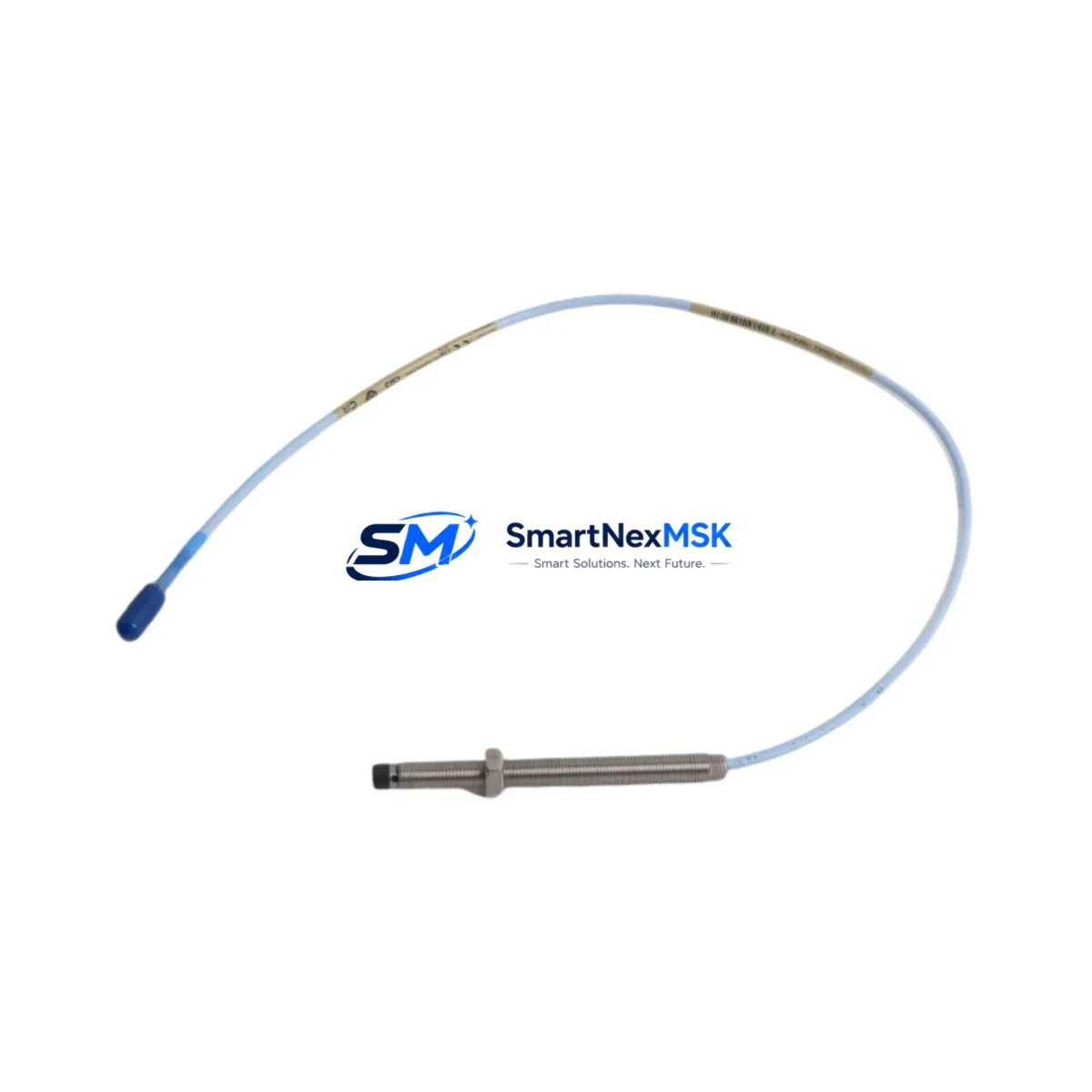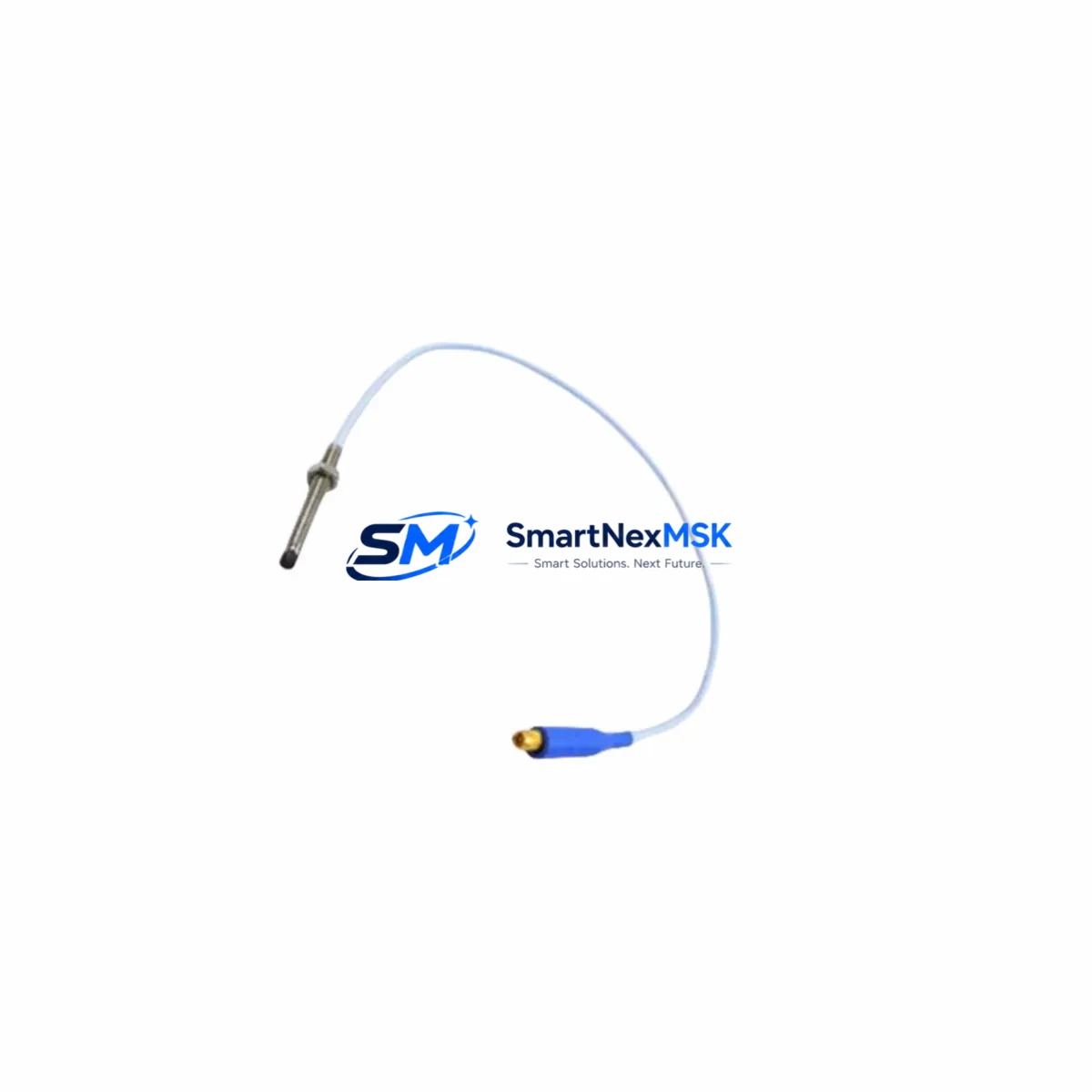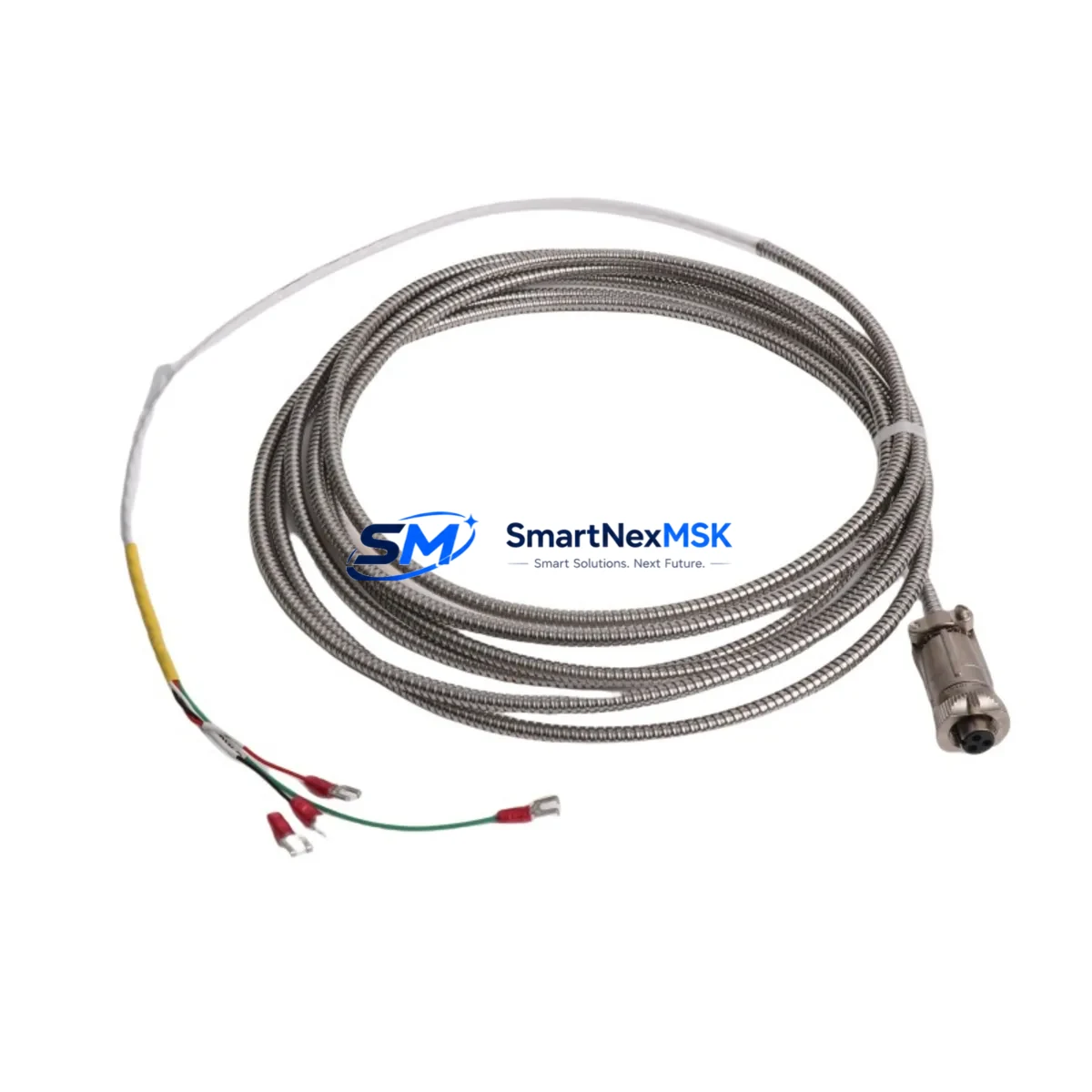
Bently Nevada 16710-17 Retrofit-Ready Proximity Interconnect Cable for 3300 & 7200 Series Control Systems
The Bently Nevada 16710-17 is a precision proximity probe interconnect cable engineered for seamless integration into legacy vibration monitoring and machinery protection systems. As industrial facilities face increasing pressure to extend the operational life of existing control infrastructure, the 16710-17 serves as a verified drop-in replacement for aging or discontinued cable assemblies within the Bently Nevada 3300 Series and 7200 Series platforms. Whether you are executing a planned retrofit, recovering from an unplanned failure, or upgrading a control cabinet to meet current reliability standards, this cable delivers the electrical and mechanical compatibility required to restore system integrity with minimal disruption.
Designed to interface directly with Bently Nevada proximity transducer systems, the 16710-17 maintains the signal conditioning chain between the proximity probe, the extension cable, and the proximitor or monitor module. Its shielded construction preserves signal fidelity across the full operating range, ensuring that eddy-current displacement measurements remain accurate and free from electromagnetic interference — a critical requirement in rotating machinery environments where vibration, axial position, and differential expansion data feed directly into turbine protection logic and DCS alarm management.
Upgrade Compatibility Table
| Parameter | Details |
|---|---|
| SKU / Part Number | 16710-17 |
| Compatible Series | Bently Nevada 3300 Series, 7200 Series |
| Cable Type | Proximity Probe Interconnect Cable |
| Connector Interface | Standard BNC / coaxial termination compatible with 3300 XL proximitor modules |
| Installation Requirement | No hardware modification required; direct replacement of OEM cable assembly |
| Communication Compatibility | Passive signal cable; compatible with all 3300 and 7200 Series proximitor outputs feeding 4–20 mA or voltage signal to DCS/PLC |
| Replacement Recommendation | Suitable replacement for discontinued or degraded 16710-series cable variants |
| Commissioning Notes | Verify gap voltage at proximitor output after installation; confirm signal range within –10 VDC to –18 VDC per probe specification |
| Warranty | 12-Month Warranty — covers manufacturing defects and electrical performance |
Retrofit Planning for Existing Automation Systems
Successful integration of the 16710-17 into an existing machinery protection architecture requires a structured pre-installation review. Before removing the legacy cable, engineers should document the current gap voltage readings at the Bently Nevada 3300 XL Proximitor or 7200 Series proximitor module to establish a baseline. This baseline is essential for post-installation verification and ensures that the replacement cable has not introduced any impedance mismatch or grounding anomaly.
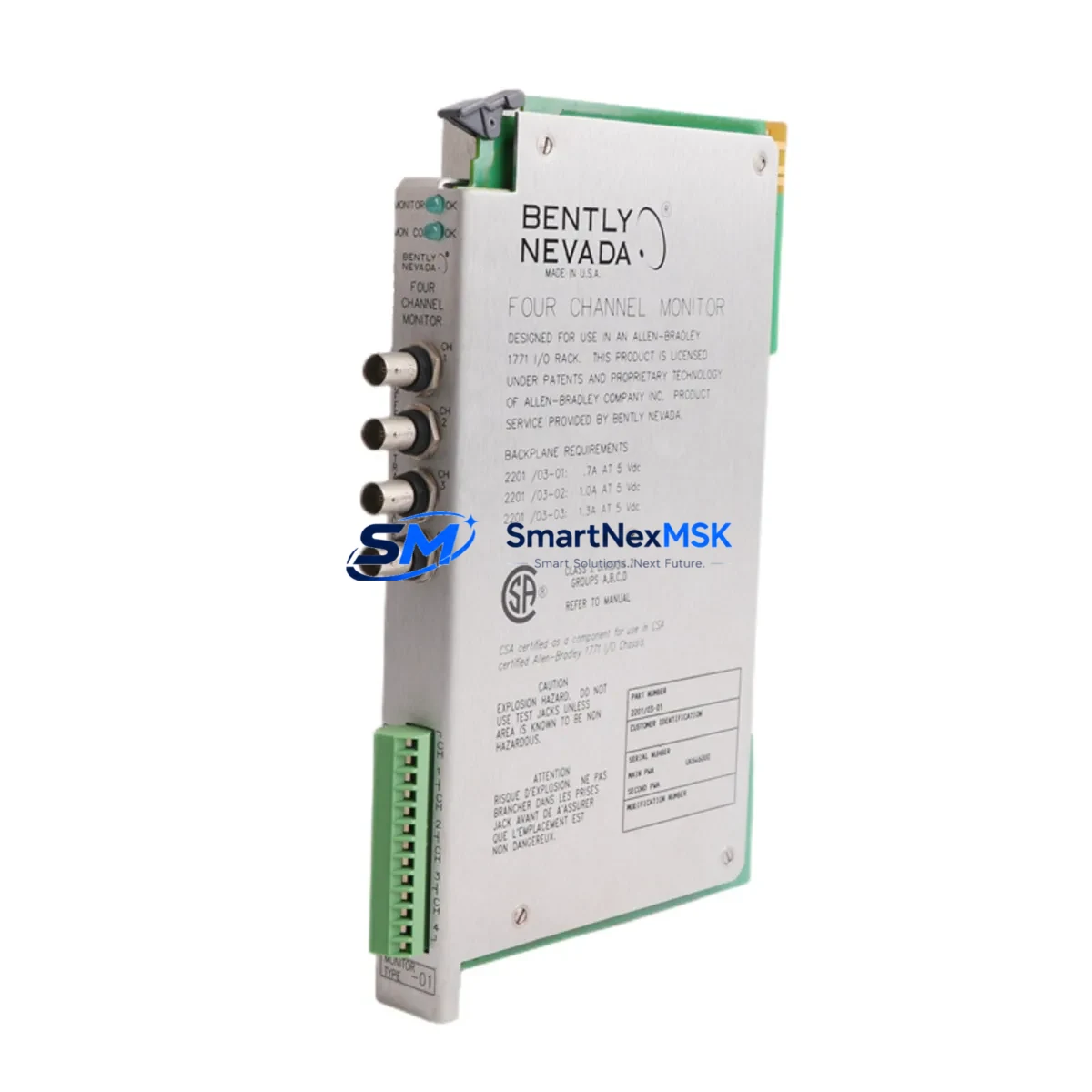
In systems where the 16710-17 feeds signal into a Bently Nevada 3500 Series rack — a common upgrade path from older 3300 installations — technicians must confirm that the monitor module input card, such as the 3500/40M or 3500/42M, is configured to accept the probe sensitivity and gap range associated with the connected transducer. The 3500 rack’s I/O module termination block wiring should be reviewed against the original loop drawing before the new cable is terminated.
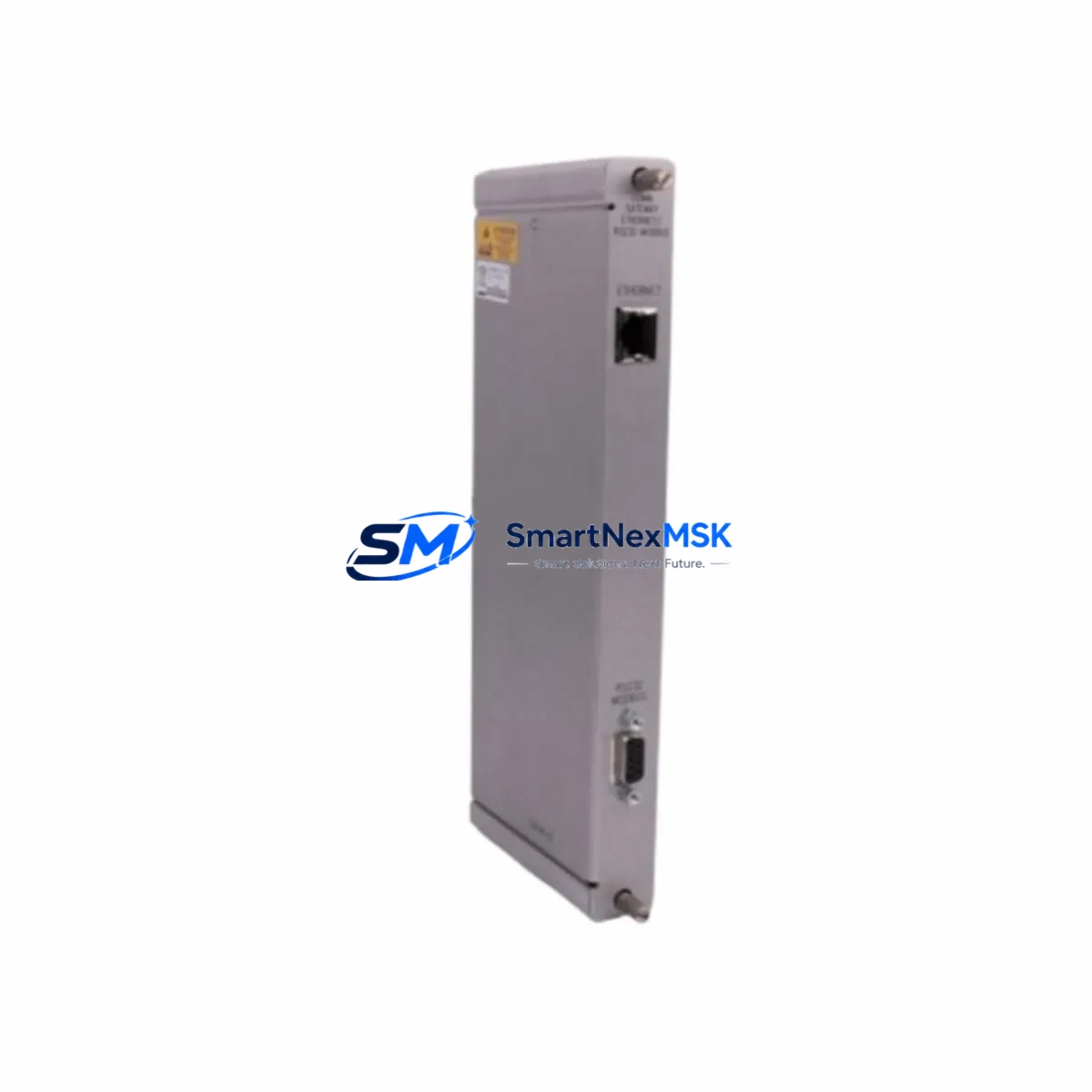
For facilities running parallel DCS integration, the 4–20 mA output from the proximitor typically connects to an analog input module on platforms such as the Emerson DeltaV or Honeywell Experion PKS. Verifying that the AI channel scaling in the DCS configuration matches the transducer’s measurement range prevents false alarms during the commissioning phase. If the control system uses a Modbus RTU or HART gateway to aggregate vibration data, the gateway’s channel mapping should be audited before the cable swap is performed.
In multi-channel monitoring cabinets, the 16710-17 is frequently installed alongside companion components including the Bently Nevada 330130 proximity probe, the 330180 extension cable, and the 330104 proximitor. When replacing a degraded cable in a populated rack, it is advisable to inspect adjacent cables and connector terminations for signs of insulation breakdown or connector corrosion, particularly in high-temperature or high-humidity environments. The Bently Nevada 3300 RAM rack and its associated power supply module should also be checked to confirm that the supply voltage remains within specification after the new cable load is added.
For older installations where the original Bently Nevada 7200 Series proximitor has been retained alongside a newer PLC-based safety system, the 16710-17 provides a cost-effective means of restoring the measurement loop without requiring a full transducer replacement. This approach is particularly valuable in facilities where the probe is embedded in a bearing housing that would require significant mechanical disassembly to access, making cable-level replacement the preferred maintenance strategy.
Downtime Control During System Migration
Minimizing unplanned downtime during a proximity cable replacement requires careful sequencing of isolation, replacement, and verification steps. Where process conditions permit, the preferred approach is to perform the cable swap during a scheduled maintenance window with the monitored machine at rest. Before de-energizing the proximitor, the existing alarm and danger setpoints in the Bently Nevada 3500 monitor or the connected DCS should be placed in bypass mode to prevent spurious trips during the open-circuit period.
Once the 16710-17 is installed and terminated, the gap voltage should be measured at the proximitor output and compared against the pre-removal baseline. A reading within ±0.5 VDC of the original value confirms that the cable has been correctly installed and that the probe-to-target gap has not shifted. Following gap verification, the monitor bypass should be released and the system returned to normal protection mode before the machine is restarted.
In cases where a hot-swap is unavoidable — for example, in continuous process plants where the monitored machine cannot be stopped — the replacement should be coordinated with the control room operator to ensure that the DCS historian is recording the transition and that maintenance personnel are in direct communication with the board operator throughout the procedure. All original program logic, HMI faceplate configurations, and alarm group assignments should be preserved without modification during the cable replacement, as the 16710-17 is a passive component that does not alter the control system’s software configuration.
Post-installation, a full functional test of the vibration monitoring loop — including simulation of a high-vibration condition using a calibrated signal source — is recommended before the maintenance record is closed. This test confirms end-to-end signal integrity from the proximity probe through the 16710-17 cable, the proximitor, and into the monitor or DCS input card, providing documented evidence that the system has been restored to its pre-failure performance standard. All test results, gap voltage readings, and wiring verification records should be retained for the 12-month warranty period.
Retrofit Support FAQ
Q1: Is the 16710-17 a direct replacement for the original Bently Nevada cable in 3300 and 7200 Series systems?
Yes. The 16710-17 is manufactured to the same electrical and mechanical specification as the original OEM cable assembly. It is compatible with the standard connector interfaces used in 3300 Series and 7200 Series proximity transducer loops and requires no modification to the existing wiring harness or termination block.
Q2: What commissioning checks are required after installing the 16710-17?
After installation, measure the gap voltage at the proximitor output and confirm it falls within the expected range for the connected probe (typically –10 VDC to –18 VDC for standard 5 mm probes). Verify that the vibration channel in the Bently Nevada 3500 monitor or the connected DCS is reading correctly and that no fault or not-OK indication is present on the proximitor LED. Release any bypasses applied during installation and confirm that alarm and danger setpoints are active before returning the machine to service.
Q3: Can the 16710-17 be used in systems that have been partially upgraded to Bently Nevada 3500 Series monitors?
Yes. The 16710-17 is compatible with mixed-generation installations where 3300 or 7200 Series transducers are connected to 3500 Series monitor racks via the appropriate input module. Confirm that the 3500 monitor’s channel configuration matches the sensitivity and gap range of the connected probe before commissioning.
Q4: What does the 12-month warranty cover?
The 12-month warranty covers manufacturing defects and verified electrical performance failures under normal operating conditions. Each unit undergoes pre-shipment functional testing to confirm continuity, insulation resistance, and connector integrity. Warranty claims should be submitted with the original purchase documentation and a description of the observed fault condition.
© 2026 SMARTNEXMSK. All rights reserved.
Original Source: https://smartnexmsk.com
Contact: [email protected] | +86 18259474341