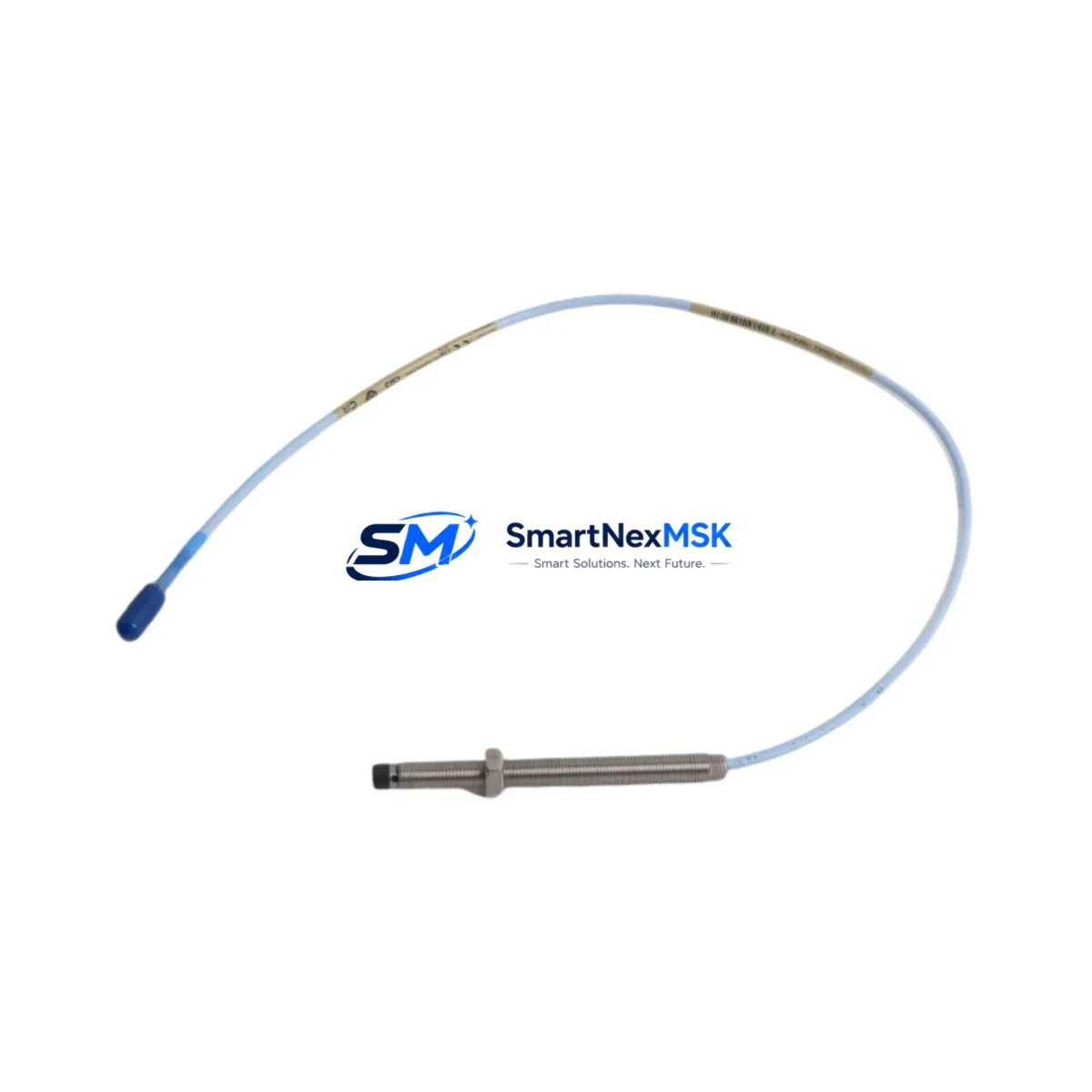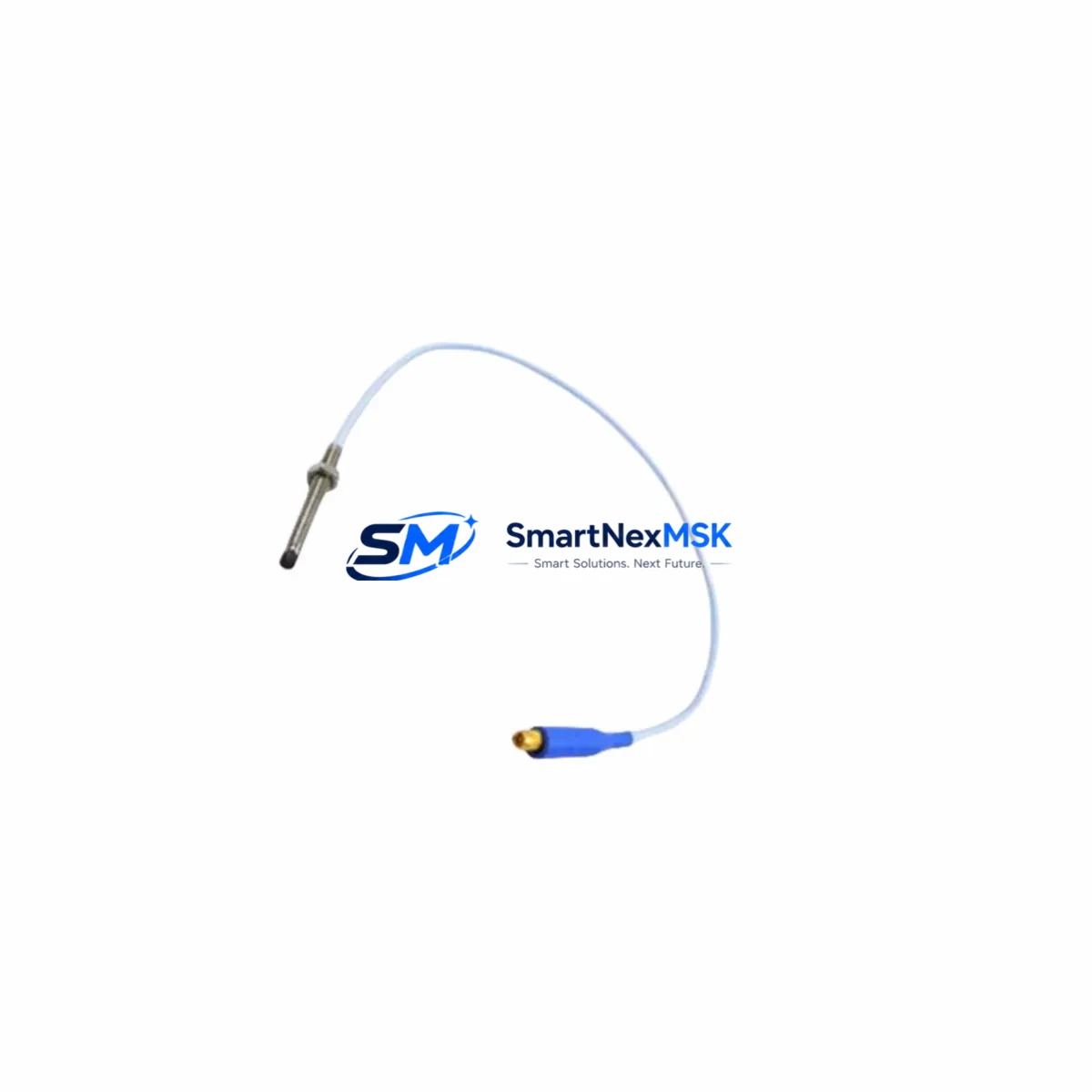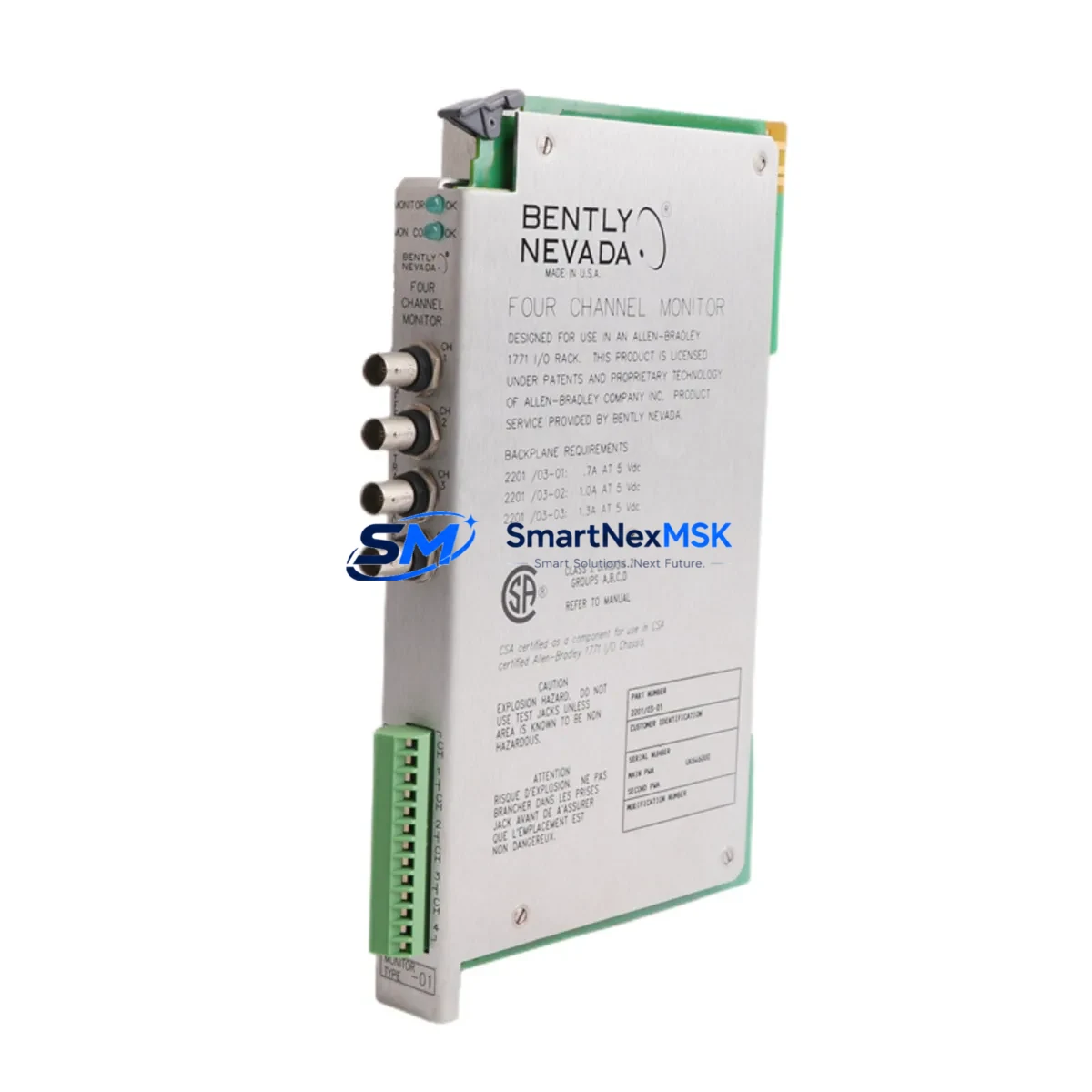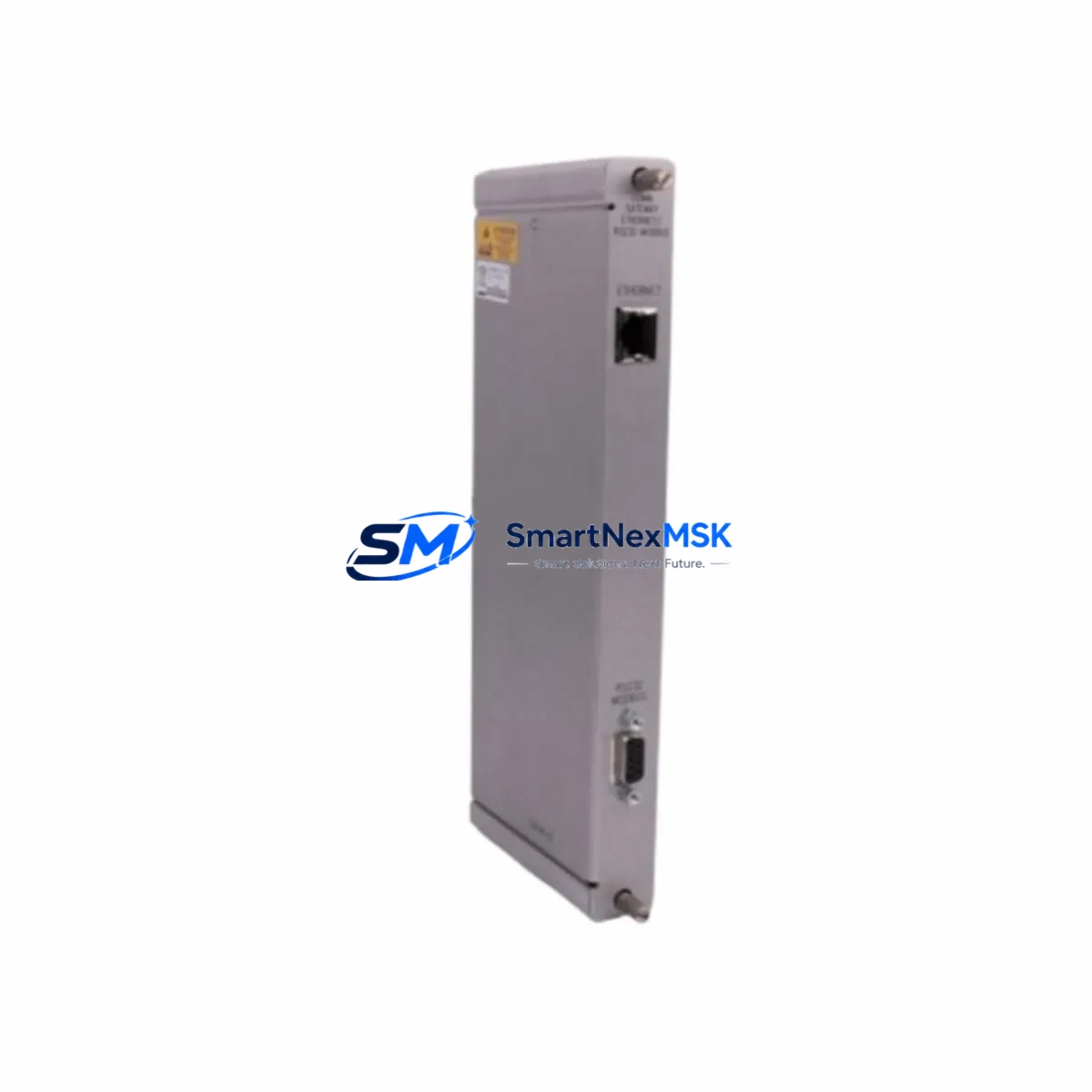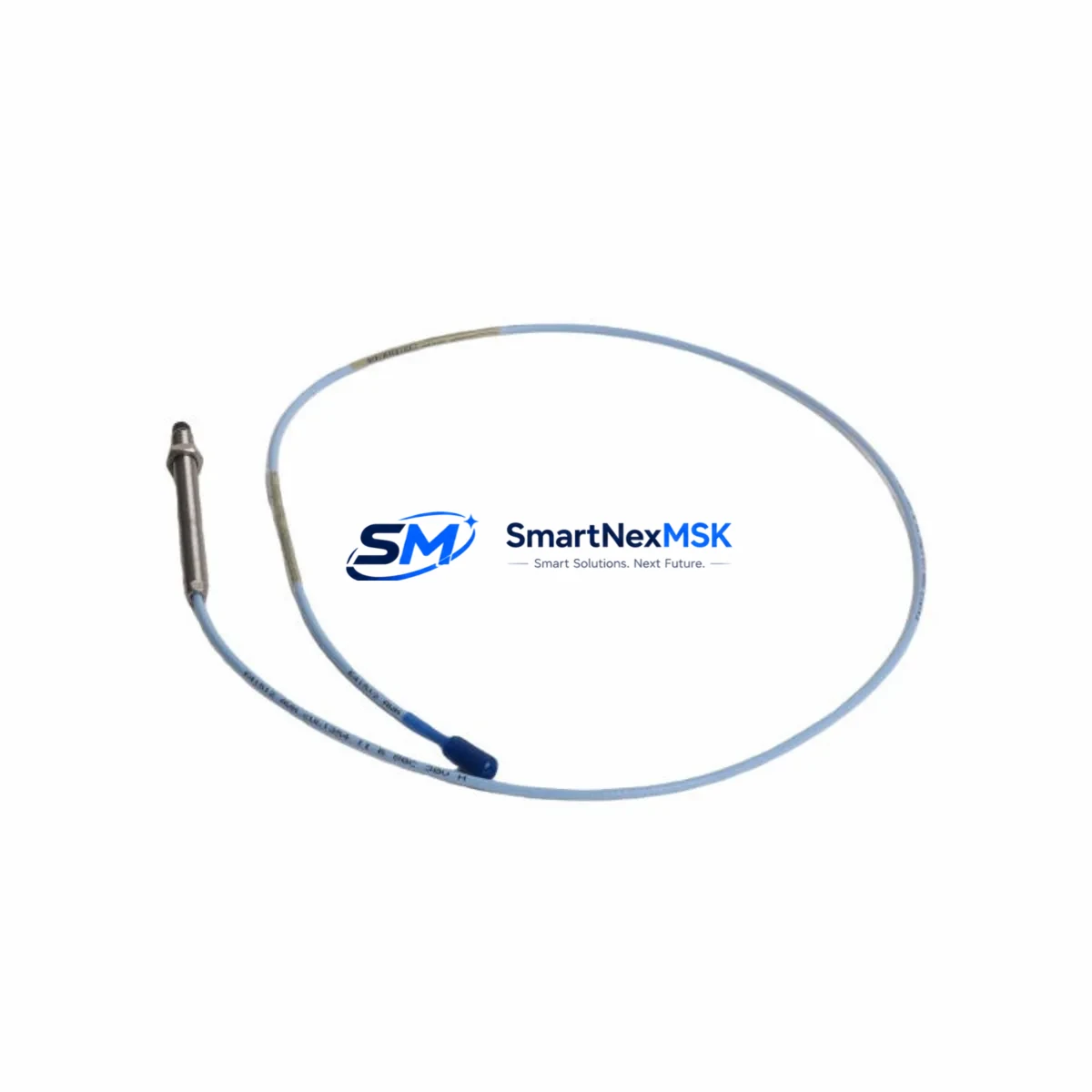
Bently Nevada 330103-00-13-05-02-CN 3300 XL Retrofit-Ready Proximity Transducer: Compatible Modernization & Smooth Legacy System Upgrade
The Bently Nevada 330103-00-13-05-02-CN is a precision proximity transducer module engineered for the 3300 XL Series continuous machinery monitoring platform. As legacy 3300 Series installations approach end-of-support milestones, plant engineers and reliability teams are increasingly tasked with sourcing verified retrofit-ready replacements that preserve existing wiring infrastructure, rack architecture, and vibration monitoring logic without triggering full system overhauls. This module addresses exactly that requirement — delivering a drop-in compatible solution for radial vibration, axial position, and speed measurement applications across rotating machinery such as compressors, turbines, pumps, and fans.
The 330103-00-13-05-02-CN operates within the standard Bently Nevada eddy-current sensing chain, pairing with the 3300 XL 8mm extension cable and the 3300 XL proximitor sensor to form a complete measurement loop. When replacing a failed or obsolete transducer in an existing 3300 XL rack, engineers must verify the gap voltage calibration range (typically –10 VDC at the linear midpoint), confirm the driver compatibility with the installed 3300 XL proximitor, and ensure the cable length matches the original assembly to maintain system sensitivity coefficients. Deviating from the original cable-transducer-driver combination can introduce measurement offset errors that compromise machinery protection thresholds.
Upgrade Compatibility Table
| Parameter | 330103-00-13-05-02-CN Specification | Retrofit Notes |
|---|---|---|
| Series Compatibility | Bently Nevada 3300 XL | Direct replacement for 3300 XL proximity transducer assemblies |
| Probe Diameter | 8 mm | Confirm existing bore and bracket dimensions before installation |
| Cable Length | 5m (as per suffix -05) | Must match original cable length to preserve sensitivity factor |
| Output Signal | –24 VDC nominal (eddy-current) | Compatible with 3300 XL monitor input cards |
| Installation Interface | Standard 3300 XL rack terminal block | No rewiring required for like-for-like replacement |
| Communication Protocol | Analog (4–20 mA / voltage output to monitor) | Verify monitor card input range; no protocol migration needed |
| Replacement Scope | Radial vibration, axial position, speed | Confirm measurement channel assignment in System 1 or TDXnet software |
| Commissioning Requirement | Gap voltage verification, alert/danger setpoint confirmation | Use Bently Nevada calibration procedure; document as-found / as-left |
| Warranty | 12-Month Warranty | Covers manufacturing defects; includes pre-shipment functional test |
Retrofit Planning for Existing Automation Systems
Successful integration of the 330103-00-13-05-02-CN into an operating plant begins well before the module arrives on site. A structured retrofit plan should address the following layers of the existing monitoring architecture:
Rack and Backplane Assessment: The 3300 XL rack accepts proximity transducer inputs through dedicated monitor cards. Before replacement, confirm the installed monitor card — such as the 3300/16 Dual Voting or 3300/20 Radial Vibration Monitor — is compatible with the 8 mm transducer system. If the rack also houses a 3300/55 Tachometer or 3300/46 Position Monitor, verify that the channel addressing and I/O mapping in the configuration software remain unchanged after the transducer swap.
Power Supply Verification: The 3300 XL system is typically powered by a 3300/05 Power Supply module. Confirm that the power supply output voltage (–24 VDC driver supply) is within specification before connecting the new transducer assembly. A degraded power supply can cause false gap readings and should be tested independently during planned downtime.
Wiring and Terminal Adaptation: The 330103-00-13-05-02-CN uses the standard Bently Nevada coaxial cable termination. When re-terminating at the junction box or rack terminal block, inspect the existing 3300 XL extension cable for insulation damage, connector corrosion, or impedance mismatch. If the extension cable — such as a 330130-series cable — shows wear, replace it as part of the same maintenance window to avoid repeat outages.
Software and Configuration Continuity: Plants running Bently Nevada System 1 software or the legacy TDXnet platform should export the existing channel configuration before any hardware change. After installing the 330103-00-13-05-02-CN, re-import the configuration and verify that the transducer scale factor, gap voltage, and alarm setpoints are correctly applied. If the site is migrating from an older 3300 Series (non-XL) monitor to a 3300 XL monitor card, a full channel reconfiguration may be required, including updating the HMI display tags in the DCS or SCADA system.
HMI and DCS Integration: For plants where the 3300 XL rack communicates with a DCS via a 3500/92 Communication Gateway or a Modbus/TCP interface card, confirm that the tag mapping for the replaced channel remains consistent. Any change in channel number or rack slot position will require a corresponding update in the DCS historian and alarm management system to prevent spurious alerts during startup.
I/O Expansion Considerations: If the retrofit is part of a broader I/O expansion — for example, adding new measurement points to an existing 3300 XL rack — ensure that the rack has available slots and that the 3300/05 Power Supply can support the additional load. Adding a 3300/16 Dual Voting Monitor or a 3300/25 Keyphasor Module to the same rack requires a power budget review before commissioning.
Downtime Control During System Migration
Minimizing unplanned downtime is the primary operational constraint in any proximity transducer replacement. The following approach is recommended for sites where continuous machinery protection is critical:
Pre-Staging and Bench Testing: Before the maintenance window, bench-test the 330103-00-13-05-02-CN against a reference target to confirm gap voltage linearity and output signal integrity. This pre-shipment functional test — included with every unit — reduces the risk of installing a non-conforming part and eliminates the need for a second outage.
Parallel Monitoring During Transition: Where the machinery protection system allows, configure a temporary bypass or inhibit on the affected channel while the transducer is being replaced. This prevents spurious trips during the installation window. Document the inhibit start and end times in the maintenance management system and notify the control room operator before proceeding.
Program Logic Preservation: If the 3300 XL rack is integrated with a safety instrumented system (SIS) or a PLC-based interlock, confirm with the controls engineer that the transducer channel is not part of an active safety function before disconnecting. Coordinate with the SIS engineer to place the relevant function block in manual mode and restore it only after the new transducer has been verified in service.
Post-Installation Verification: After installation, perform a full gap voltage check at the proximitor output, confirm the signal reaches the monitor card within the expected range, and verify that the System 1 or DCS display reflects the correct vibration or position reading. Record the as-left gap voltage and compare it to the historical baseline to confirm the transducer is seated correctly in the probe holder.
Retrofit Support FAQ
Q1: Is the 330103-00-13-05-02-CN a direct drop-in replacement for other 330103-series transducers?
Yes, within the 3300 XL 8 mm proximity transducer family, the 330103 series shares a common mechanical interface and electrical output. However, the suffix codes define cable length, connector type, and temperature rating. Confirm that the suffix of the replacement matches the original — particularly the cable length (-05 = 5 m) and the connector configuration (-02-CN) — before installation. Mismatched cable lengths will alter the system sensitivity factor and require recalibration.
Q2: What commissioning steps are required after replacing the transducer?
After physical installation, perform the following: (1) Measure the gap voltage at the proximitor output with the shaft stationary and confirm it falls within the linear range specified in the 3300 XL system documentation. (2) Verify the signal at the monitor card input. (3) Confirm alert and danger setpoints are active and correctly configured in System 1 or the local monitor display. (4) Perform a slow-roll check if the machine can be rotated at low speed to confirm dynamic signal quality before returning to full operation.
Q3: Can this transducer be used with a 3500 Series monitor rack?
The 330103-00-13-05-02-CN is designed and calibrated for the 3300 XL monitoring platform. While the 3500 Series uses a similar eddy-current sensing principle, the monitor cards, configuration software (Rack Configuration Software vs. System 1), and channel setup procedures differ. Using a 3300 XL transducer with a 3500 Series monitor requires verification of compatibility with the specific 3500 monitor card and may require recalibration. Consult the Bently Nevada 3500 system documentation before cross-platform use.
Q4: What does the 12-month warranty cover, and what is included in the pre-shipment test?
The 12-month warranty covers manufacturing defects in materials and workmanship from the date of shipment. Each unit undergoes a pre-shipment functional test that verifies gap voltage output, cable continuity, and connector integrity. The test results are available upon request. Warranty claims require the original purchase documentation and a description of the failure mode. Units that have been physically damaged, improperly installed, or used outside the specified environmental ratings are not covered under the standard warranty.
© 2026 SMARTNEXMSK. All rights reserved.
Original Source: https://smartnexmsk.com
Contact: [email protected] | +86 18259474341