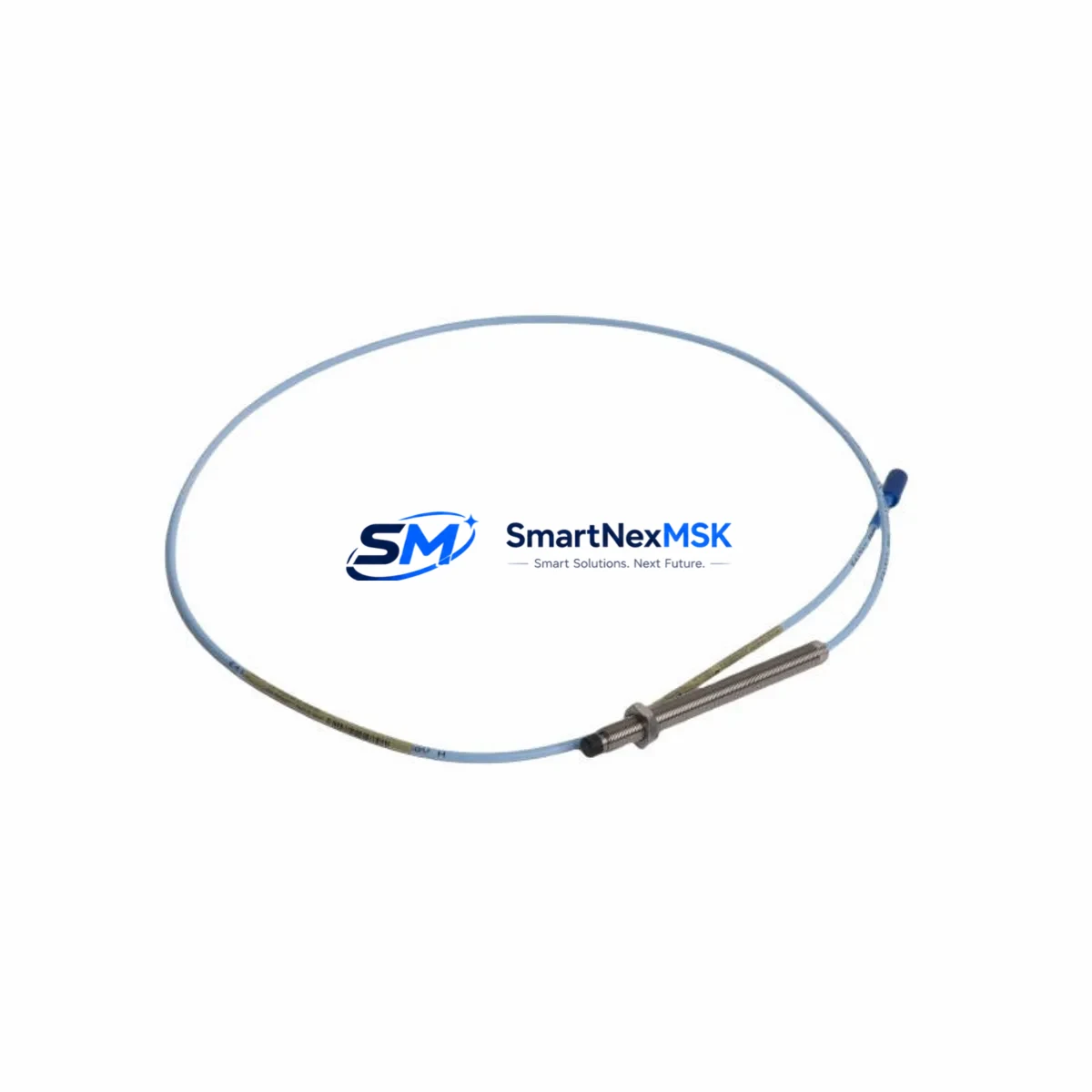
Bently Nevada 330103-08-16-10-02-00 Retrofit-Ready Proximity Transducer for 3300 XL Control Systems
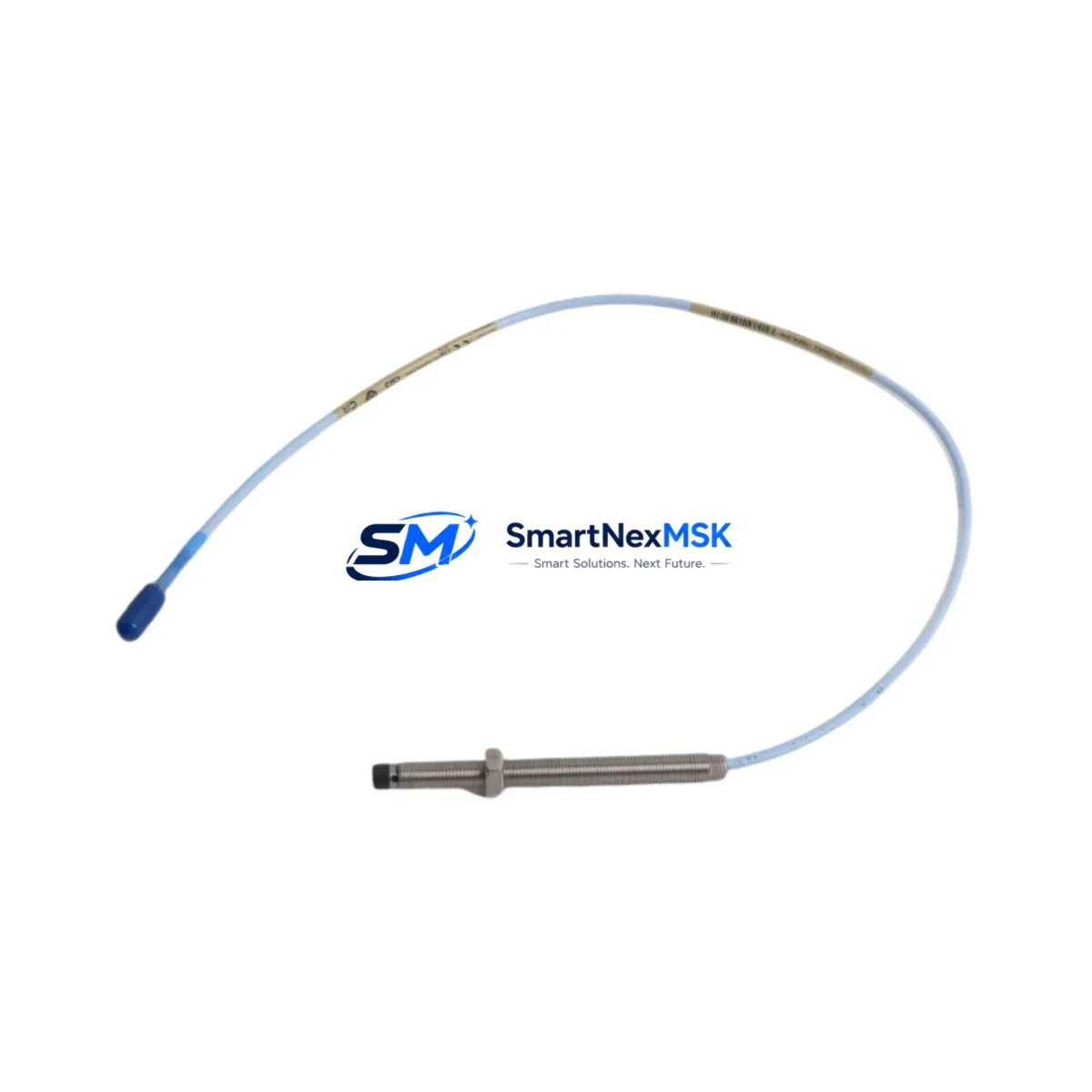
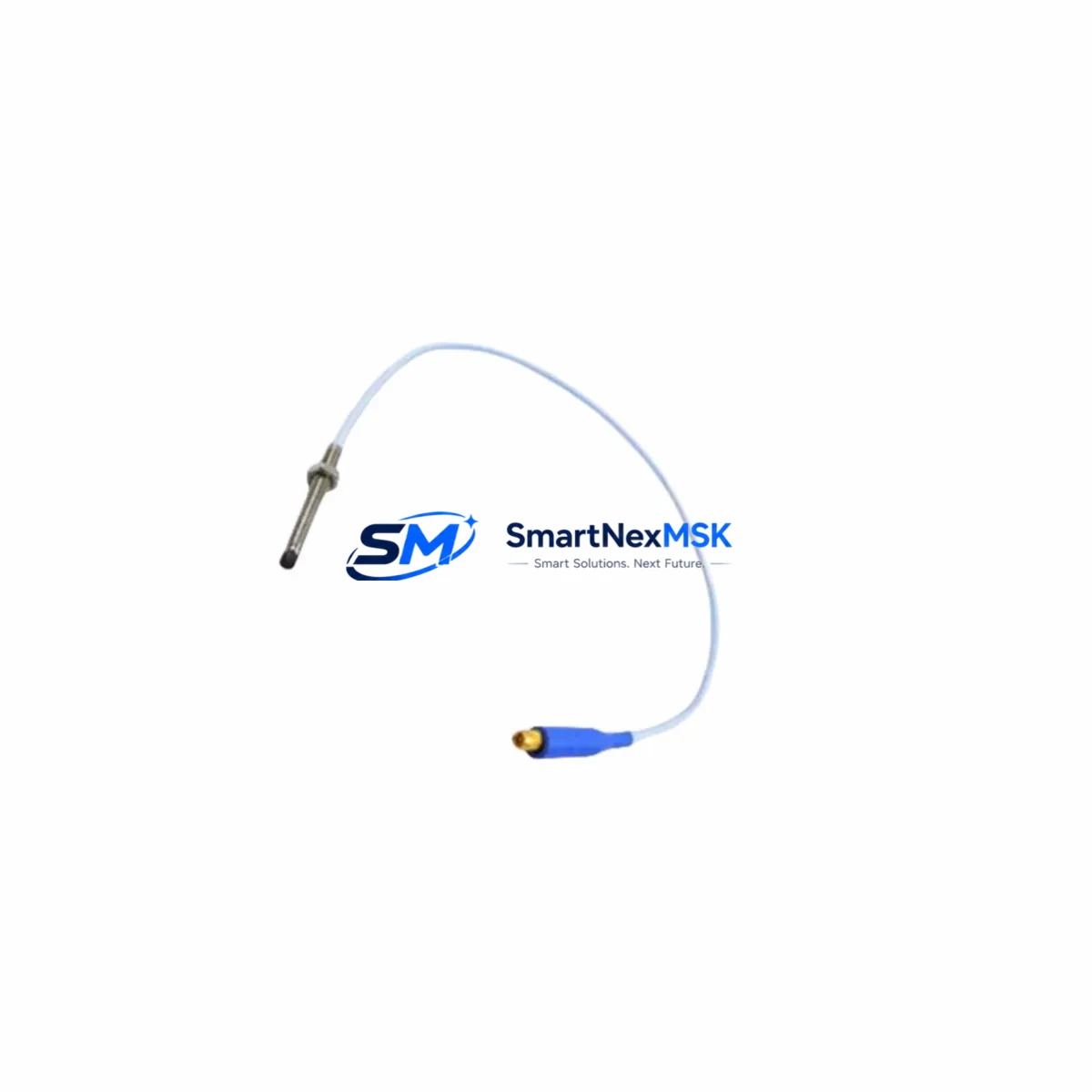
The Bently Nevada 330103-08-16-10-02-00 is an 8mm proximity transducer engineered for the 3300 XL Series vibration monitoring platform. As legacy 3300 XL installations approach end-of-service milestones, this transducer serves as a verified retrofit-ready replacement that enables smooth migration from discontinued configurations without requiring full rack replacement or reprogramming of existing monitor logic. Whether you are restoring a failed channel, upgrading aging field sensors, or consolidating spare parts inventory for a multi-train turbomachinery installation, the 330103-08-16-10-02-00 delivers the dimensional accuracy, cable length, and sensitivity specifications required for direct substitution.
Upgrade Compatibility Table
| Parameter | 330103-08-16-10-02-00 | Retrofit Notes |
|---|---|---|
| Probe Diameter | 8 mm | Matches standard 3300 XL probe bore; no re-machining required |
| Cable Length | 5 m (extension + integral) | Verify total system cable length against monitor input spec |
| Sensitivity | 7.87 V/mm (200 mV/mil) | Compatible with 3300 XL monitor input range; no gain adjustment needed |
| Frequency Range | DC – 10 kHz | Supports both radial vibration and axial position measurement |
| Connector Type | Standard BNC / coaxial | Mates directly with 3300 XL extension cable connectors |
| Installation | Threaded probe tip, locknut included | Confirm bracket thread pitch before installation |
| Communication Compatibility | Analog 4–20 mA / voltage output | No protocol conversion required for existing 3300 XL monitors |
| Replacement Recommendation | Direct drop-in for 330103 series | Cross-reference with 330180 extension cable for full system match |
| Commissioning Focus | Gap voltage, sensitivity verification | Set gap to –10.0 VDC ± 0.5 V per 3300 XL installation guide |
| Warranty | 12 Months | Covers manufacturing defects; includes pre-shipment functional test |
Retrofit Planning for Existing Automation Systems
Successful integration of the 330103-08-16-10-02-00 into an operating plant begins well before the transducer arrives on site. Engineers should first audit the existing 3300 XL monitor rack — typically housed in a dedicated vibration monitoring cabinet alongside a 3300/16 or 3300/20 monitor module — to confirm that the channel configuration, alert setpoints, and danger setpoints stored in the monitor firmware are documented and backed up. The 3500 Series rack system is a common migration target for sites planning a longer-term platform upgrade, and the 330103-08-16-10-02-00 can serve as an interim field sensor while the control room infrastructure is being modernized.
Before disconnecting the existing probe, technicians should record the installed gap voltage using a calibrated voltmeter at the monitor’s buffered output. This baseline reading, combined with the target material’s conductivity characteristics, determines whether the replacement transducer will require a gap adjustment at the probe tip. The 330180-02-05-10-02-00 extension cable is the standard companion component for this probe body, and its condition should be inspected simultaneously — cracked jackets or corroded BNC connectors are a frequent source of signal noise that is often misattributed to monitor card faults.
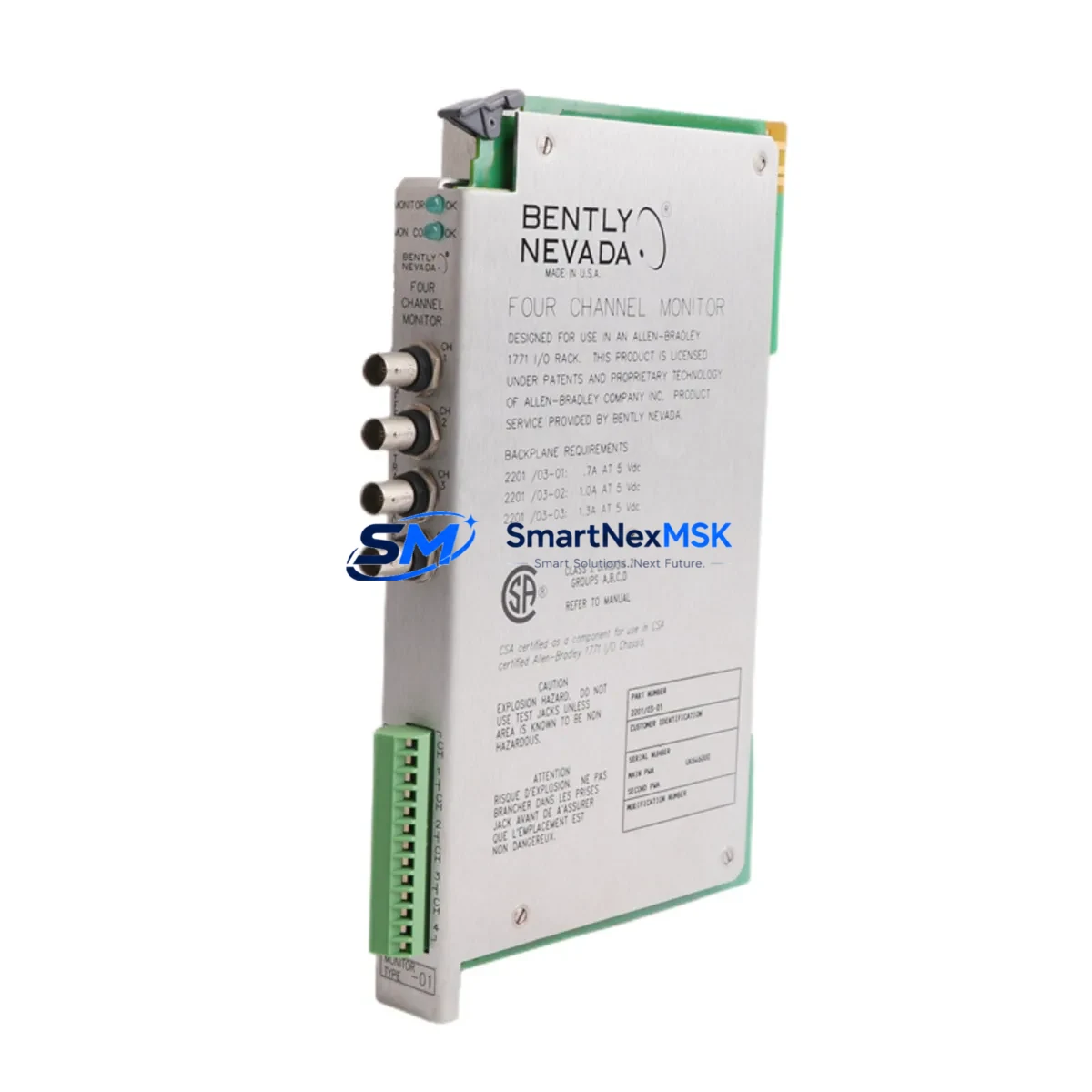
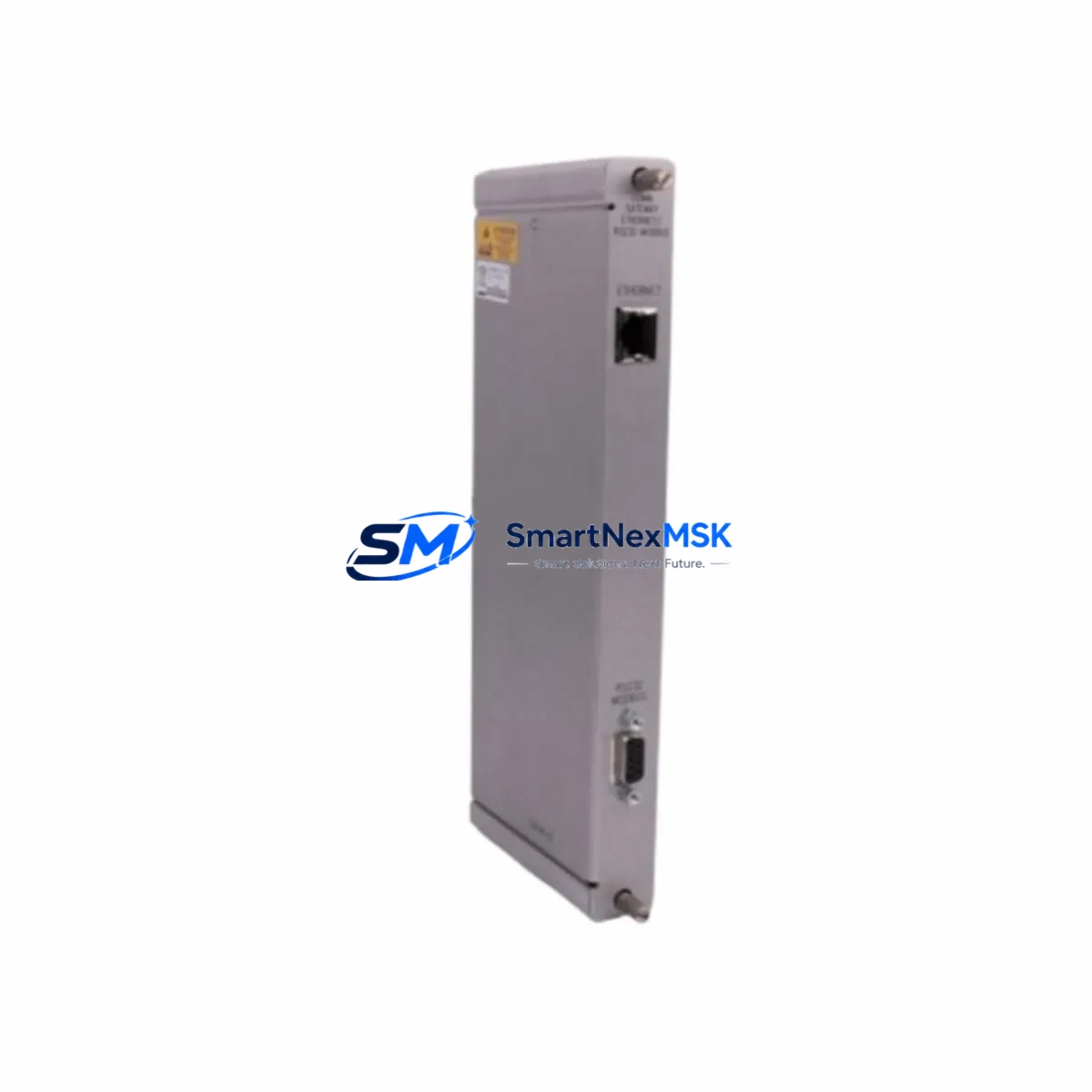
For installations where the 3300 XL monitor card itself is also being replaced, the 3300/16-02-01-00 or equivalent monitor module must be configured to match the transducer sensitivity before the system is returned to service. Sites running a Bently Nevada System 1 condition monitoring software platform should verify that the channel tag assignments and engineering unit scaling in the historian database are updated to reflect the new transducer serial number and calibration certificate. Where a TDXnet or Ethernet-based data acquisition interface is in use, the communication link between the monitor rack and the plant DCS — often a Modbus RTU or FOUNDATION Fieldbus segment — should be tested for continuity and correct register mapping after any hardware change.
I/O expansion scenarios are common in aging petrochemical and power generation facilities where the original 3300 XL rack was installed with spare slots that have since been populated. In these cases, adding a replacement 330103-08-16-10-02-00 to a previously unused channel requires not only physical installation but also activation of the channel within the monitor configuration software and verification that the rack power supply — typically a 3300/05 or equivalent dual-redundant power module — has sufficient headroom to support the additional channel load. A power budget review is a mandatory step before energizing any newly populated slot.
Downtime Control During System Migration
Minimizing unplanned downtime during a proximity transducer replacement requires a structured hot-swap protocol. Where the process permits, the replacement should be staged during a scheduled maintenance window with the machine at rest. The original probe should be removed only after the monitor channel has been placed in bypass mode to prevent a spurious trip signal from propagating to the safety system or DCS interlock logic. The bypass state must be logged in the plant’s management of change system and communicated to the control room operator before work begins.
Once the 330103-08-16-10-02-00 is installed and the gap voltage is confirmed within specification, the channel bypass should be lifted in a controlled sequence — first verifying that the buffered output signal is stable and within the expected quiescent range, then confirming that the monitor’s OK relay has energized, and finally checking that the System 1 historian is receiving a valid engineering unit value on the restored channel. If the installation involves a simultaneous firmware update to the 3300 XL monitor card, the updated configuration file should be validated against a known-good backup before being written to the module. This approach preserves the original alarm logic and prevents inadvertent setpoint changes that could compromise machinery protection during the commissioning period.
Retrofit Support FAQ
Q: Is the 330103-08-16-10-02-00 a direct replacement for all 330103 series variants?
A: The 330103-08-16-10-02-00 is dimensionally and electrically compatible with other 330103 series probes sharing the same 8 mm body diameter and 200 mV/mil sensitivity. However, cable length and connector configurations vary across the series. Always verify the full part number — including the cable length and termination suffix — against the installed component before ordering.
Q: What commissioning checks are required after installation?
A: The primary commissioning check is gap voltage verification at the monitor’s buffered output, targeting –10.0 VDC ± 0.5 V for a standard conductive target. Secondary checks include OK relay status confirmation, vibration channel noise floor measurement, and a functional test of the alert and danger setpoint response using a calibrated signal simulator if the process cannot be run up to operating speed during the maintenance window.
Q: Can this transducer be used with a 3500 Series monitor rack?
A: Yes. The 330103-08-16-10-02-00 is compatible with 3500 Series monitor inputs that accept standard 8 mm, 200 mV/mil proximity transducer systems. Confirm the specific 3500 monitor module’s input configuration and any required jumper or software settings before installation.
Q: What does the 12-month warranty cover?
A: The 12-month warranty covers manufacturing defects in materials and workmanship from the date of shipment. Each unit undergoes a pre-shipment functional test including sensitivity verification and insulation resistance check. Warranty claims require the original invoice and a description of the failure mode. Physical damage, improper installation, or use outside the specified environmental ratings are excluded.
© 2026 SMARTNEXMSK. All rights reserved.
Original Source: https://smartnexmsk.com
Contact: [email protected] | +86 18259474341