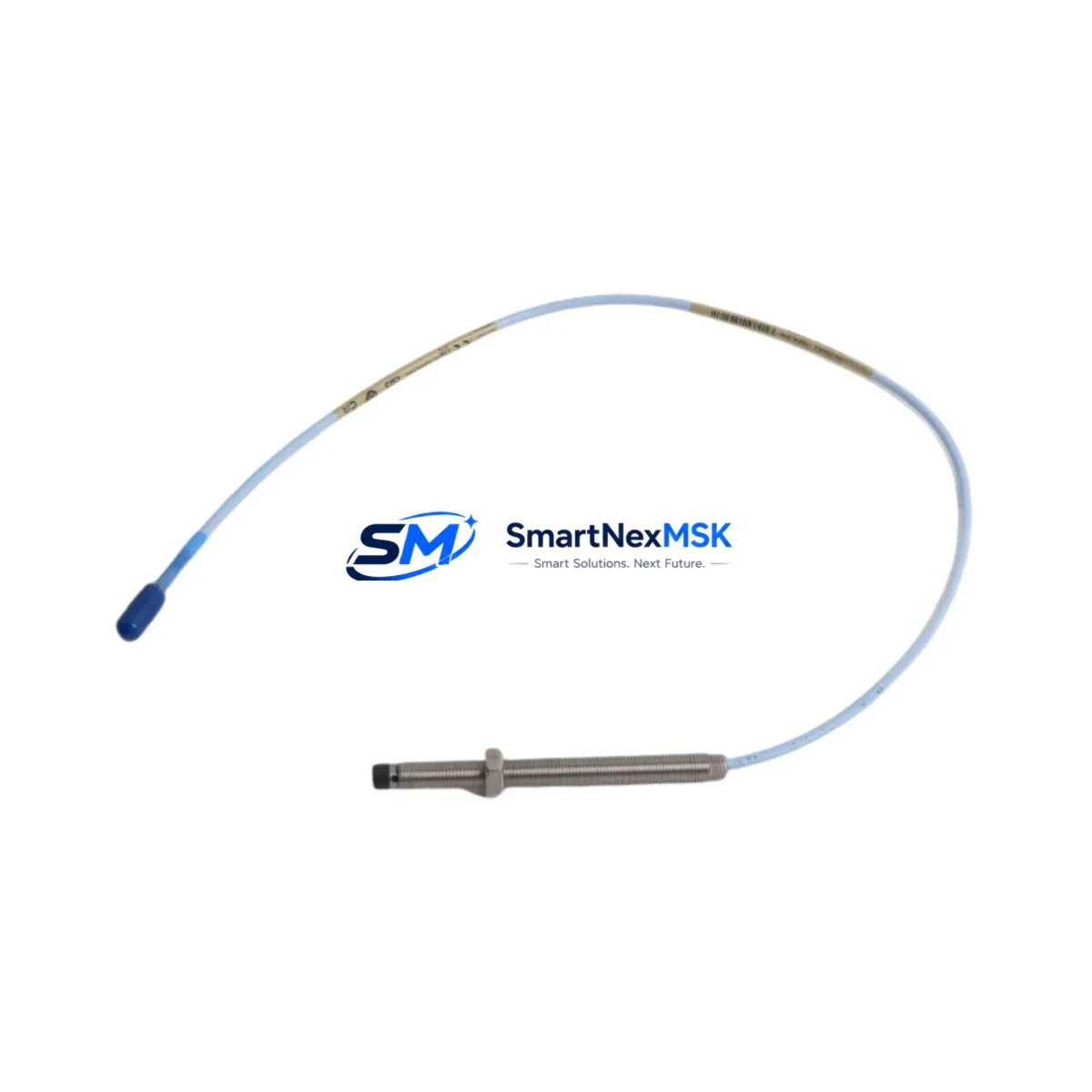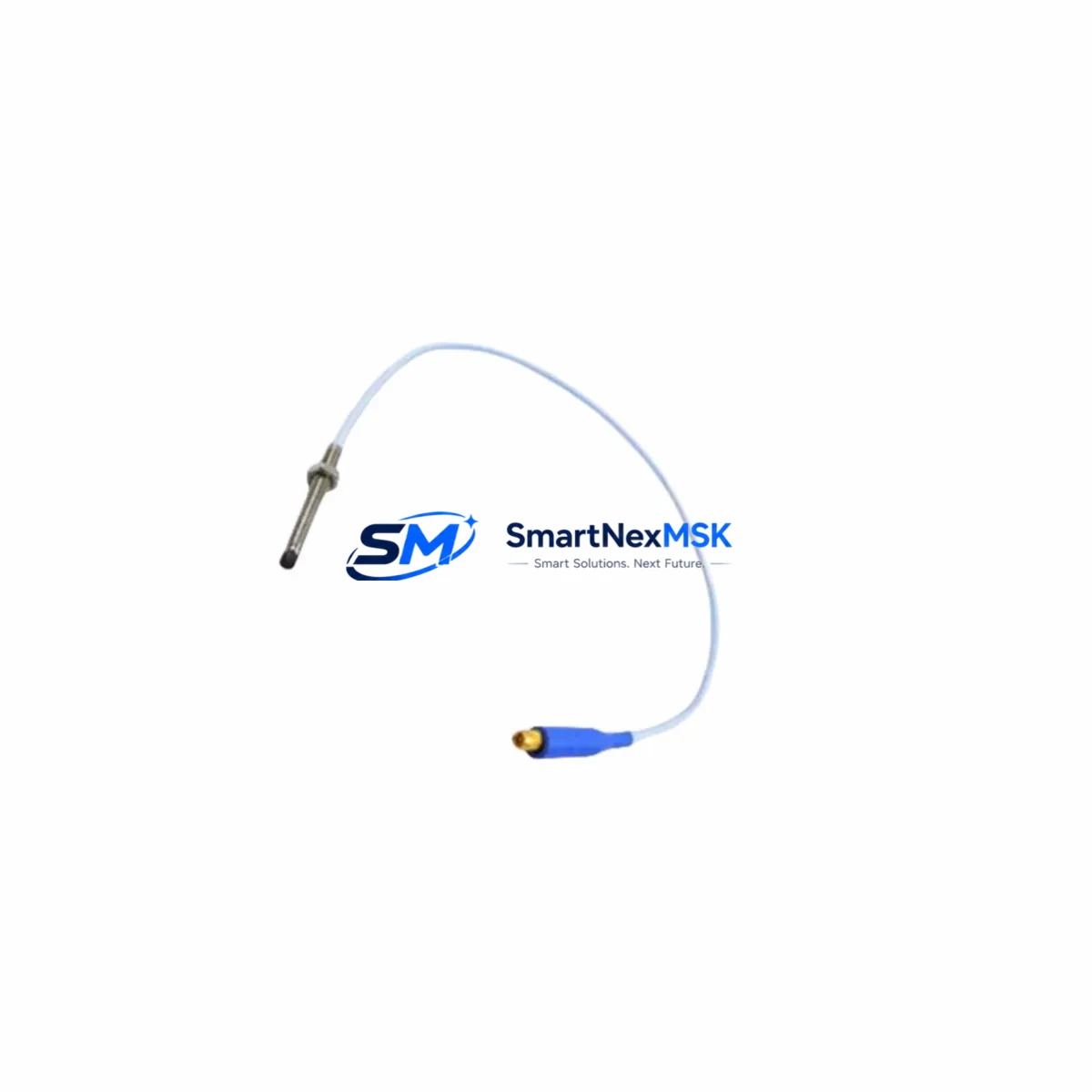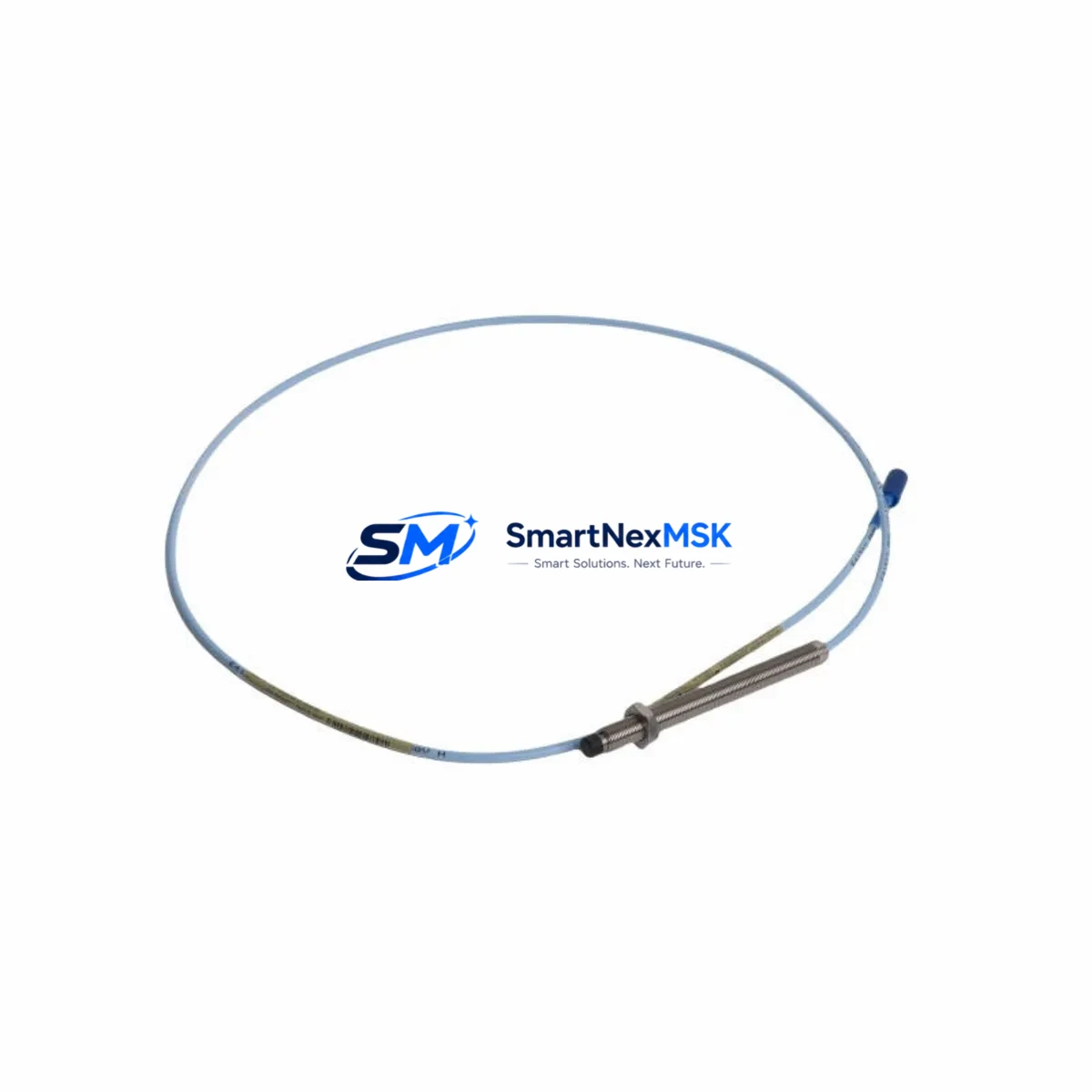
Bently Nevada 330104-00-13-50-02-CN Retrofit-Ready Proximity Transducer for 3300 XL Control Systems
The Bently Nevada 330104-00-13-50-02-CN is an eddy-current proximity transducer engineered for seamless integration into existing 3300 XL Series machinery protection systems. As legacy Bently Nevada 3300 Series components reach end-of-life or become increasingly difficult to source, the 330104-00-13-50-02-CN provides a verified, drop-in compatible upgrade path that preserves original wiring topology, signal conditioning parameters, and rack-level addressing — minimising engineering rework and unplanned downtime during system modernisation projects.
This transducer operates within the standard Bently Nevada -24 VDC bias voltage range and delivers a sensitivity of 200 mV/mil (7.87 V/mm), fully compatible with the 3300 XL proximitor/seismic monitor cards installed in existing 3300 XL racks. Engineers replacing worn or discontinued 330104-series probes can retain the original Bently Nevada 3300 XL 8-mm extension cables and proximitor housings without modification, significantly reducing field labour time and the risk of introducing wiring errors during a live plant turnaround.
Upgrade Compatibility Table
| Parameter | 330104-00-13-50-02-CN | Legacy 3300 Series Reference |
|---|---|---|
| Probe Tip Diameter | 8 mm | 8 mm (direct fit) |
| Cable Length | 5.0 m (standard) | Compatible with existing 3300 XL extension cables |
| Bias Voltage | -24 VDC nominal | -24 VDC (no re-calibration required) |
| Sensitivity | 200 mV/mil / 7.87 V/mm | Matches 3300 XL monitor card input range |
| Connector Type | Standard BNC / integral armoured | Compatible with existing junction box terminations |
| Rack / Backplane Interface | 3300 XL rack-compatible | No backplane modification required |
| Communication / Signal | Analogue voltage output | Direct replacement – no protocol conversion needed |
| Installation Requirement | Standard 3300 XL mounting bracket | Existing bracket retained |
| Replacement Recommendation | Direct drop-in for 330104 series | Verify gap voltage after installation |
| Commissioning Focus | Gap voltage, OK relay, alert/danger setpoints | Confirm via 3300 XL monitor display or Rack Config software |
| Warranty | 12-Month Warranty – covers manufacturing defects and signal performance | |
Retrofit Planning for Existing Automation Systems
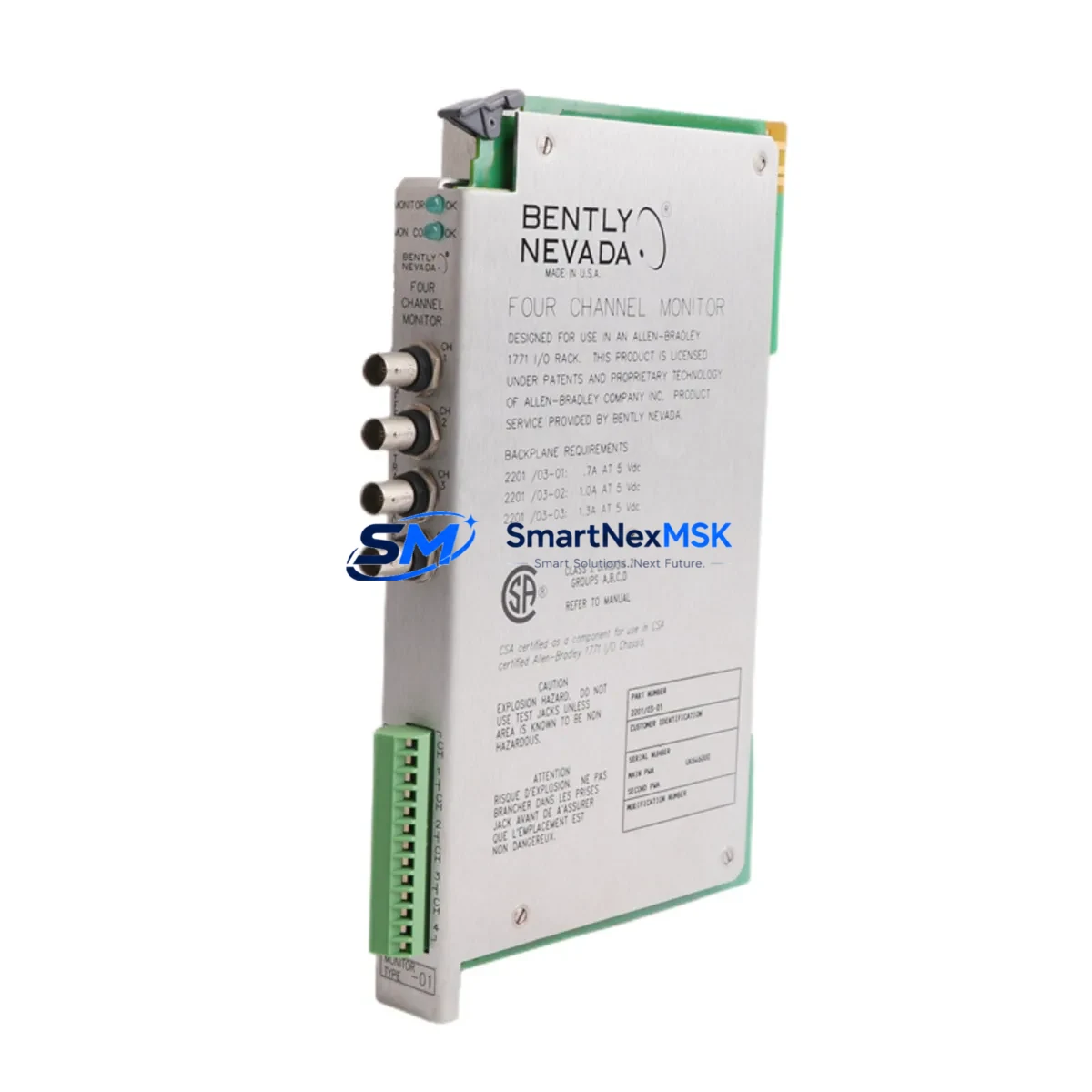
Successful integration of the 330104-00-13-50-02-CN into a running plant requires a structured pre-outage assessment. Before scheduling the replacement window, maintenance engineers should document the current gap voltage reading displayed on the associated Bently Nevada 3300 XL Proximitor Monitor – typically a 3300/16 or 3300/20 monitor card – and record the alert and danger setpoint values stored in the rack configuration. This baseline ensures that post-installation verification can be completed against known-good reference values rather than relying on memory or outdated P&IDs.
The physical retrofit begins at the junction box. Technicians should photograph existing terminal wiring before disconnection, paying particular attention to the shield drain wire routing on the Bently Nevada 330130 armoured extension cable. Incorrect shield grounding is one of the most common sources of noise after a transducer swap and can produce spurious vibration readings that trigger nuisance trips on the 3300 XL monitor. Once the new 330104-00-13-50-02-CN probe is installed and the extension cable reconnected, the gap voltage should be adjusted to the manufacturer-specified nominal value – typically -10.0 VDC to -11.0 VDC for an 8-mm probe at the calibrated gap – before the monitor card is returned to run mode.
For plants running a broader Bently Nevada 3500 Series rack alongside legacy 3300 XL hardware, engineers should confirm that the 3500/42M Proximitor I/O Module or 3500/40M Proximitor/Seismic Monitor is not sharing a common power bus with the 3300 XL rack without adequate isolation. Cross-rack power contamination is a known issue in mixed-generation control cabinets and can affect the OK relay status of newly installed transducers. Similarly, if the plant uses a Bently Nevada TDXnet or System 1 condition monitoring platform, the channel mapping for the replaced transducer must be updated in the software database to reflect the new probe serial number and calibration coefficients before the historian resumes data logging.
Plants that are simultaneously upgrading their PLC infrastructure – for example, migrating from a legacy Allen-Bradley SLC 500 or PLC-5 controller to a ControlLogix or CompactLogix platform – should treat the transducer replacement as part of a broader I/O rationalisation exercise. In these scenarios, the 4-20 mA retransmission output from the 3300 XL monitor card may need to be re-terminated on a new 1756-IF16 analogue input module or equivalent, and the corresponding tag addresses updated in the Studio 5000 project file. Coordinating the transducer swap with the PLC migration avoids a second outage window and reduces the total engineering cost of the modernisation project.
Additional components commonly encountered during a 3300 XL retrofit include the Bently Nevada 330180 power supply module, which should be load-tested before the new transducer is commissioned to confirm it can sustain the full rack current draw, and the 3300 XL Rack Interface Module (RIM), which governs communication between the monitor rack and the plant DCS or safety system. If the plant DCS uses a Modbus RTU or FOUNDATION Fieldbus interface card, the RIM configuration file must be reviewed to ensure the new channel is correctly mapped before the system is returned to automatic control.
Downtime Control During System Migration
Minimising production impact during a proximity transducer replacement requires a pre-staged parts kit, a clear work scope, and a tested rollback plan. Before the outage window opens, the replacement 330104-00-13-50-02-CN should be bench-tested using a Bently Nevada 330185 calibration standard or equivalent gap simulator to confirm the output voltage curve matches the published sensitivity specification. A transducer that fails bench verification before installation avoids the costly scenario of discovering a defective part after the machine has been taken offline.
During the outage, the sequence should follow a lock-out/tag-out procedure on the 3300 XL rack power supply, physical probe removal and replacement, extension cable reconnection, power restoration, gap voltage verification, and finally a functional test of the OK relay and alert/danger outputs before the machine is restarted. This sequence, when rehearsed in advance, can typically be completed within a two-hour maintenance window for a single-channel replacement, preserving the majority of the planned production schedule.
Where the plant control philosophy permits, placing the affected 3300 XL monitor channel into bypass mode before the outage – rather than allowing the channel to go to a fault state – prevents the safety system from initiating an unplanned shutdown on adjacent machinery sharing the same trip logic. The bypass status should be formally authorised under the plant’s management of change procedure and removed immediately after the new transducer has been verified in service. Original program logic, setpoint values, and historian tag configurations are preserved throughout this process, as the 330104-00-13-50-02-CN is a direct signal-compatible replacement that requires no firmware changes to the monitor card or DCS interface.
Retrofit Support FAQ
Q1: Is the 330104-00-13-50-02-CN a direct replacement for other 330104 series variants?
Yes. The 330104-00-13-50-02-CN is dimensionally and electrically compatible with other 330104 series proximity probes used in Bently Nevada 3300 XL systems. Minor suffix differences typically denote cable length or connector configuration; engineers should verify the cable length and connector type against the existing installation before ordering. Signal sensitivity and bias voltage specifications are identical across the standard 330104 series, so no monitor card reconfiguration is required.
Q2: What commissioning checks are required after installation?
After physical installation, verify the gap voltage at the proximitor output terminal – target range is typically -10.0 VDC to -11.0 VDC for an 8-mm probe at the calibrated air gap. Confirm the OK relay is energised, check that alert and danger setpoints are active on the 3300 XL monitor card display, and perform a slow-roll vibration check if the machine can be jogged before returning to full speed. Document all readings in the maintenance management system before closing the work order.
Q3: Can this transducer be used with Bently Nevada 3500 Series monitors?
The 330104-00-13-50-02-CN is optimised for 3300 XL Series monitor cards. While the electrical output is broadly compatible with 3500 Series proximitor inputs, Bently Nevada recommends using 3500-series qualified probes (such as the 330730 or 330900 series) for 3500 rack installations to ensure full system certification compliance. For mixed-rack plants, consult the Bently Nevada System Compatibility Guide before cross-applying transducers between rack generations.
Q4: What does the 12-month warranty cover?
The 12-month warranty covers manufacturing defects, signal output deviations outside published specification, and connector integrity failures under normal operating conditions. Each unit shipped by SMARTNEXMSK undergoes pre-shipment functional testing including bias voltage verification and sensitivity curve confirmation. Warranty claims require the original purchase order reference and a brief description of the observed fault; replacement units are dispatched within 5 business days of claim approval.
Copyright 2026 SMARTNEXMSK. All rights reserved.
Original Source: https://smartnexmsk.com
Contact: [email protected] | +86 18259474341