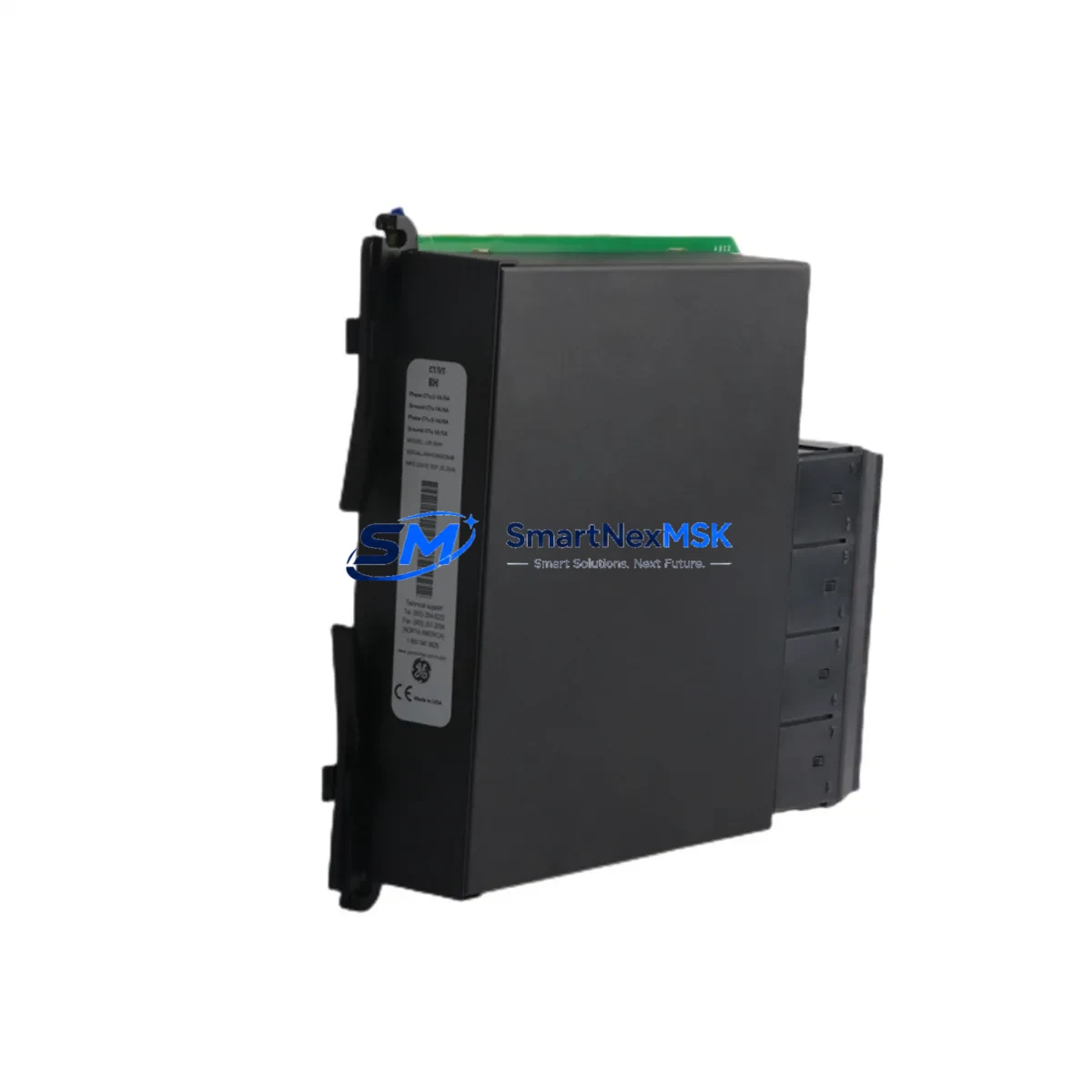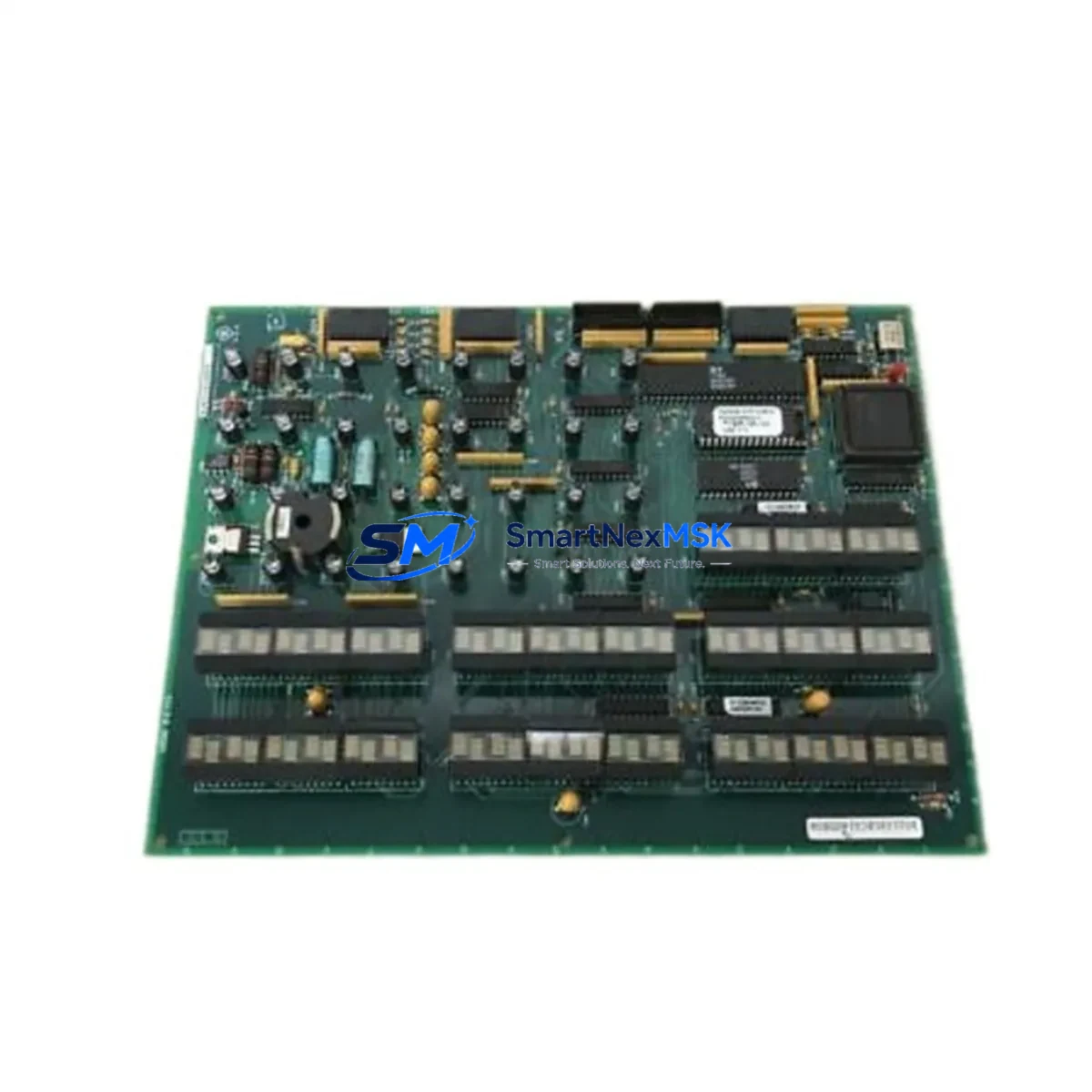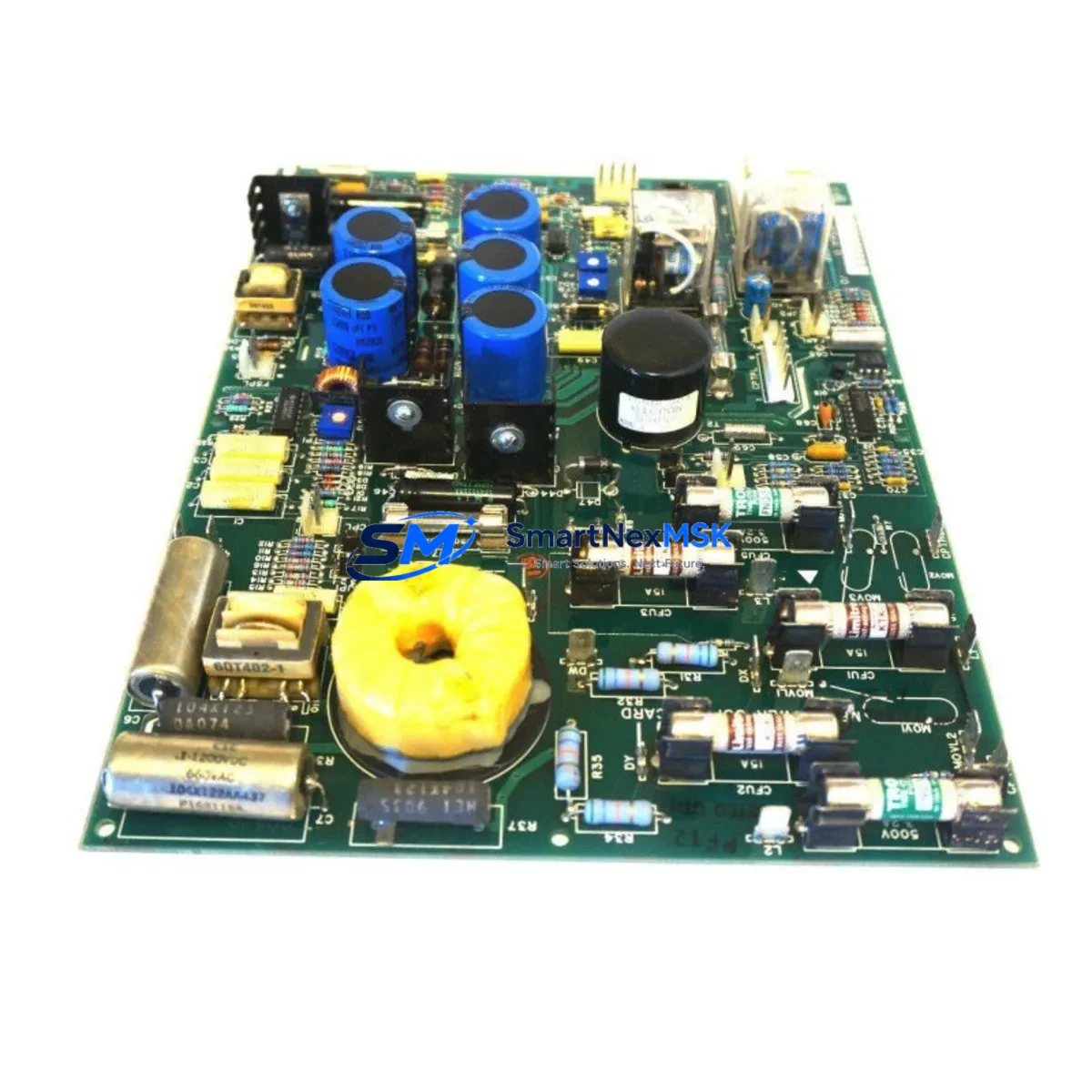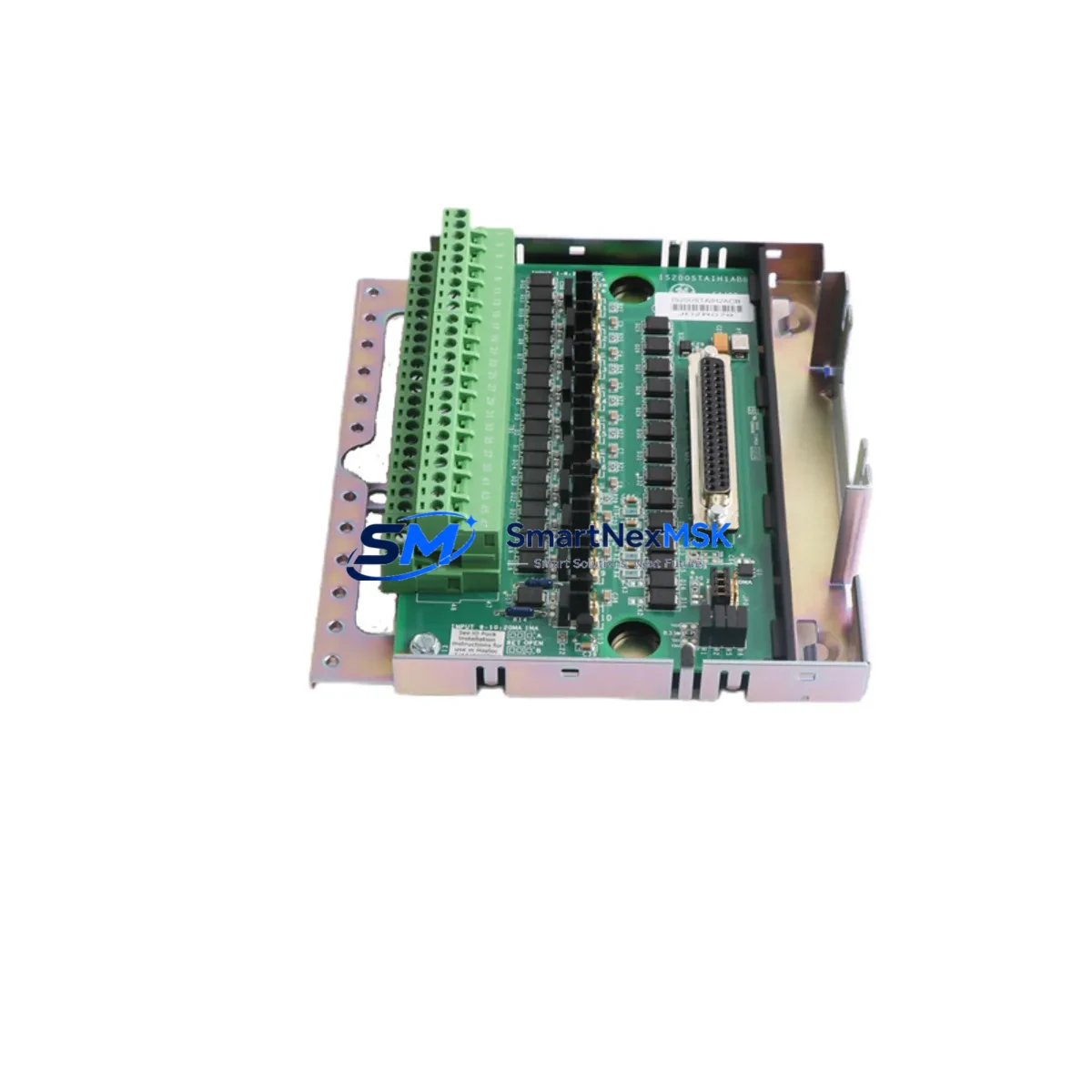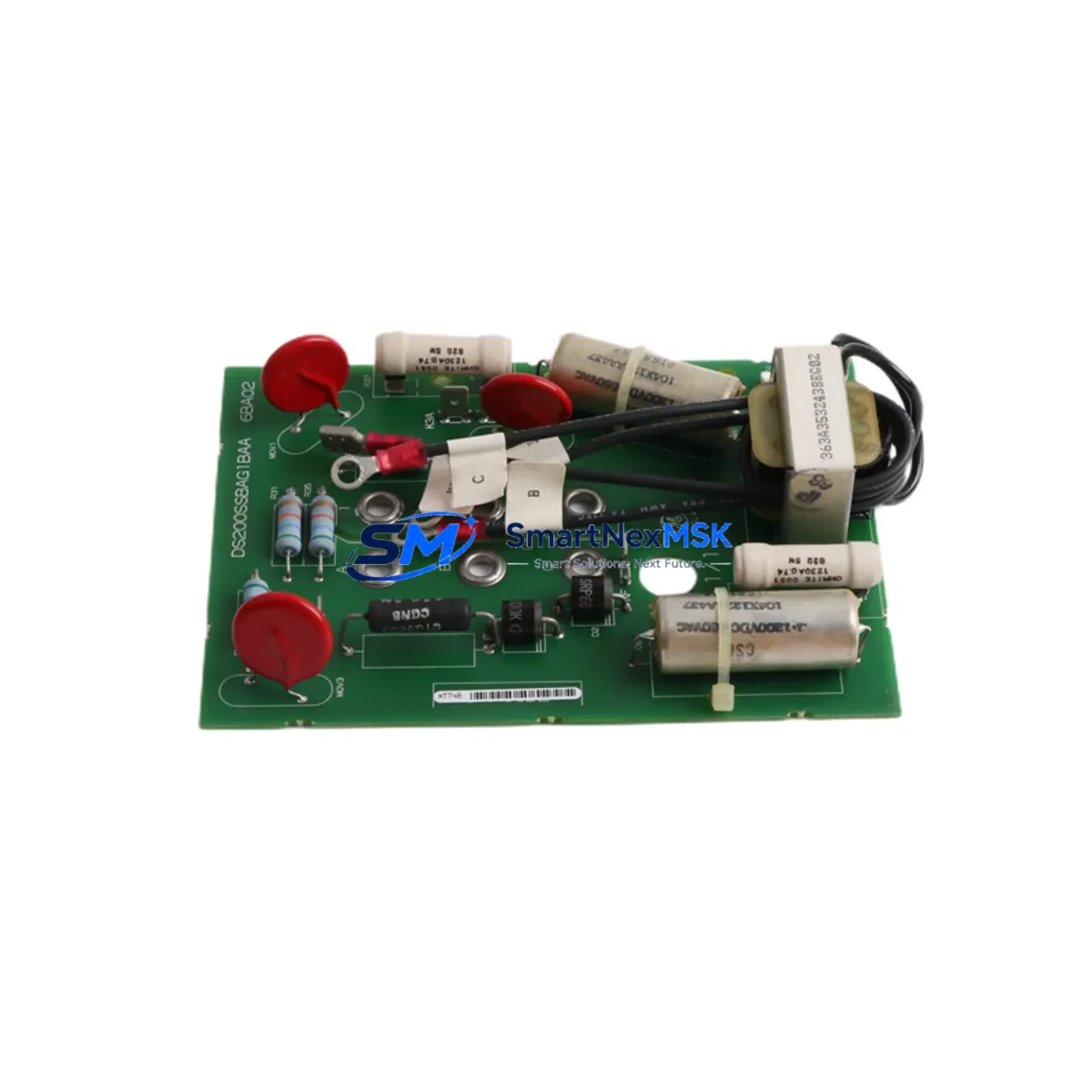
GE DS200SSBAG1BAA Retrofit-Ready Turbine Control Board for Mark V Speedtronic Control Systems
The GE DS200SSBAG1BAA is a Speedtronic Signal Conditioning Board designed for use within the GE Mark V turbine control platform — one of the most widely deployed gas and steam turbine control architectures in power generation, oil & gas, and industrial process facilities worldwide. As GE has progressively discontinued support for the Mark V series in favor of the Mark VIe platform, operators of legacy turbine trains face increasing pressure to source verified replacement boards that maintain full backward compatibility with existing backplane configurations, I/O wiring, and control logic.
This DS200SSBAG1BAA board serves as a direct retrofit replacement for failed or degraded signal conditioning modules within the Mark V <R>, <S>, and <T> controller racks. It interfaces with the TCCA, TCCB, and TCCC processor boards via the standard Mark V VME-style backplane, and is fully compatible with the existing terminal board wiring harnesses — including the TBQC, TBCI, and TBSB terminal assemblies — without requiring rewiring or connector modification. Engineers planning a retrofit should verify the board revision suffix (G1BAA) matches the installed firmware baseline on the TCCA processor to ensure signal scaling and interrupt handling remain consistent with the original control configuration.
Upgrade Compatibility Table
| Parameter | Details |
|---|---|
| SKU / Part Number | DS200SSBAG1BAA |
| Platform Compatibility | GE Mark V Speedtronic (R, S, T Controllers) |
| Backplane Interface | VME-style Mark V backplane — direct plug-in replacement |
| Terminal Board Compatibility | TBQC, TBCI, TBSB — no rewiring required |
| Processor Board Pairing | TCCA, TCCB, TCCC — verify firmware revision match |
| Communication Compatibility | Mark V ARCNET / IONet — no protocol migration required |
| Installation Requirement | Power-down rack before insertion; re-address module if slot changed |
| Replacement Recommendation | Direct drop-in; confirm G1BAA suffix matches installed baseline |
| Commissioning Focus | Signal scaling verification, I/O loop check, HMI alarm validation |
| Warranty | 12-Month Warranty — covered against manufacturing defects |
Retrofit Planning for Existing Automation Systems
A successful DS200SSBAG1BAA retrofit begins well before the board arrives on site. Maintenance engineers should first audit the power supply capacity of the Mark V cabinet — the PPRO or PTUR power supply modules must be confirmed capable of sustaining the full rack load after the new board is inserted, particularly in multi-controller configurations where the <R>, <S>, and <T> racks share a common DC bus. Insufficient power headroom is a common cause of intermittent faults after board replacement and is frequently misdiagnosed as a board defect.
Next, the terminal wiring connected to the TBQC or TBCI terminal boards should be documented and photographed before any disconnection. The DS200SSBAG1BAA receives analog and discrete signals from field instruments — including thermocouples, RTDs, and 4–20 mA transmitters — routed through these terminal assemblies. Any wiring transposition during reinstallation will produce incorrect signal readings that may not immediately trigger alarms but will corrupt turbine protection logic over time.
The backplane slot address must also be confirmed. In Mark V systems, the SSBA board occupies a defined slot within the VME rack, and the TCCA processor references it by physical address. If the replacement board is installed in a different slot — even temporarily during troubleshooting — the processor will fail to recognize it, and the HMI operator station running Cimplicity or the legacy Mark V HMI software will display a board fault alarm. Slot address configuration is not software-programmable on this board generation; it is determined by physical jumper or backplane position.
For sites also managing a parallel upgrade of the DSPX or DSPM processor boards, or integrating a new DS200IIBDG1B I/O interface board to extend analog input capacity, the DS200SSBAG1BAA retrofit should be sequenced as a standalone task to isolate any signal conditioning issues before introducing additional variables. Similarly, if the site is migrating communication links from the legacy Mark V ARCNET network to a modern Ethernet-based IONet topology — often as part of a broader Mark V to Mark VIe migration — the signal conditioning layer should be validated on the existing protocol before the network cutover is executed.
Sites operating GE LM2500, Frame 6B, Frame 7EA, or Frame 9E gas turbines with Mark V control systems will find the DS200SSBAG1BAA particularly relevant as a stocking spare, given the extended operational life of these turbine frames and the increasing scarcity of OEM-sourced replacement boards. All units are pre-tested prior to shipment and supplied with full test documentation.
Downtime Control During System Migration
Minimizing unplanned downtime during a DS200SSBAG1BAA replacement requires a structured pre-outage preparation protocol. Before the maintenance window opens, engineers should export and archive the complete Mark V application program from the TCCA processor using the GE Toolbox software. This backup preserves all control constants, setpoints, sequence logic, and I/O assignments, and serves as the recovery baseline if the replacement board triggers unexpected behavior during commissioning.
The physical replacement itself — powering down the rack, extracting the failed board, inserting the DS200SSBAG1BAA, and restoring power — typically takes under 30 minutes for a trained technician familiar with the Mark V rack architecture. The majority of the maintenance window is consumed by post-installation verification: confirming that all analog input channels are reading correctly against known field values, validating that discrete I/O states match the physical field device status, and checking that the TCCA processor has re-established communication with the board without generating persistent fault codes.
HMI validation is the final step before returning the turbine to service. Operators should confirm that all signal tags associated with the DS200SSBAG1BAA — including exhaust temperature spreads, vibration inputs, and flame detector signals where applicable — are displaying correctly on the Cimplicity or equivalent operator interface. Any residual alarm that cannot be cleared after board replacement should be investigated against the original program backup before the unit is restarted, as unresolved alarms may indicate a wiring issue or a firmware mismatch between the replacement board and the installed TCCA revision.
For critical baseload units where even a brief outage carries significant generation or process cost, maintaining a pre-tested DS200SSBAG1BAA as a shelf spare — alongside companion boards such as the DS200TCQAG1B or DS200EXPSG1ADA expansion board — is the most effective strategy for keeping mean time to repair within acceptable limits.
Retrofit Support FAQ
Q: Is the DS200SSBAG1BAA a direct drop-in replacement for all Mark V SSBA variants?
A: The G1BAA suffix designates a specific board revision. It is directly compatible with Mark V systems running the corresponding firmware baseline on the TCCA processor. If your installed system uses an earlier SSBA revision (e.g., G1A or G1AAA), compatibility should be verified against the Mark V system documentation or confirmed with your control system engineer before installation.
Q: Does installation require reprogramming the Mark V controller?
A: No. The DS200SSBAG1BAA is a hardware replacement that does not alter the application program stored in the TCCA processor. Provided the board is installed in the correct backplane slot and the revision suffix matches the installed baseline, the controller will recognize the board automatically upon power restoration without requiring any software changes.
Q: What pre-shipment testing is performed on each unit?
A: Every DS200SSBAG1BAA is functionally tested prior to shipment using a Mark V-compatible test rack. Testing covers analog input channel accuracy, discrete I/O response, backplane communication handshake, and power rail integrity. A test report is included with each shipment. All units are covered by a 12-month warranty against manufacturing defects from the date of delivery.
Q: Can this board be used in a Mark VIe system?
A: No. The DS200SSBAG1BAA is designed exclusively for the GE Mark V Speedtronic platform. The Mark VIe uses a fundamentally different I/O and communication architecture based on the VCMI and VTUR I/O packs, which are not backplane-compatible with Mark V DS200-series boards. If you are migrating from Mark V to Mark VIe, the signal conditioning function performed by this board will be handled by the appropriate Mark VIe I/O module in the new architecture.
© 2026 SMARTNEXMSK. All rights reserved.
Original Source: https://smartnexmsk.com
Contact: [email protected] | +86 18259474341