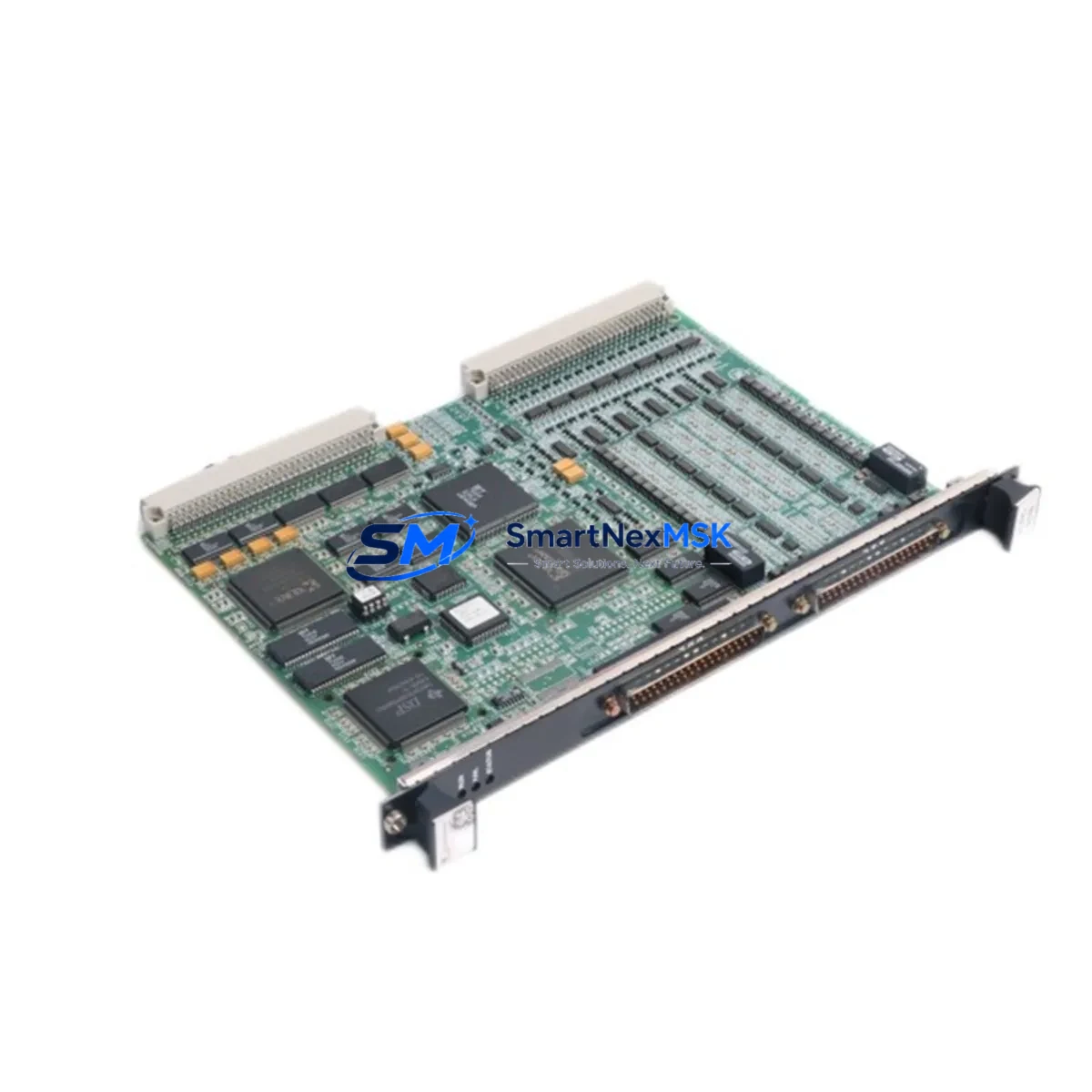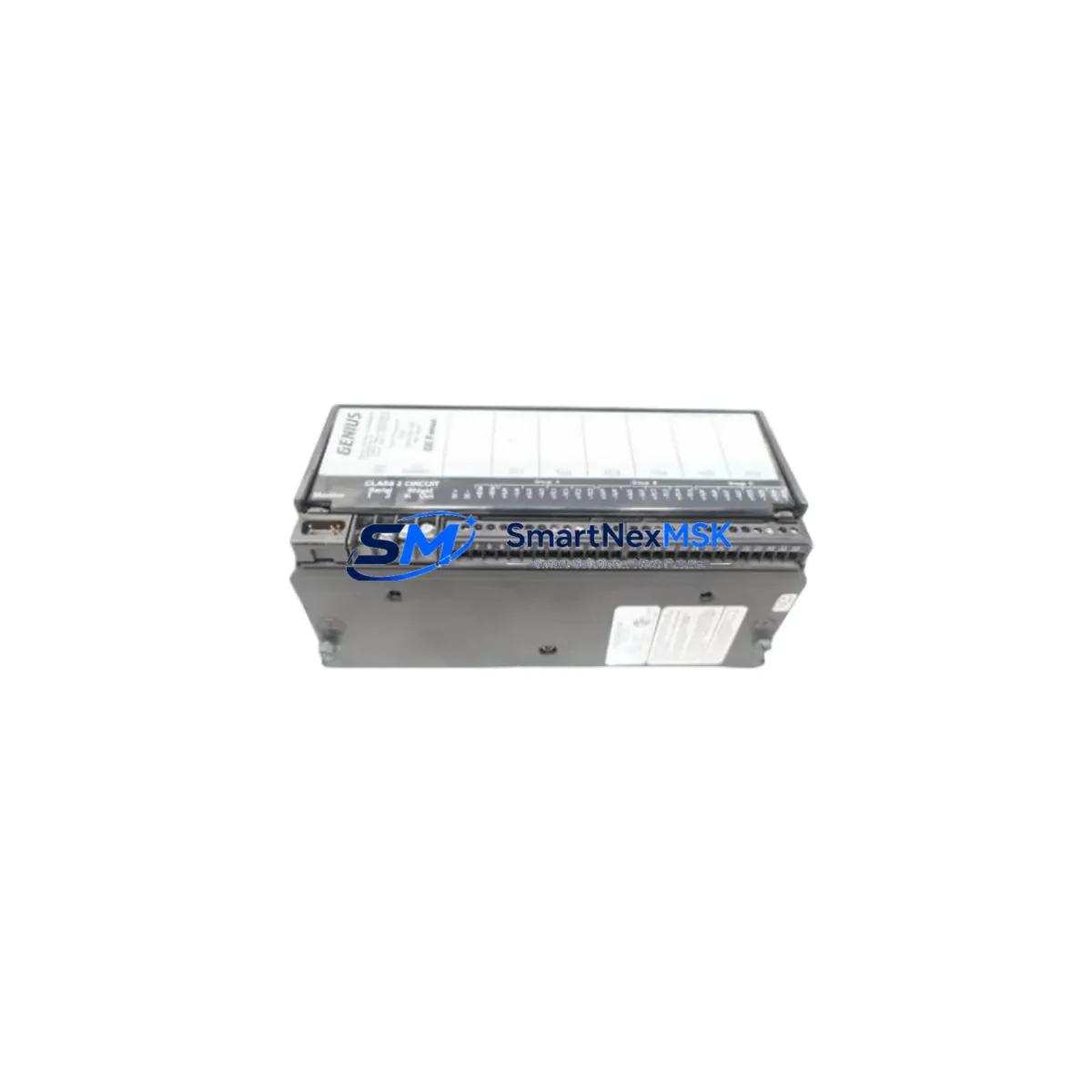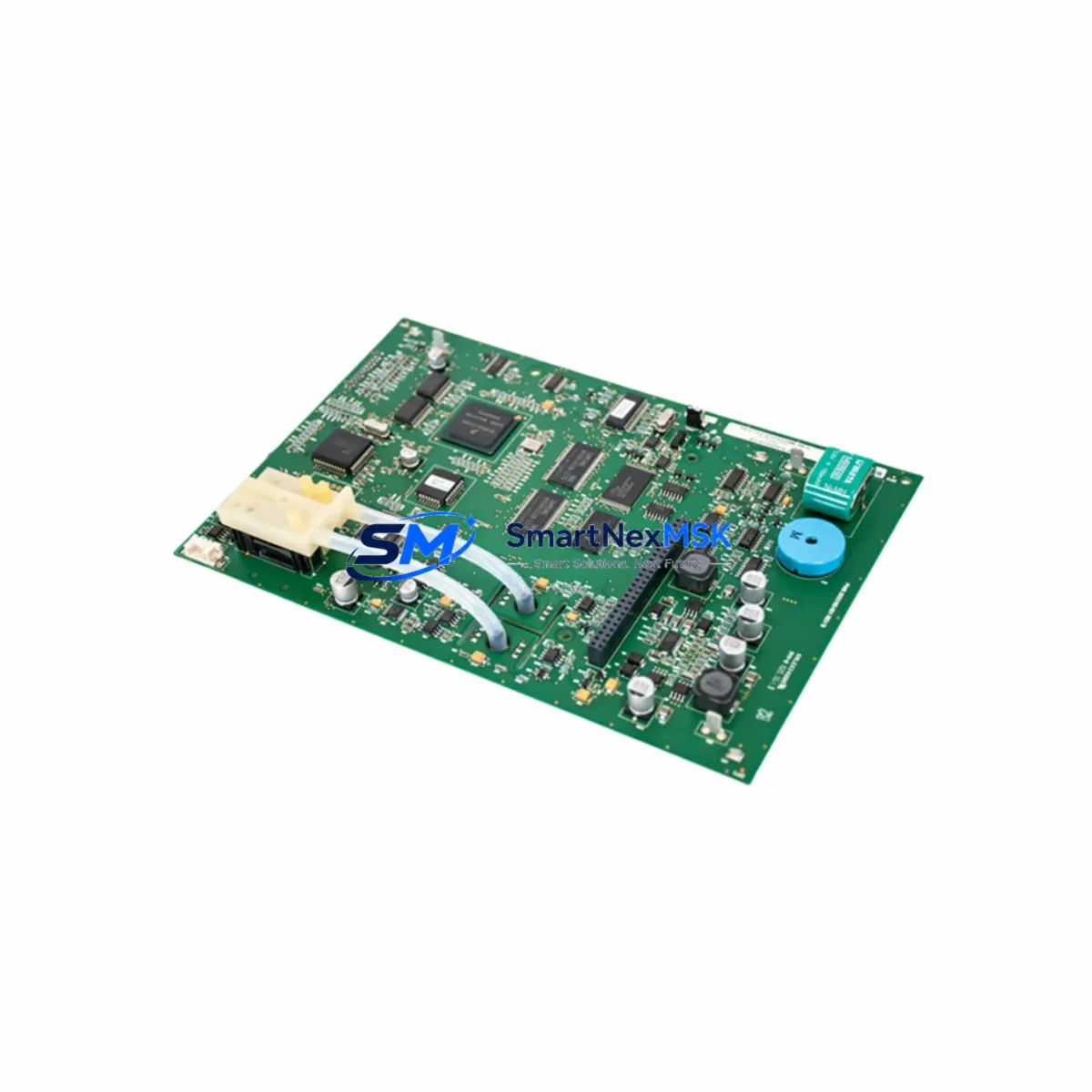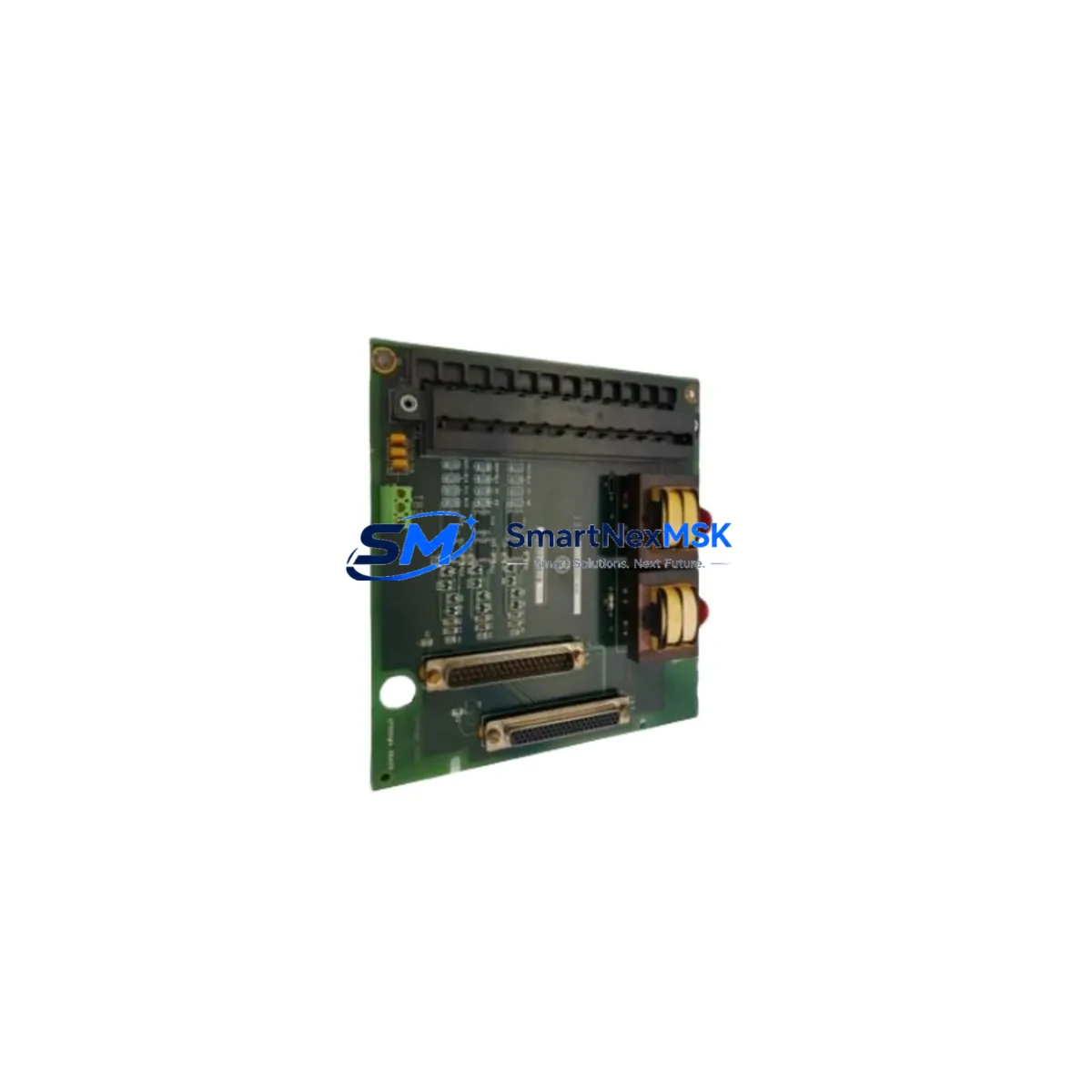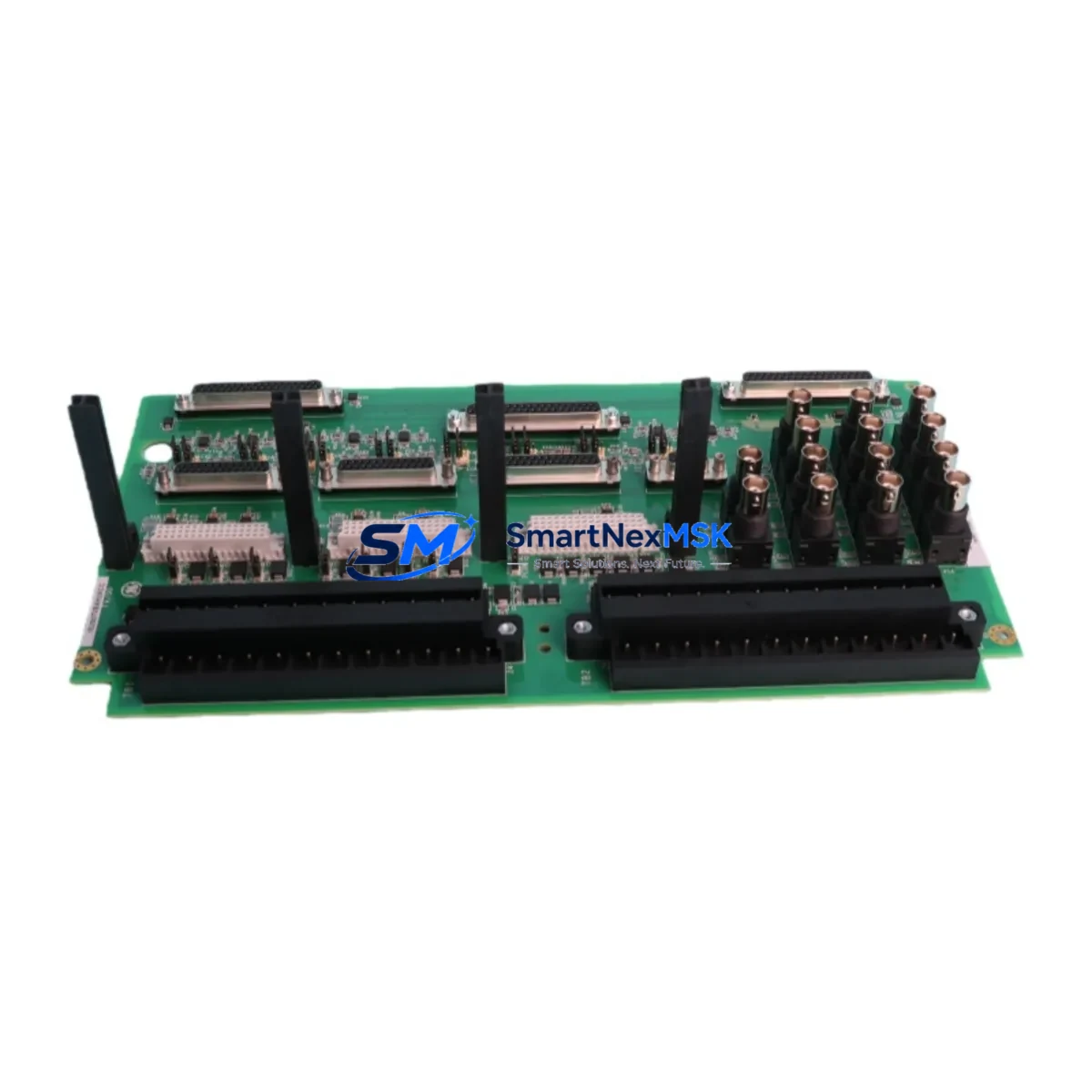
GE IS200TVBAH1ACC Retrofit-Ready Vibration Terminal Board for Mark VI Control Systems
The GE IS200TVBAH1ACC is a vibration terminal board engineered for the GE Mark VI turbine control platform, widely deployed in gas turbine, steam turbine, and combined-cycle power generation facilities. As legacy Mark VI systems approach end-of-support milestones, plant engineers and control system integrators increasingly rely on verified replacement units like the IS200TVBAH1ACC to sustain operational continuity without committing to a full Mark VIe migration. SMARTNEXMSK maintains in-stock inventory of this board, fully tested and backed by a 12-month warranty, to support both emergency breakdown recovery and planned retrofit programs.
The IS200TVBAH1ACC interfaces directly with the Mark VI I/O terminal board rack, accepting vibration and dynamic pressure signals from proximity probes, accelerometers, and Bently Nevada-compatible transducers. Before installation, engineers must verify the terminal board’s slot assignment within the VCMI or VCRC rack, confirm that the existing IS200VSVOH1B or IS200VSVOH1A speed and vibration signal conditioner modules remain compatible, and validate that the IONET or ENET communication link to the Mark VI controller is intact. Wiring terminations on the IS200TVBAH1ACC follow the same 37-pin D-sub and barrier strip layout as predecessor boards, reducing rewiring time during a like-for-like swap.
In retrofit scenarios where the plant is transitioning from an older Mark V TTVIB vibration terminal board to the Mark VI IS200TVBAH1ACC, the primary engineering tasks involve remapping I/O signal assignments in the ToolboxST configuration software, verifying that the IS200VCMI or IS200VCRC rack backplane can accommodate the updated board revision, and confirming that the IS215VCMIH2A or IS215VCMIH2B VME communication module firmware supports the replacement unit. Signal scaling for vibration amplitude, phase reference, and gap voltage must be re-entered in ToolboxST and cross-checked against the original Mark V DSVT configuration to prevent false trip conditions during commissioning.
Upgrade Compatibility Table
| Parameter | IS200TVBAH1ACC (Replacement) | Notes |
|---|---|---|
| Compatible Platform | GE Mark VI / Mark VIe | Verify rack revision before ordering |
| Predecessor Boards | Mark V TTVIB, IS200TVBAH1A, IS200TVBAH1B | Direct retrofit path; I/O remapping required |
| Rack Interface | VCMI / VCRC backplane | Confirm slot assignment in ToolboxST |
| Communication | IONET / ENET (Mark VI standard) | Verify VME comm module firmware version |
| Signal Types | Vibration, proximity probe, dynamic pressure | Bently Nevada transducer compatible |
| Wiring Termination | 37-pin D-sub + barrier strip | Same layout as predecessor; minimal rewiring |
| Configuration Tool | ToolboxST | Signal scaling must be re-entered post-swap |
| Warranty | 12 Months | Covered by SMARTNEXMSK from shipment date |
| Pre-shipment Test | Full functional test performed | Test report available on request |
| Lead Time | In stock — ships within 2 business days | Express DHL/FedEx available |
Retrofit Planning for Existing Automation Systems
A successful IS200TVBAH1ACC retrofit begins well before the board arrives on site. The engineering team should pull the existing rack layout drawing to confirm which slot the vibration terminal board occupies within the IS200VCRC or IS200VCMI rack assembly. Adjacent modules — including the IS200VSVOH1B vibration signal conditioner, the IS200EPCTG1A power converter, and the IS200TRLYH1B relay output terminal board — must remain undisturbed during the swap to avoid cascading I/O faults.
Power supply integrity is a critical pre-check. The IS200TVBAH1ACC draws its logic power from the Mark VI rack’s internal 28 VDC bus, supplied through the IS200EPCTG1A or IS200EPCTG1B power entry module. Before pulling the old board, verify that the rack power budget has sufficient headroom and that the IS200EPCTG1A output voltage is within the ±2% tolerance specified in GEH-6421. If the existing power entry module is showing age-related drift, replacing it concurrently with the vibration board eliminates a second planned outage.
For plants running dual-redundant Mark VI configurations, the IS200TVBAH1ACC replacement can often be performed on one controller leg while the redundant leg maintains turbine protection, provided the plant’s safety procedures permit single-leg maintenance. The IS215VCMIH2A VME communication module on the active leg must be confirmed healthy before isolating the maintenance leg. After the board swap, the ToolboxST download must be executed on the replaced controller, and the IS200VCMI rack must complete its self-test sequence before the leg is returned to service.
HMI screens on the GE Cimplicity or iFIX SCADA system that display vibration trends, gap voltage, and alarm setpoints do not require modification when performing a like-for-like IS200TVBAH1ACC replacement, as the signal tag names and I/O addresses remain unchanged. However, if the retrofit is part of a broader Mark VI to Mark VIe migration involving an IS200ECTBG1A Ethernet communication terminal board or a new IS215UCVEH2A controller, HMI tag remapping and OPC server reconfiguration will be required.
Downtime Control During System Migration
Minimizing turbine downtime during a vibration board replacement requires a structured pre-outage checklist. Before the maintenance window opens, the engineering team should export the full ToolboxST project backup, document all current vibration setpoints and alarm thresholds, photograph the existing wiring terminations on the IS200TVBAH1ACC, and confirm that the replacement unit’s firmware revision matches the rack’s expected board revision code. Having the IS200TVBAH1ACC pre-staged and bench-tested before the outage window begins can reduce the actual board swap time to under 30 minutes.
During the outage, follow the Mark VI rack power-down sequence documented in GEH-6421: disable the turbine protection outputs, de-energize the IS200EPCTG1A power entry module, and ground the rack before handling any boards. After installing the IS200TVBAH1ACC, restore rack power, allow the VME backplane to complete its initialization, and execute the ToolboxST configuration download before re-enabling protection outputs. Perform a live signal check on all vibration channels — confirming gap voltage, 1X amplitude, and phase reference readings against the pre-outage baseline — before returning the unit to automatic control.
For plants where even a brief outage is operationally costly, SMARTNEXMSK can provide a pre-tested IS200TVBAH1ACC with a completed factory acceptance test (FAT) report, reducing the on-site commissioning burden and supporting a faster return-to-service timeline. All units ship with a 12-month warranty covering manufacturing defects and functional failures under normal operating conditions.
Retrofit Support FAQ
Q: Is the IS200TVBAH1ACC a direct drop-in replacement for the IS200TVBAH1A and IS200TVBAH1B?
A: In most cases, yes. The IS200TVBAH1ACC is the current revision of the IS200TVBAH1 series and is backward compatible with the same rack slot, wiring terminations, and ToolboxST configuration. Confirm the board revision code accepted by your specific rack firmware version before installation.
Q: Do I need to re-enter vibration setpoints after replacing the IS200TVBAH1ACC?
A: Signal scaling parameters — including vibration amplitude ranges, gap voltage calibration, and phase reference settings — are stored in the ToolboxST project, not on the board itself. A fresh ToolboxST download to the controller after the swap will restore all setpoints automatically, provided the project backup is current.
Q: What pre-shipment testing does SMARTNEXMSK perform on the IS200TVBAH1ACC?
A: Each unit undergoes a full functional test covering power-on self-test, backplane communication verification, and signal channel continuity checks. A test report is available on request. All units are covered by a 12-month warranty from the shipment date.
Q: Can the IS200TVBAH1ACC be used in a Mark VIe system?
A: The IS200TVBAH1ACC is primarily designed for the Mark VI platform. Mark VIe systems use a different I/O pack architecture (IS200-series I/O packs with Ethernet connectivity). Consult your GE system documentation or contact SMARTNEXMSK to confirm compatibility before ordering for a Mark VIe application.
© 2026 SMARTNEXMSK. All rights reserved.
Original Source: https://smartnexmsk.com
Contact: [email protected] | +86 18259474341