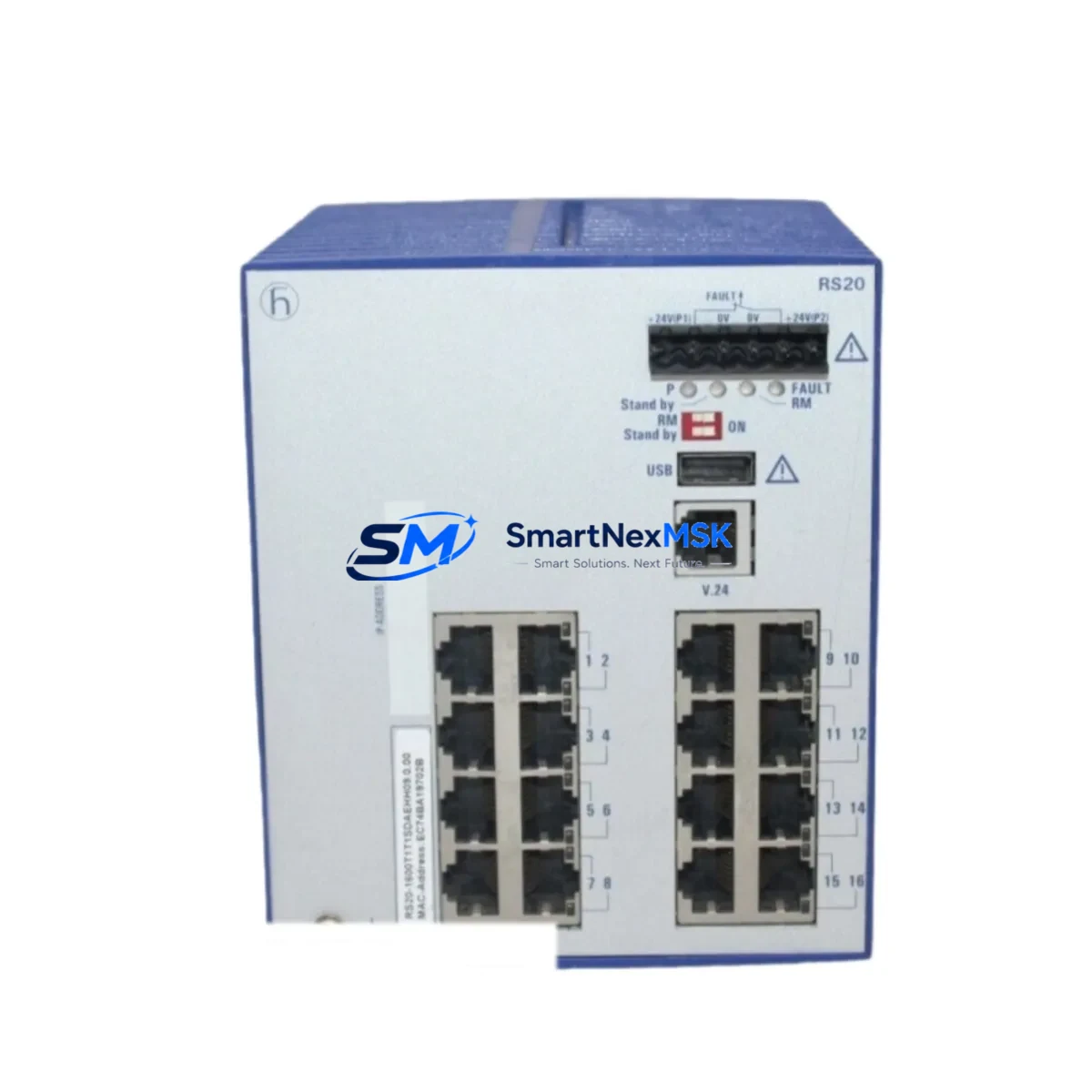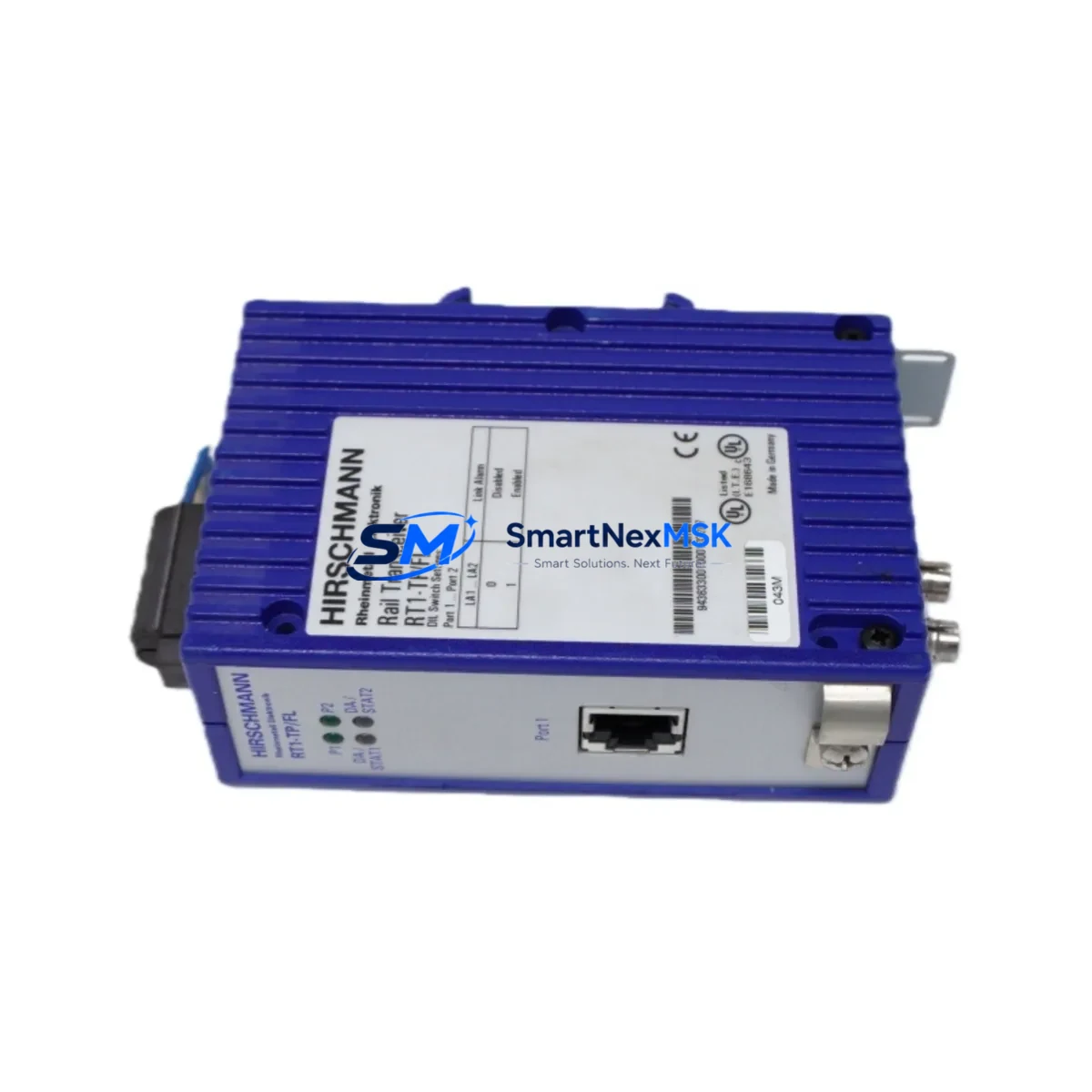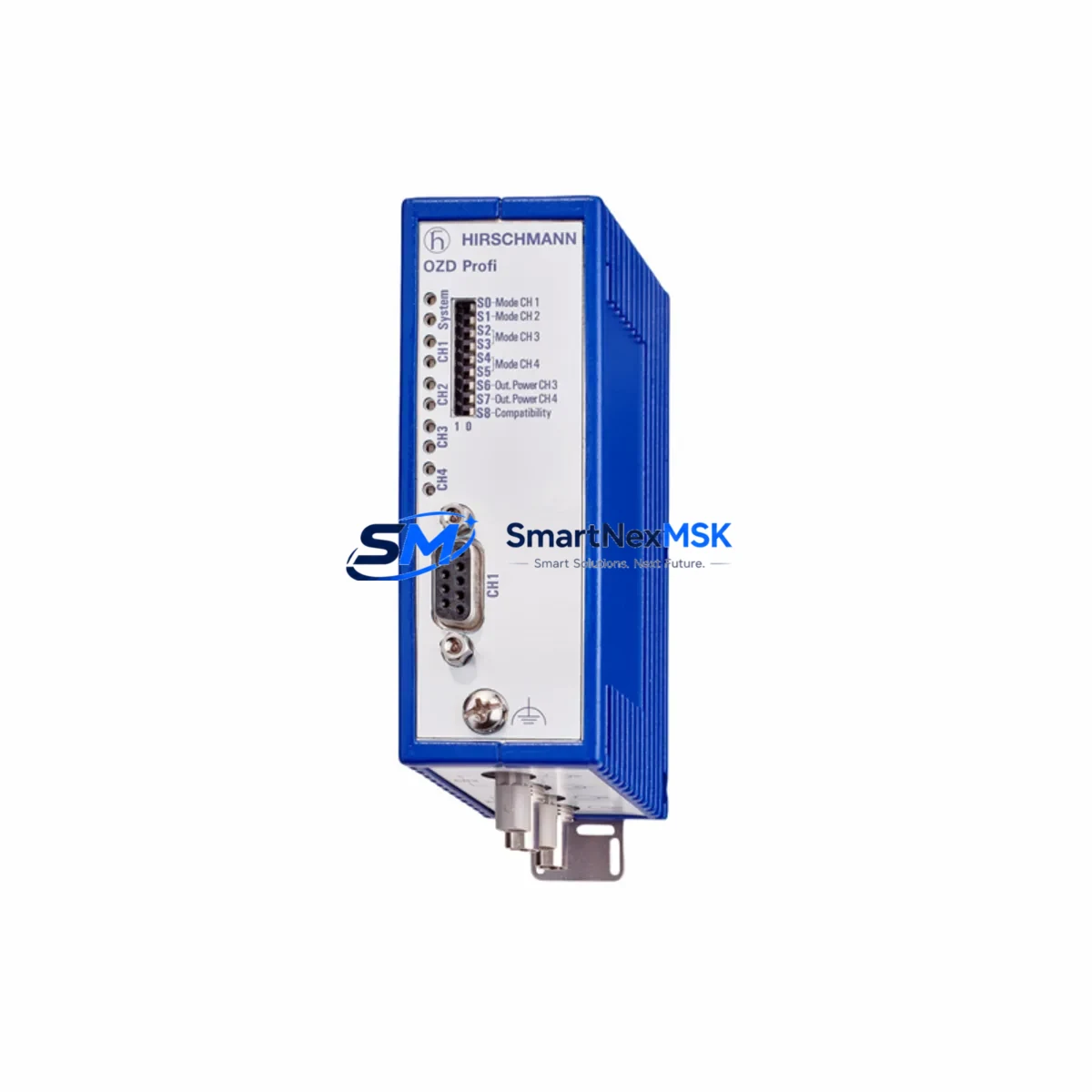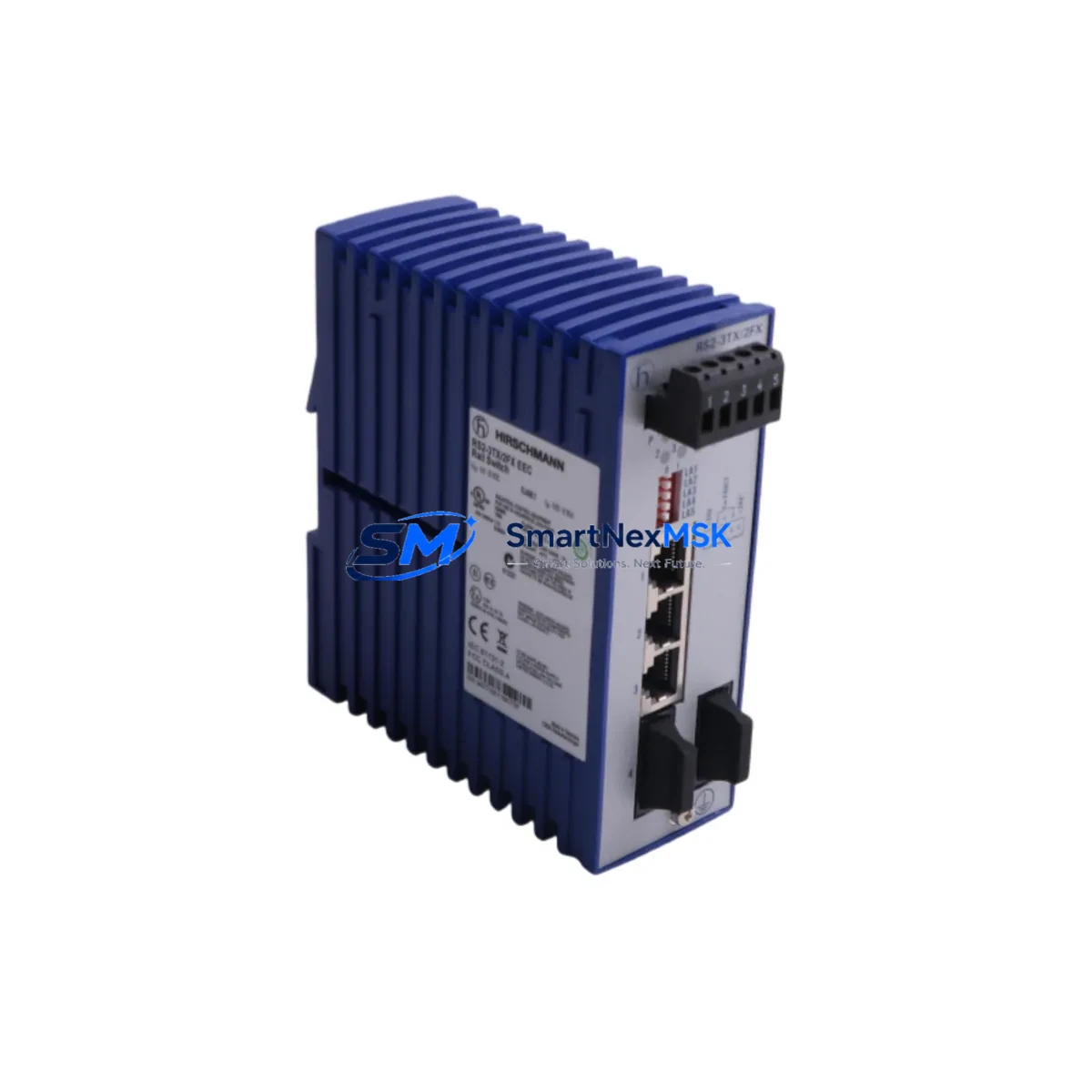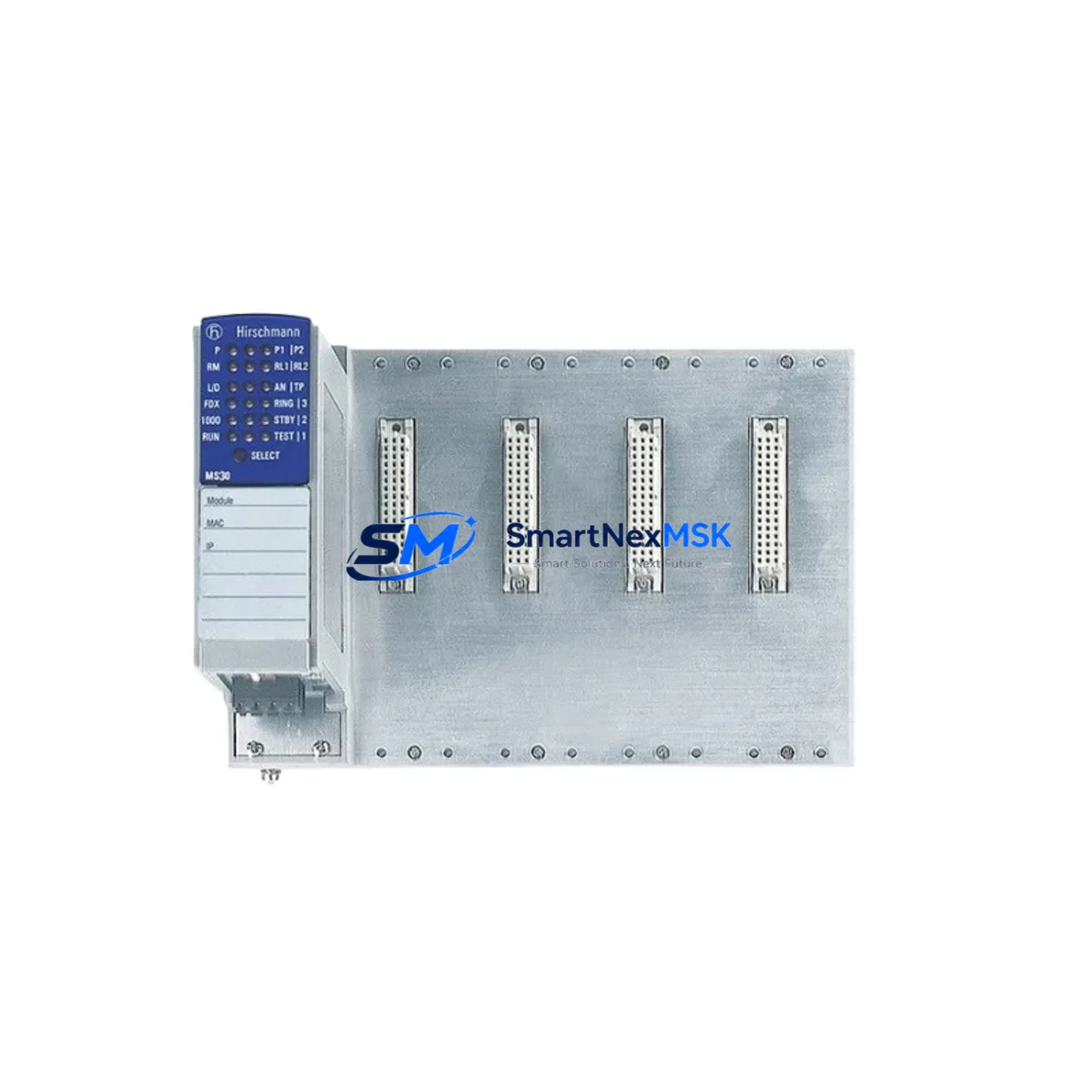
HIRSCHMANN MS20-1600SAAE Retrofit-Ready Ethernet Switch for MICE MS20 Control Systems
When aging MICE MS20 Series network infrastructure begins to threaten production continuity, the HIRSCHMANN MS20-1600SAAE delivers a proven, retrofit-ready replacement path that minimizes engineering risk and eliminates the need for full network redesign. Engineered to slot into existing MICE MS20 control cabinet architectures, this managed industrial Ethernet switch preserves your original ring topology, RSTP/HIPER-Ring redundancy configuration, and VLAN segmentation — allowing maintenance teams to execute a controlled swap without rewriting network logic or reconfiguring upstream SCADA and DCS communication links.
The MS20-1600SAAE supports 16 Fast Ethernet ports with fiber and copper flexibility, making it directly compatible with the cabling infrastructure already deployed in MICE MS20 installations. Whether your plant runs fiber-optic backbone segments between control rooms and field junction boxes, or relies on copper patch panels within the control cabinet, this switch accommodates both without adapter modules or media converters. Its DIN-rail mounting footprint matches the original MICE MS20 chassis dimensions, so panel space and cable routing remain undisturbed during the retrofit.
For automation engineers managing a phased migration from legacy MICE MS20 networks to modern HIRSCHMANN MACH or OCTOPUS platform architectures, the MS20-1600SAAE serves as a stable interim node. It maintains full compatibility with HIRSCHMANN’s HiVision network management software, allowing centralized monitoring of switch health, port status, and traffic statistics alongside newer platform devices. This is particularly valuable in hybrid environments where older MICE RS20 or MICE RS30 switches remain in service on adjacent cabinet segments while the MS20 nodes are progressively replaced.
During retrofit planning, engineers should verify the existing 24 VDC power supply capacity within the control cabinet. The MS20-1600SAAE draws from a redundant 24 VDC input, and if the original MICE MS20 power budget was calculated at the margin, adding a HIRSCHMANN PowerMICE or equivalent redundant power supply module is recommended before commissioning the replacement switch. Terminal block wiring on the power input connector follows the same two-terminal 24 VDC arrangement as the predecessor model, so no rewiring of the power distribution rail is required in most installations.
Backplane interface and DIN-rail clip compatibility have been validated against standard 35 mm DIN rails used in MICE MS20 control cabinets. The switch’s compact housing allows adjacent mounting of HIRSCHMANN SPIDER or GECKO series unmanaged switches for local I/O network extensions without consuming additional panel space. For plants that rely on PROFINET or Modbus TCP communication between PLCs and field devices, the MS20-1600SAAE’s QoS and VLAN capabilities ensure that time-critical control traffic is prioritized over diagnostic or HMI data streams, preserving cycle-time integrity during the transition period.
Commissioning the MS20-1600SAAE in a MICE MS20 replacement scenario typically follows a structured sequence: export the existing switch configuration via HiVision or CLI backup, import the configuration template to the new unit, verify HIPER-Ring or RSTP ring membership settings, confirm VLAN assignments match the original port map, and then perform a hot-swap during a planned maintenance window. With proper preparation, total switchover time can be reduced to under 15 minutes, keeping production downtime within acceptable limits for most continuous-process facilities.
Upgrade Compatibility Table
| Parameter | Details |
|---|---|
| SKU | MS20-1600SAAE |
| Brand / Series | HIRSCHMANN / MICE MS20 |
| Port Configuration | 16 × Fast Ethernet (fiber + copper combo) |
| Redundancy Protocol | HIPER-Ring, RSTP, MRP |
| Power Input | 24 VDC redundant, standard 2-terminal block |
| Mounting | 35 mm DIN-rail, same footprint as MICE MS20 |
| Management | HiVision compatible, CLI, SNMP v1/v2c/v3 |
| VLAN Support | IEEE 802.1Q, port-based and tagged |
| Operating Temperature | -10 °C to +60 °C |
| Protection Rating | IP30 |
| Origin | Germany |
| Replacement For | HIRSCHMANN MICE MS20 Series (legacy) |
| Configuration Migration | CLI/HiVision backup-restore supported |
| Warranty | 12-Month Warranty — tested before shipment |
Retrofit Planning for Existing Automation Systems
A successful MICE MS20 retrofit begins well before the physical swap. Start by auditing the full network topology: identify every switch node in the ring, document port assignments for each PLC, HMI panel, remote I/O station, and SCADA server connection. In typical MICE MS20 installations, the ring may include a mix of MICE RS20, MICE RS30, and MICE MS20 units — each with its own VLAN and QoS configuration that must be preserved in the replacement unit.
Power infrastructure is a frequent oversight in retrofit projects. The control cabinet’s 24 VDC rail, often fed by a HIRSCHMANN PowerMICE PS or equivalent redundant power supply, should be load-tested before the new MS20-1600SAAE is commissioned. If the cabinet also houses HIRSCHMANN SPIDER 5TX unmanaged switches for local sensor networks, their power draw must be factored into the total budget. A dedicated power feed for the managed switch backbone is best practice in high-availability environments.
For plants running PROFINET IO over the MICE MS20 network, the MS20-1600SAAE’s PROFINET-aware VLAN and QoS settings allow the existing IO controller-to-device relationships to be maintained without re-addressing. Similarly, if Modbus TCP polling from a SCADA system targets field transmitters through the switch, the port forwarding and storm control settings from the original MICE MS20 configuration can be directly imported. Engineers should also verify that any HIRSCHMANN GECKO or SPIDER series unmanaged switches downstream of the MS20 node are operating within their rated temperature range, as cabinet thermal conditions may have changed since the original installation.
HMI panels connected via the MICE MS20 ring — whether running WinCC, iFIX, or a proprietary operator interface — will reconnect automatically once the MS20-1600SAAE is online with the correct IP address and VLAN configuration. No HMI screen reconfiguration is required if the switch’s management IP and VLAN structure match the predecessor unit. Programming cables used for PLC firmware updates or logic downloads that route through the switch will also resume normal operation without driver changes, as the MS20-1600SAAE presents the same Layer 2 forwarding behavior as the original MICE MS20.
Downtime Control During System Migration
Minimizing production downtime during a MICE MS20 to MS20-1600SAAE migration requires a disciplined pre-commissioning workflow. The most effective approach is to pre-configure the replacement switch offline using a configuration file exported from the existing MICE MS20 unit via HiVision or CLI. This allows the new switch to be powered up, verified, and staged in a test environment before it enters the live ring.
During the planned maintenance window, the sequence is: isolate the target switch node from the ring by temporarily breaking the ring at an adjacent node, remove the legacy MICE MS20 unit, install the MS20-1600SAAE on the same DIN-rail position, reconnect all fiber and copper patch cables in the original port order, restore the ring connection, and verify HIPER-Ring or RSTP convergence. With a pre-loaded configuration, ring convergence typically completes within 500 ms, and PLC communication to field devices resumes without program intervention.
Original program logic in the PLC — whether running on a SIEMENS S7-300, Allen-Bradley ControlLogix, or Schneider Modicon platform — does not require modification, as the switch replacement is transparent at Layer 2. SCADA historians and alarm servers will log a brief communication gap corresponding to the switchover window, which should be documented in the maintenance record. Post-commissioning, a full port-by-port traffic verification using HiVision’s port statistics view confirms that all control, HMI, and I/O traffic has resumed at expected rates before the maintenance window is closed.
Retrofit Support FAQ
Q1: Is the MS20-1600SAAE a direct drop-in replacement for the HIRSCHMANN MICE MS20?
A: Yes. The MS20-1600SAAE shares the same DIN-rail footprint, 24 VDC power input terminal arrangement, and HIPER-Ring/RSTP redundancy protocol support as the legacy MICE MS20 series. Configuration files exported from the original unit can be imported directly, eliminating the need to rebuild VLAN, QoS, or ring settings from scratch.
Q2: What pre-shipment testing is performed on the MS20-1600SAAE?
A: Every unit undergoes full power-on functional testing, port link verification, and management interface validation before shipment. Units are inspected for physical integrity and packaged with anti-static protection. A 12-month warranty covers all hardware defects from the date of delivery.
Q3: Can the MS20-1600SAAE operate in a mixed network alongside legacy MICE RS20 or MICE RS30 switches?
A: Yes. The MS20-1600SAAE is fully compatible with HIRSCHMANN’s MICE family RSTP and HIPER-Ring implementations, allowing it to coexist in rings that include MICE RS20, MICE RS30, or other MICE MS20 units. This supports phased migration strategies where not all nodes are replaced simultaneously.
Q4: What is the long-term supply commitment for the MS20-1600SAAE?
A: SMARTNEXMSK maintains dedicated inventory of the MS20-1600SAAE to support ongoing retrofit and emergency replacement requirements. Orders are processed with fast global shipping, and our technical team can assist with compatibility verification, configuration guidance, and multi-unit procurement planning for large-scale migration projects.
© 2026 SMARTNEXMSK. All rights reserved.
Original Source: https://smartnexmsk.com
Contact: [email protected] | +86 18259474341