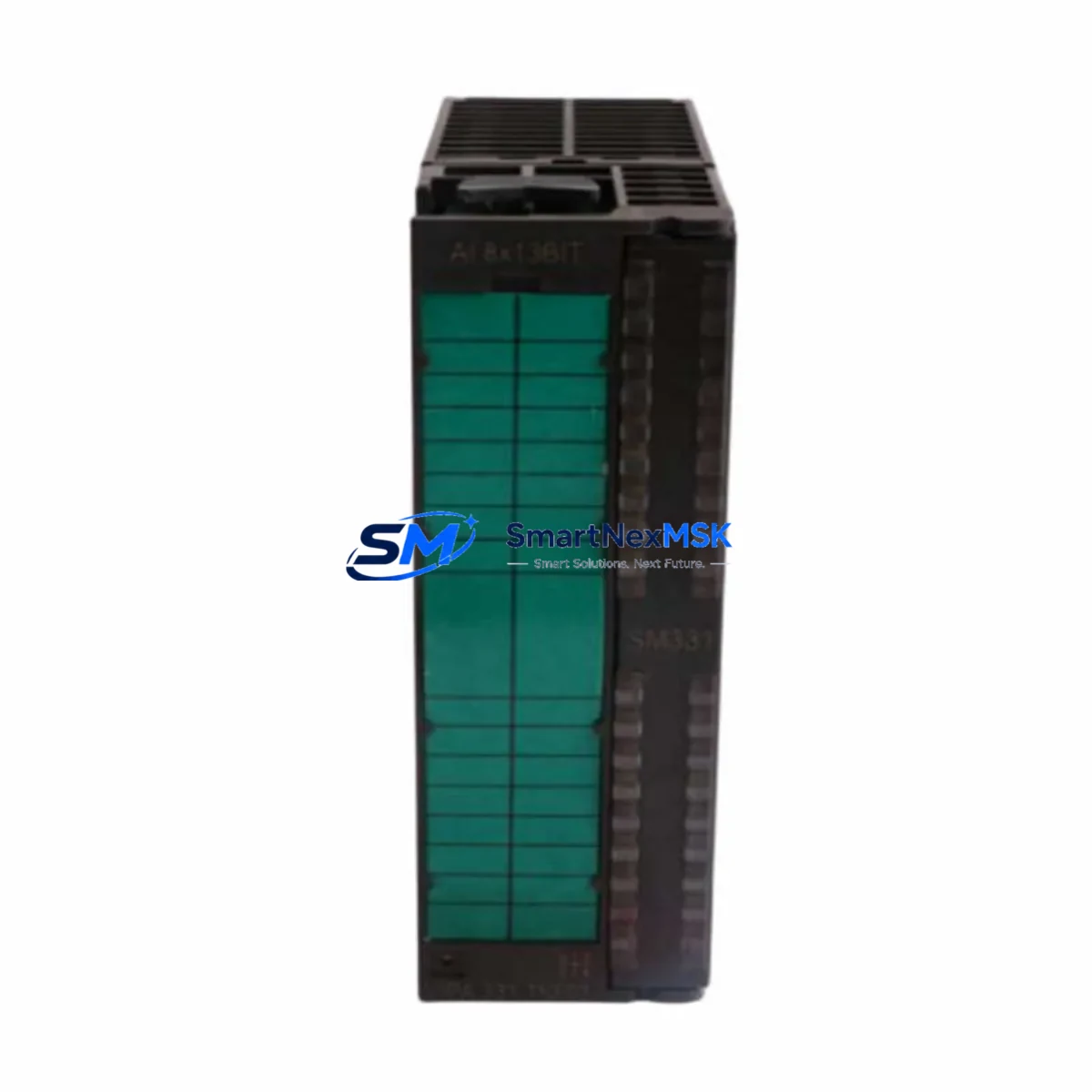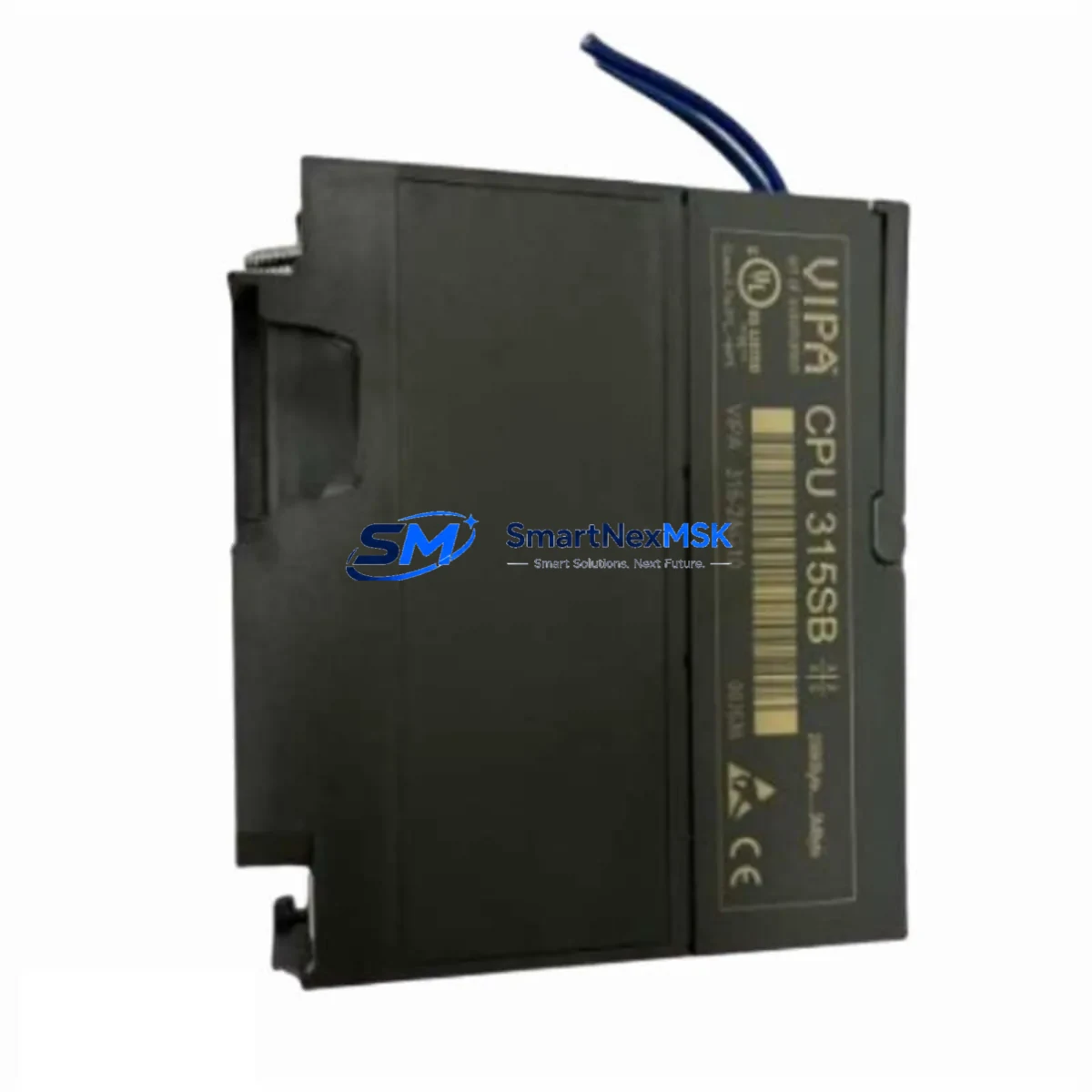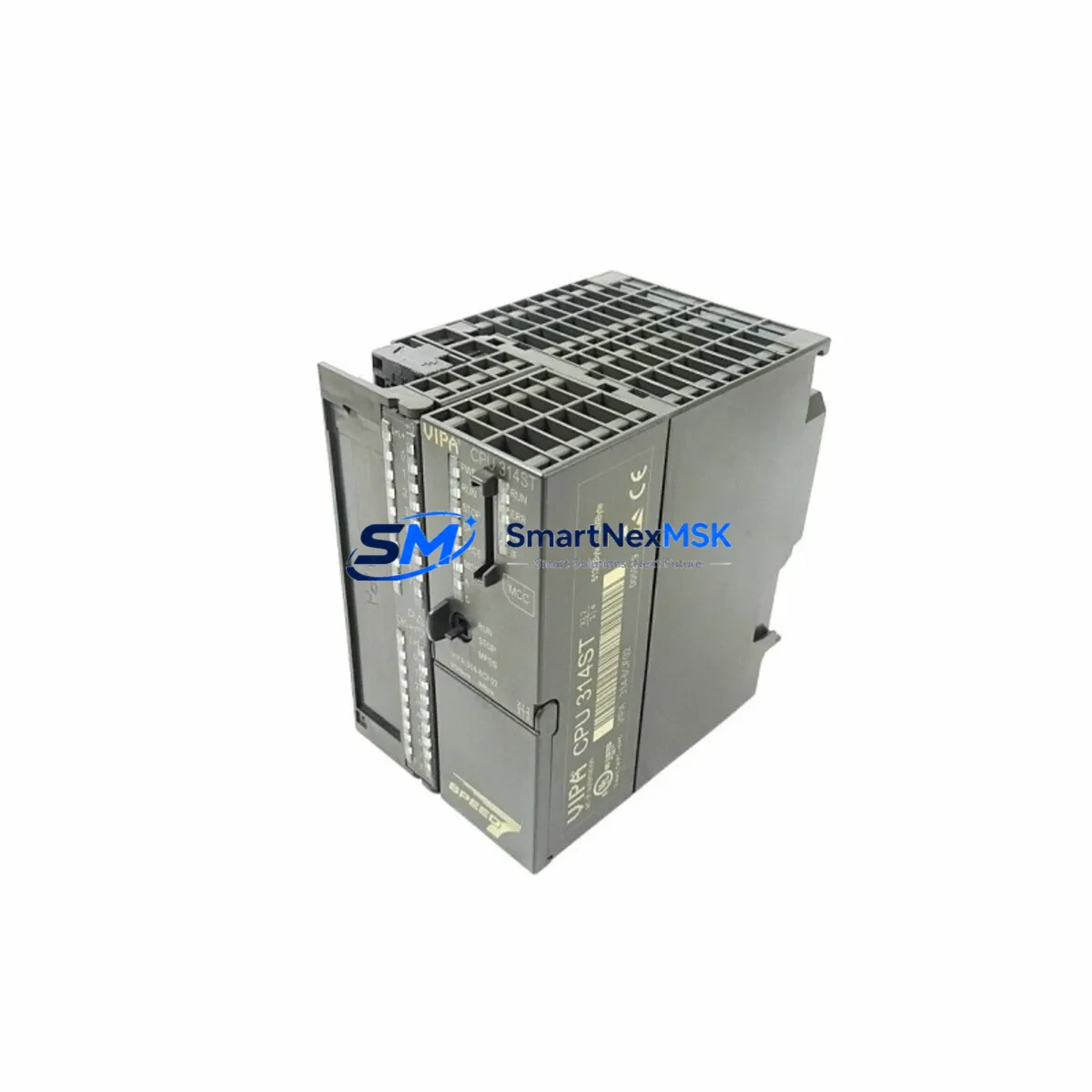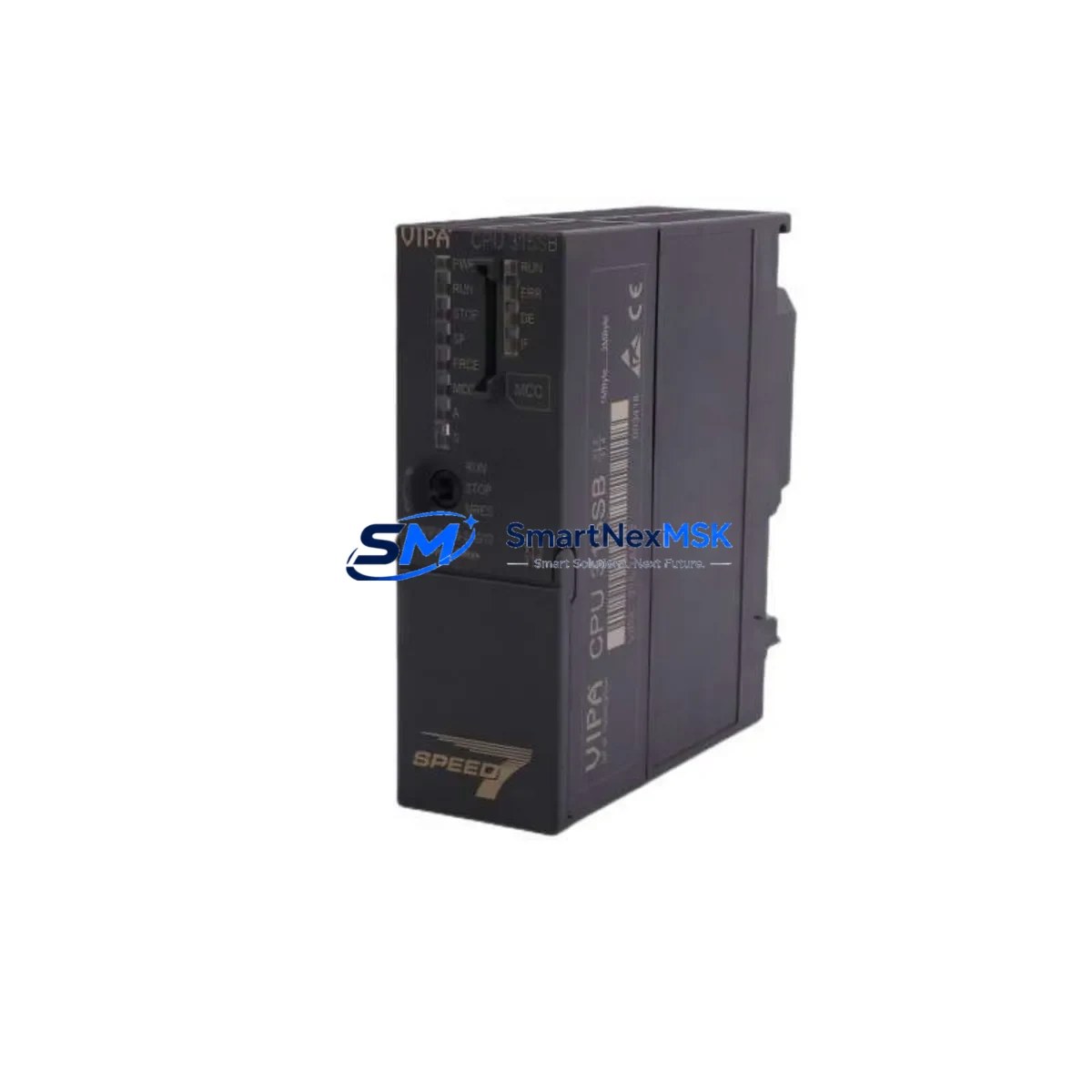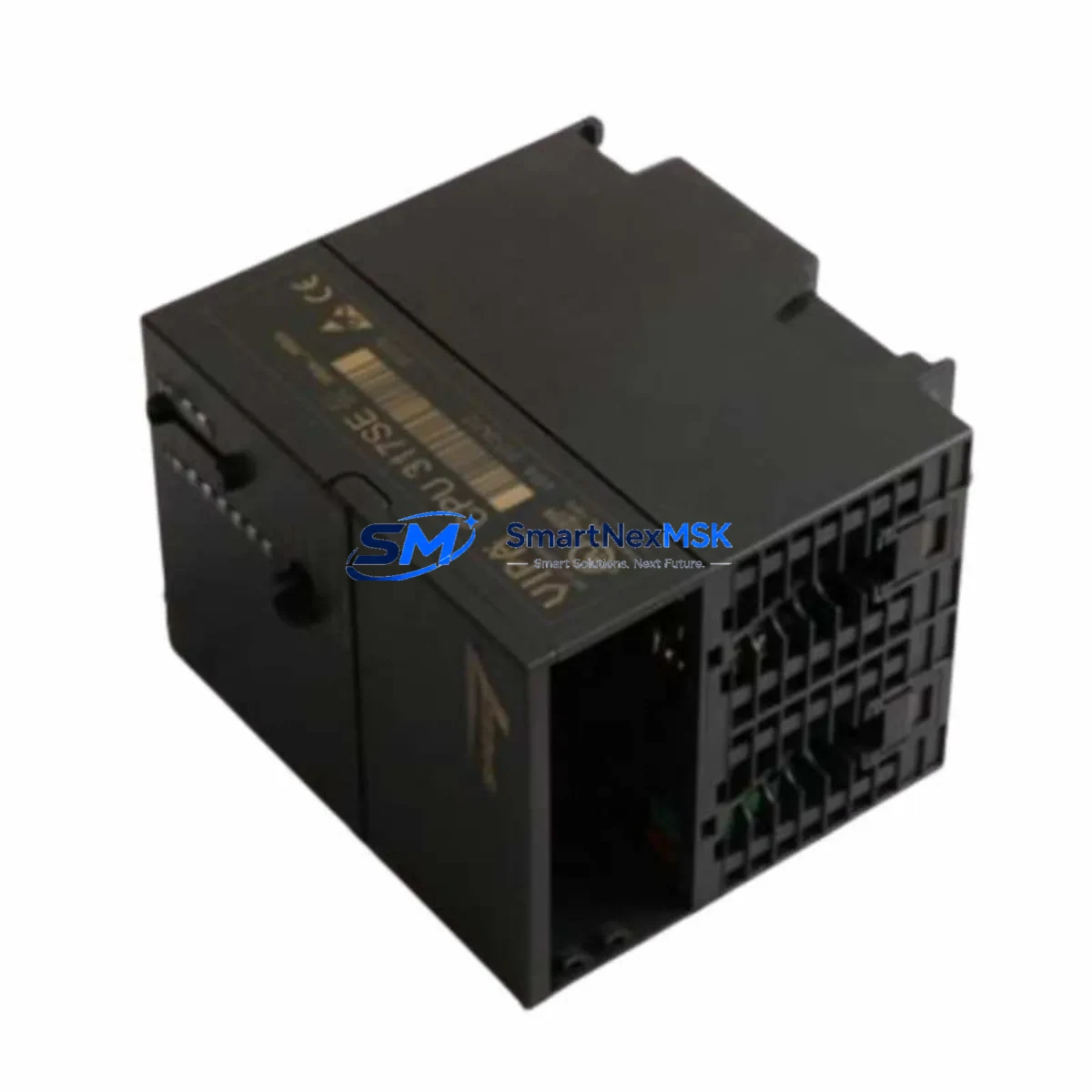
VIPA CPU 313SC 313-6CF03 Safety-Enhanced PLC CPU Module for Harsh Industrial Sites
The VIPA CPU 313SC 313-6CF03 is a high-performance SPEED7 programmable logic controller CPU module engineered for mission-critical industrial automation environments where control continuity, signal integrity, and operational safety are non-negotiable. Designed and manufactured in Germany to exacting industrial standards, this CPU module delivers deterministic scan-cycle execution, robust EMC immunity, and wide-range power tolerance — making it the preferred choice for control engineers managing high-load, high-interference, or continuously operating production facilities.
In heavy industrial settings — including petrochemical plants, power generation substations, mining extraction systems, water treatment facilities, metallurgical furnaces, port logistics automation, and continuous-process manufacturing lines — control interruptions carry severe safety and financial consequences. The VIPA CPU 313SC 313-6CF03 addresses these risks directly through its SPEED7 architecture, which executes ladder logic, function block diagrams, and structured text programs at processing speeds significantly faster than conventional S7-300 compatible CPUs, reducing the window of vulnerability during which a delayed scan cycle could allow a hazardous process state to persist undetected.
Safety Reliability Table
| Parameter | Specification / Capability |
|---|---|
| SKU / Part Number | CPU 313SC 313-6CF03 |
| Brand / Manufacturer | VIPA (Yaskawa VIPA) |
| Series | SPEED7 |
| CPU Architecture | SPEED7 — up to 10× faster than standard S7-300 CPUs |
| Program Memory | 512 KB work memory (expandable via MMC) |
| Integrated I/O | 24 DI / 16 DO / 4 AI (SC = System SLIO Compact) |
| Communication Interfaces | MPI/DP (PROFIBUS), integrated Ethernet (optional), RS-485 |
| PROFIBUS DP | Master/Slave, up to 12 Mbit/s |
| Supply Voltage | DC 24 V (18–30 V tolerance) |
| EMC Protection | EN 61000-6-2 (industrial immunity), EN 61000-6-4 (emission) |
| Operating Temperature | 0 °C to +60 °C |
| Storage Temperature | −25 °C to +70 °C |
| Relative Humidity | 5–95%, non-condensing |
| Vibration Resistance | IEC 60068-2-6 compliant |
| Shock Resistance | IEC 60068-2-27 compliant |
| Protection Class | IP20 (panel-mount, control cabinet installation) |
| S7-300 Compatibility | Full STEP 7 / TIA Portal compatible; drop-in replacement |
| Origin | Germany |
| Warranty | 12 Months — covers manufacturing defects and functional failure |
| Pre-shipment Testing | 100% functional test before dispatch |
| Stock Status | In-stock; ready for immediate shipment |
Control Cabinet Protection Strategy
A reliable control cabinet is a system — not a single component. The VIPA CPU 313SC 313-6CF03 is most effective when integrated within a well-engineered protection architecture. In high-interference environments such as arc furnace control rooms, variable-frequency drive (VFD) enclosures, or high-voltage switchgear panels, the CPU must be shielded from conducted and radiated disturbances that can corrupt program execution or trigger spurious outputs.
Power supply quality is the first line of defense. Pairing the 313-6CF03 with a VIPA 307-1EA00 or equivalent SPEED7 power supply module ensures the CPU receives clean, regulated DC 24 V even when upstream AC supply fluctuates due to motor starts, welding operations, or grid switching events. For sites with known surge exposure, installing a dedicated surge protection device (SPD) on the 24 V DC rail — rated to IEC 61643-21 — prevents transient overvoltages from reaching the CPU backplane.
On the I/O side, the VIPA SLIO system (System SLIO modules, e.g., VIPA 021-1BF00 digital input slice or VIPA 022-1BF00 digital output slice) extends the CPU’s I/O capacity while maintaining the high-speed SPEED7 backplane bus. These SLIO slices are particularly valuable in safety interlock circuits where input debounce timing and output response latency must be tightly controlled to prevent false trips or missed shutdowns.
For PROFIBUS DP networks connecting the 313-6CF03 to remote I/O stations, distributed drives, or intelligent field devices, network segment isolation using PROFIBUS repeaters (such as the Siemens 6ES7972-0AA02-0XA0 or equivalent) prevents a fault on one bus segment from propagating to the CPU. Termination resistors must be correctly installed at both ends of each PROFIBUS segment to eliminate signal reflections that cause communication timeouts — a common root cause of unexpected CPU STOP states in noisy industrial environments.
In safety-critical interlock loops — such as emergency shutdown (ESD) systems, fire and gas detection interfaces, or high-pressure relief valve controls — the CPU’s digital outputs should drive safety relays (e.g., Pilz PNOZ series or Phoenix Contact PSR series) rather than actuating loads directly. This relay interposition layer provides galvanic isolation, contact multiplication, and manual reset capability, all of which are required by IEC 62061 and ISO 13849 functional safety standards for SIL 1–2 applications.
Communication redundancy can be achieved by combining the 313-6CF03 with a VIPA 040-1AA00 Ethernet CP module, enabling simultaneous MPI/DP and Ethernet connectivity. This dual-path architecture allows SCADA systems and HMI panels to maintain data acquisition even if one communication medium is temporarily disrupted — a critical requirement in continuous-process industries where operator visibility must never be lost.
Critical Industrial Safety Applications
Petrochemical & Refinery Plants: In hydrocarbon processing facilities, the VIPA CPU 313SC 313-6CF03 manages burner management sequences, compressor anti-surge control, and emergency depressurization logic. Its fast scan cycle ensures that process deviations — such as high-high pressure or low-low flow conditions — are detected and acted upon within the required safety instrumented function (SIF) response time. The CPU’s wide supply voltage tolerance (18–30 V DC) maintains operation during the voltage sags that commonly occur when large motor-driven pumps start across-the-line.
Power Generation & Substations: Turbine auxiliary control systems, transformer cooling fan sequencing, and battery room ventilation interlocks benefit from the 313-6CF03’s deterministic execution and PROFIBUS DP master capability. The CPU can simultaneously manage local I/O and coordinate with remote terminal units (RTUs) or protection relays via PROFIBUS, providing a unified control and monitoring architecture without requiring a separate communication processor for each protocol.
Mining & Mineral Processing: Underground conveyor belt safety systems, crusher interlock chains, and ventilation fan control in mining operations demand CPUs that tolerate high vibration, dust ingress, and wide temperature swings. Installed in sealed, climate-controlled control cabinets with appropriate IP-rated enclosures, the 313-6CF03 provides the processing reliability needed to manage multi-drive conveyor systems where a single CPU fault could halt an entire ore transport chain.
Water & Wastewater Treatment: Pump station sequencing, chlorination dosing control, and UV disinfection system interlocks in water treatment plants require CPUs with long mean-time-between-failure (MTBF) ratings and readily available spare parts. The VIPA SPEED7 platform’s broad installed base and SMARTNEXMSK’s maintained inventory ensure that replacement units are available without the extended lead times that can compromise water supply continuity.
Metallurgy & Steel Production: Rolling mill drive coordination, ladle transfer car positioning, and fume extraction interlock systems in steel plants expose control hardware to intense electromagnetic fields from induction furnaces and high-current bus bars. The 313-6CF03’s EN 61000-6-2 immunity rating and robust SPEED7 architecture make it suitable for these extreme EMC environments when installed with proper cabinet shielding and cable segregation practices.
Safety and Quality FAQ
Q1: What does the 12-month warranty cover for the VIPA CPU 313SC 313-6CF03?
The 12-month warranty covers all manufacturing defects and functional failures under normal operating conditions. If the unit fails to perform its specified functions within the warranty period, SMARTNEXMSK will provide a replacement or repair at no additional cost. The warranty period begins from the date of shipment confirmation.
Q2: How is each unit tested before shipment?
Every VIPA CPU 313SC 313-6CF03 unit undergoes a 100% functional test prior to dispatch. Testing includes power-on verification, program load/execute cycle confirmation, I/O channel continuity checks, and communication interface validation. Units that do not pass all test criteria are quarantined and not shipped. A test record is available upon request.
Q3: Is the 313-6CF03 a direct drop-in replacement for existing S7-300 or VIPA SPEED7 installations?
Yes. The VIPA CPU 313SC 313-6CF03 is fully compatible with Siemens STEP 7 (v5.x) and TIA Portal programming environments and uses the standard S7-300 rail and module form factor. Existing hardware configurations, I/O addressing, and program blocks can be retained without modification in most replacement scenarios. For installations using VIPA-specific SPEED7 extensions, the VIPA SPEED7 Studio IDE provides additional optimization options.
Q4: Can long-term supply continuity be guaranteed for ongoing maintenance programs?
SMARTNEXMSK maintains dedicated safety stock of the VIPA CPU 313SC 313-6CF03 to support customers with planned maintenance schedules, annual spare parts procurement programs, and emergency breakdown replacement requirements. Customers with recurring demand are encouraged to contact our sales team to discuss reserved inventory arrangements and priority dispatch agreements, ensuring that critical production lines are never halted by spare parts unavailability.
© 2026 SMARTNEXMSK. All rights reserved.
Original Source: https://smartnexmsk.com
Contact: [email protected] | +86 18259474341