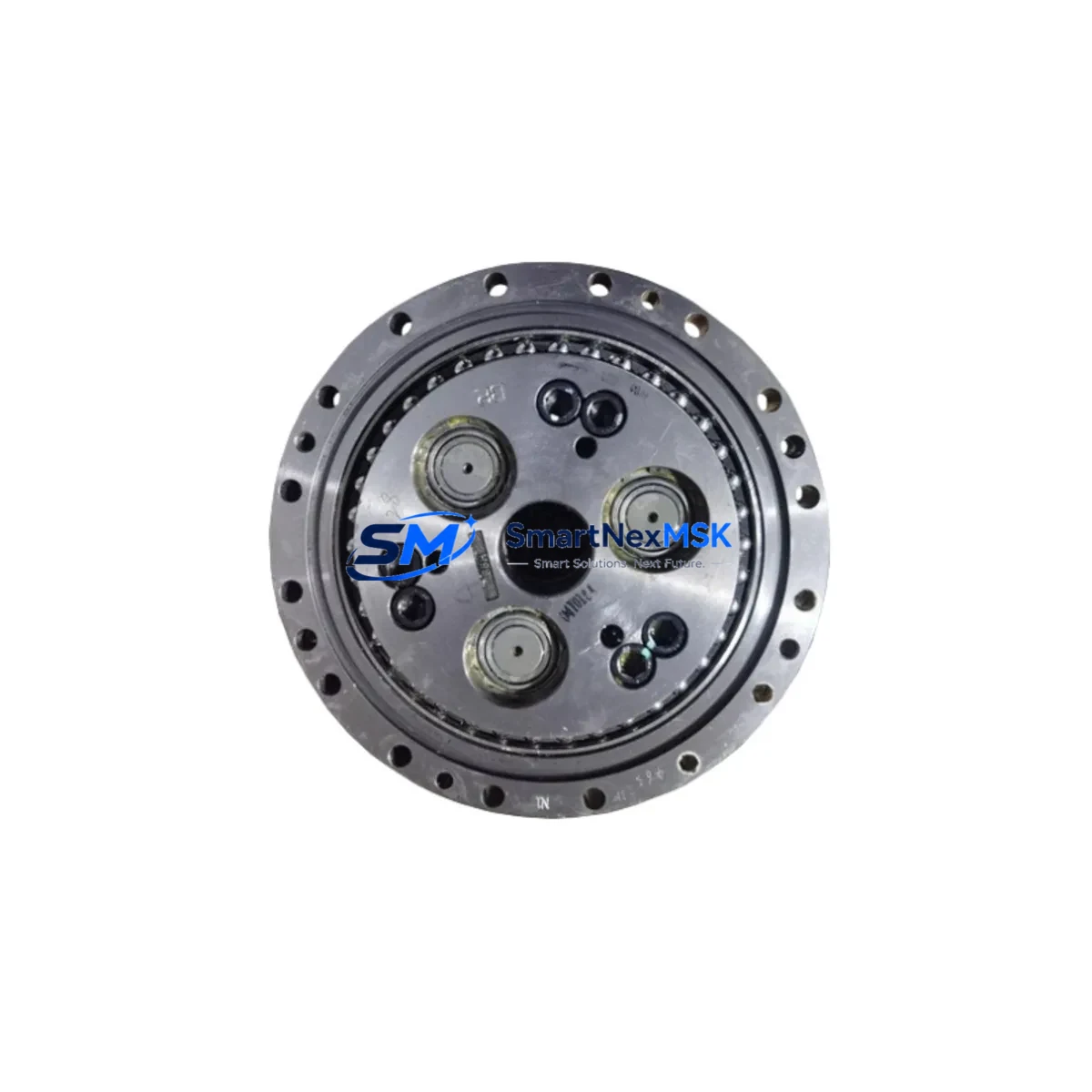
YASKAWA HW0380146-F Spare for Motoman Automation: Spare Replacement & Industrial Downtime Risk Control
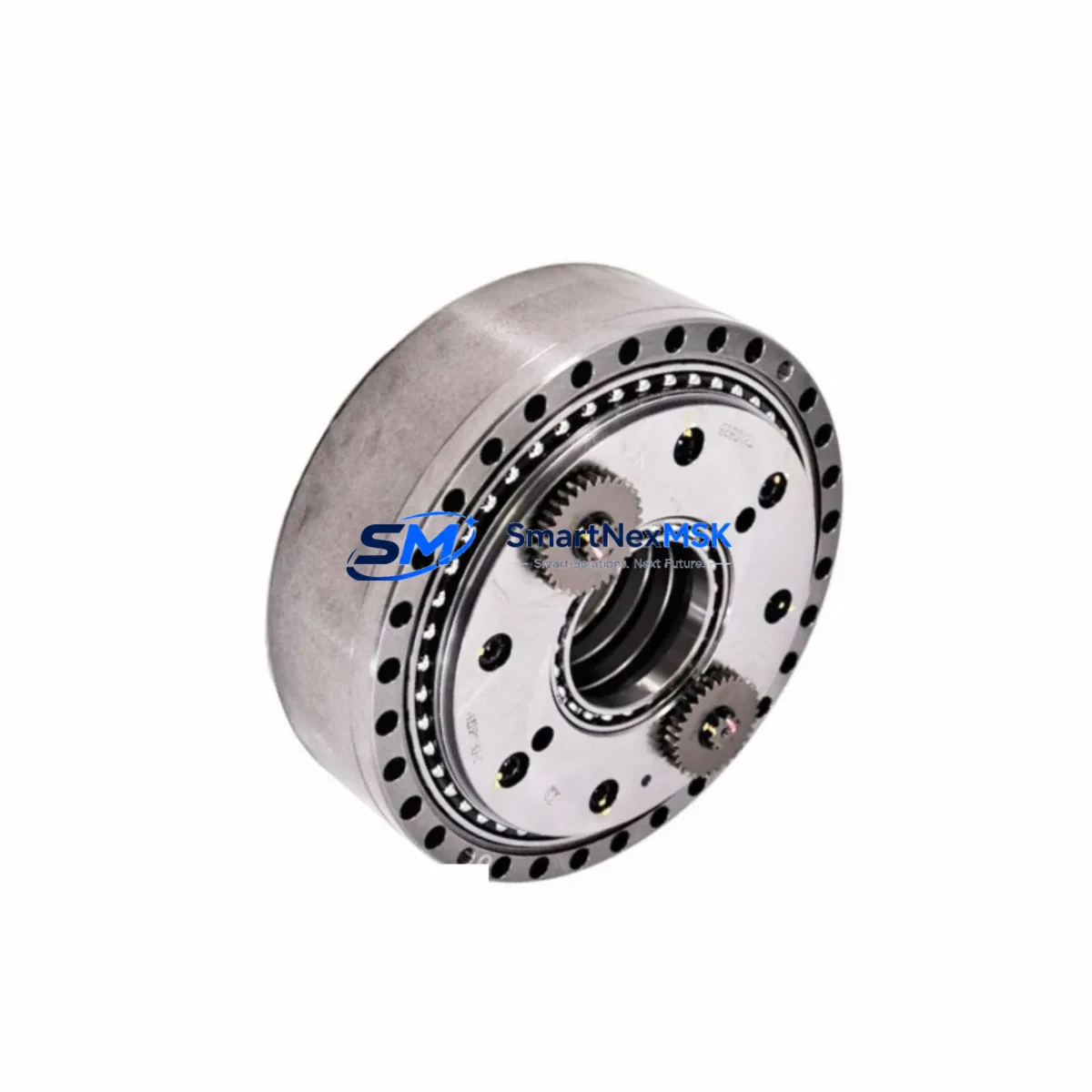
The YASKAWA HW0380146-F (cross-reference: SGDR-SDB950A01D, HW9380961-D) is an original OEM B-axis servo reducer designed for Motoman industrial robot systems. In high-cycle manufacturing environments — automotive body welding, arc welding cells, material handling, and press-tending lines — the B-axis reducer is a critical mechanical interface between the servo motor and the robot arm. Unplanned failure of this component results in immediate production stoppage, often requiring emergency sourcing under time pressure. Maintaining a verified spare in your parts inventory is the most effective strategy to minimize mean time to repair (MTTR) and protect production continuity.
This unit is sourced as an original YASKAWA spare, pre-shipment tested, and dispatched with a 12-month warranty. Each unit undergoes dimensional inspection and functional verification before packaging to ensure it meets OEM specifications for direct installation without modification.
Spare Maintenance Table
| Parameter | Specification |
|---|---|
| Part Number | HW0380146-F |
| Cross Reference | SGDR-SDB950A01D / HW9380961-D |
| Brand | YASKAWA |
| Series | Motoman Robot Series |
| Component Type | B-Axis Servo Reducer |
| Application Axis | B-Axis (Wrist Bend) |
| Compatible Systems | Motoman UP, SK, ES, HP, MA, MH Series (B-axis configuration) |
| Origin | Japan (OEM) |
| Installation Type | Direct OEM replacement, no modification required |
| Mounting | Per YASKAWA robot arm mechanical interface standard |
| Operating Environment | Industrial robot cell; IP rating per robot arm enclosure |
| Lubrication | Factory pre-lubricated; verify grease type per YASKAWA maintenance manual |
| Maintenance Interval | Per YASKAWA robot maintenance schedule (typically 12,000–24,000 hrs) |
| Warranty | 12 Months from dispatch date |
| Pre-Shipment Test | Yes — dimensional and functional verification |
| Availability | In stock; long-term supply supported |
Maintenance Planning for Continuous Operation
When a B-axis servo reducer fault is identified — whether through abnormal vibration, position deviation alarms, or physical backlash detected during routine inspection — the replacement workflow should extend beyond the reducer itself. A thorough maintenance engineer will simultaneously audit the surrounding drive and control components to prevent repeat failures and ensure the robot returns to full specification.
Begin with the SGDR-SDB950A01D servo drive unit (the motor-side drive paired with this reducer axis). Inspect the drive for overcurrent history, encoder feedback errors, and capacitor condition. If the reducer failed due to overload, the drive may have absorbed stress events that shorten its remaining service life. Alongside this, verify the JZNC-YRK01-1E robot controller rack and its associated JANCD-YCP01 CPU board for any latched fault codes that preceded the mechanical failure — these logs often reveal whether the root cause was electrical (torque command spikes) or mechanical (lubrication breakdown).
Check the JZRCR-YPU01-1 power supply unit within the controller cabinet. Servo reducer failures under load can be preceded by unstable DC bus voltage; a degraded power supply may have contributed to irregular torque delivery. Similarly, inspect the JANCD-YIF01 interface board and its I/O signal integrity — particularly the brake release signal and servo-ready interlock — to confirm the control logic is functioning correctly before recommissioning.
For the wiring harness between the controller and the robot arm, inspect the HW0170390-A robot cable assembly (or equivalent axis cable) for insulation wear, connector pin corrosion, and continuity on the encoder signal lines. A degraded cable can cause intermittent encoder errors that accelerate reducer wear through erratic servo response. If the robot has been in service for more than five years, proactive replacement of the axis cable alongside the reducer is a sound maintenance investment.
In the control cabinet, audit the JZNC-YPS01 servo amplifier module and any associated regenerative resistor units for signs of thermal stress. High-cycle B-axis motion profiles generate significant regenerative energy; a degraded resistor or amplifier can cause DC bus overvoltage events that stress the reducer’s input shaft. Also verify the JANCD-YBK01 brake control board — a brake that does not fully release or engage cleanly will cause the reducer to operate under abnormal load conditions.
Finally, for facilities managing aging Motoman systems, consider stocking the HW0380146-F alongside complementary wrist-axis reducers (S-axis and T-axis variants) and a spare SGMAH or SGMPH series servo motor appropriate to the robot model. This multi-component spare strategy ensures that a single maintenance event does not cascade into a multi-week parts sourcing delay.
Site Replacement Workflow
Replacing the HW0380146-F B-axis servo reducer on a Motoman robot follows a structured procedure to minimize downtime and ensure system compatibility:
1. Pre-Replacement Verification: Confirm the part number against the robot’s maintenance manual and the label on the existing reducer. Cross-reference SGDR-SDB950A01D and HW9380961-D as valid alternates. Verify the robot model and axis configuration match the reducer’s rated reduction ratio and torque specification.
2. Safe Isolation: Power down the robot controller via the JZNC-YRK01-1E main breaker. Engage the mechanical brake on the B-axis and support the arm mechanically before disassembly. Confirm zero-energy state per your site LOTO procedure.
3. Removal and Inspection: Remove the existing reducer per the YASKAWA maintenance manual torque sequence. Inspect the mating surfaces on the robot arm casting and the servo motor output shaft for wear, fretting, or corrosion. Clean all mating surfaces before installation.
4. Installation: Install the HW0380146-F using the specified fastener torque values from the YASKAWA maintenance manual. Do not substitute fastener grades. Verify grease fill per the manual specification — do not over-grease, as excess lubricant can cause seal failure.
5. Recommissioning: Restore power and perform the YASKAWA zero-point calibration procedure for the B-axis. Run the robot through a slow-speed test cycle and verify position accuracy before returning to production speed. Log the replacement in the robot’s maintenance record.
This workflow applies equally to legacy Motoman UP and SK series robots as to current HP and MH series platforms, making the HW0380146-F a versatile spare for facilities operating mixed-generation robot fleets.
Spare Parts Support FAQ
Q: What is the shelf life of the HW0380146-F if stored as a spare?
A: When stored in a clean, dry environment at 5–40°C with low humidity and away from vibration, the HW0380146-F can be held as a spare for 2–3 years without degradation. The factory pre-lubrication remains stable within this period. For longer storage, consult the YASKAWA maintenance manual for re-lubrication procedures before installation.
Q: How is compatibility with my specific Motoman robot model confirmed?
A: Compatibility is confirmed by matching the robot model number, axis designation (B-axis), and the part number on the existing reducer label. The HW0380146-F is cross-referenced to SGDR-SDB950A01D and HW9380961-D. If you provide your robot model and serial number, our technical team can verify compatibility before dispatch.
Q: What pre-shipment testing is performed on each unit?
A: Each HW0380146-F undergoes dimensional inspection of the input/output flanges and shaft interfaces, verification of backlash within OEM tolerance, and a visual inspection for seal integrity and surface condition. Units that do not meet OEM specification are not dispatched. A test report is available on request.
Q: What does the 12-month warranty cover?
A: The 12-month warranty covers manufacturing defects and premature failure under normal operating conditions as defined by YASKAWA’s application guidelines. It does not cover damage resulting from improper installation, incorrect lubrication, overload beyond rated torque, or use outside the specified environmental conditions. Warranty claims are supported with replacement dispatch and technical assistance.
© 2026 SMARTNEXMSK. All rights reserved.
Original Source: https://smartnexmsk.com
Contact: [email protected] | +86 18259474341