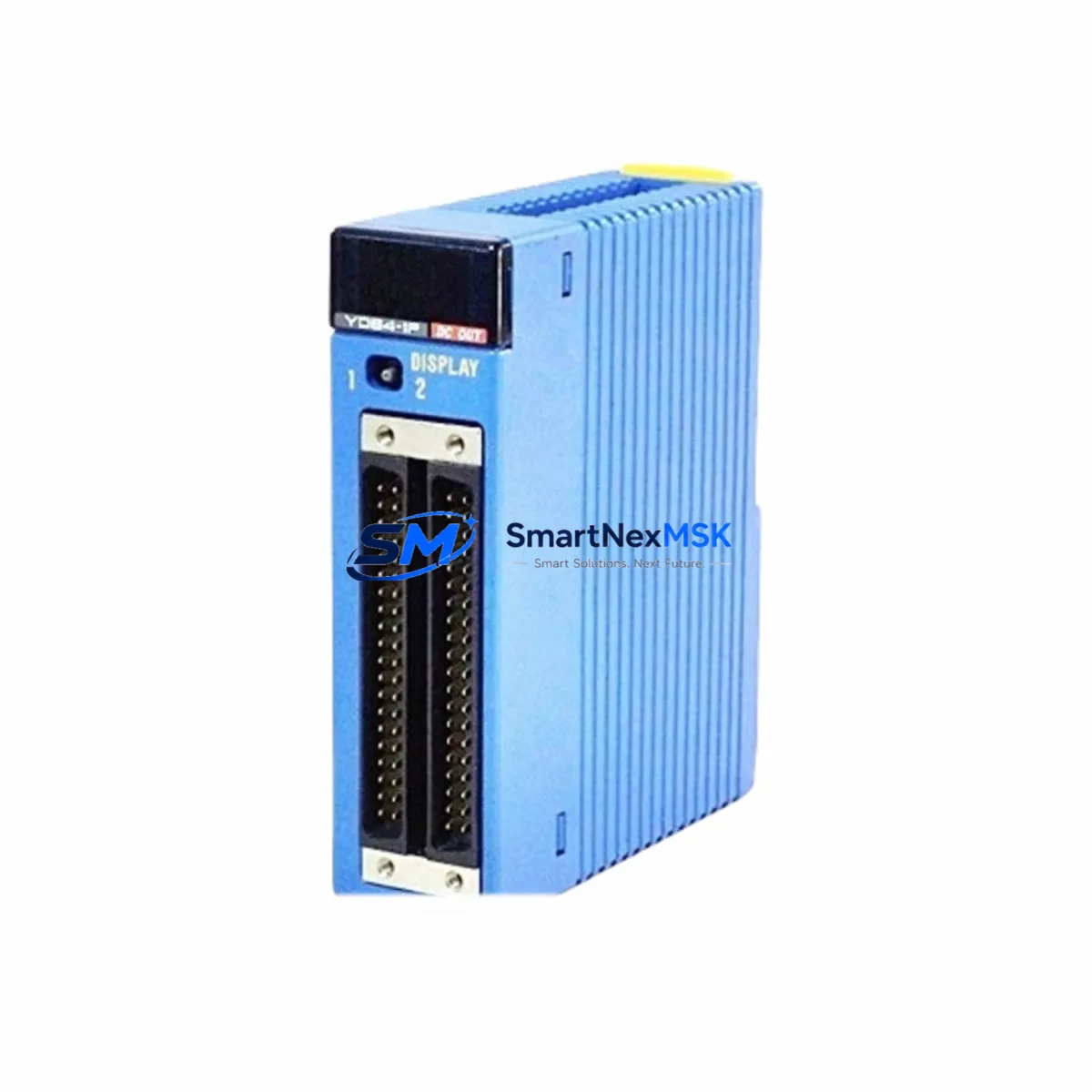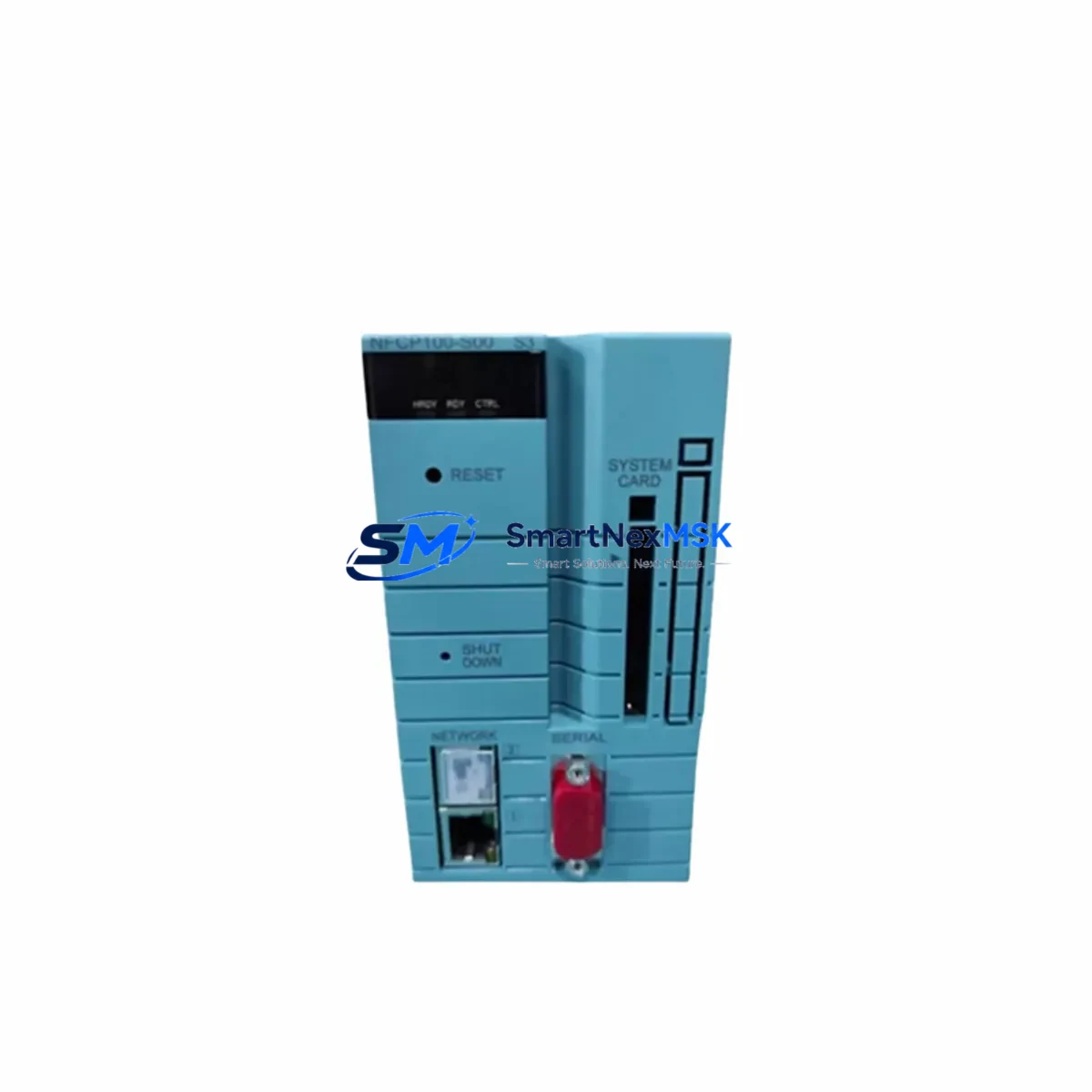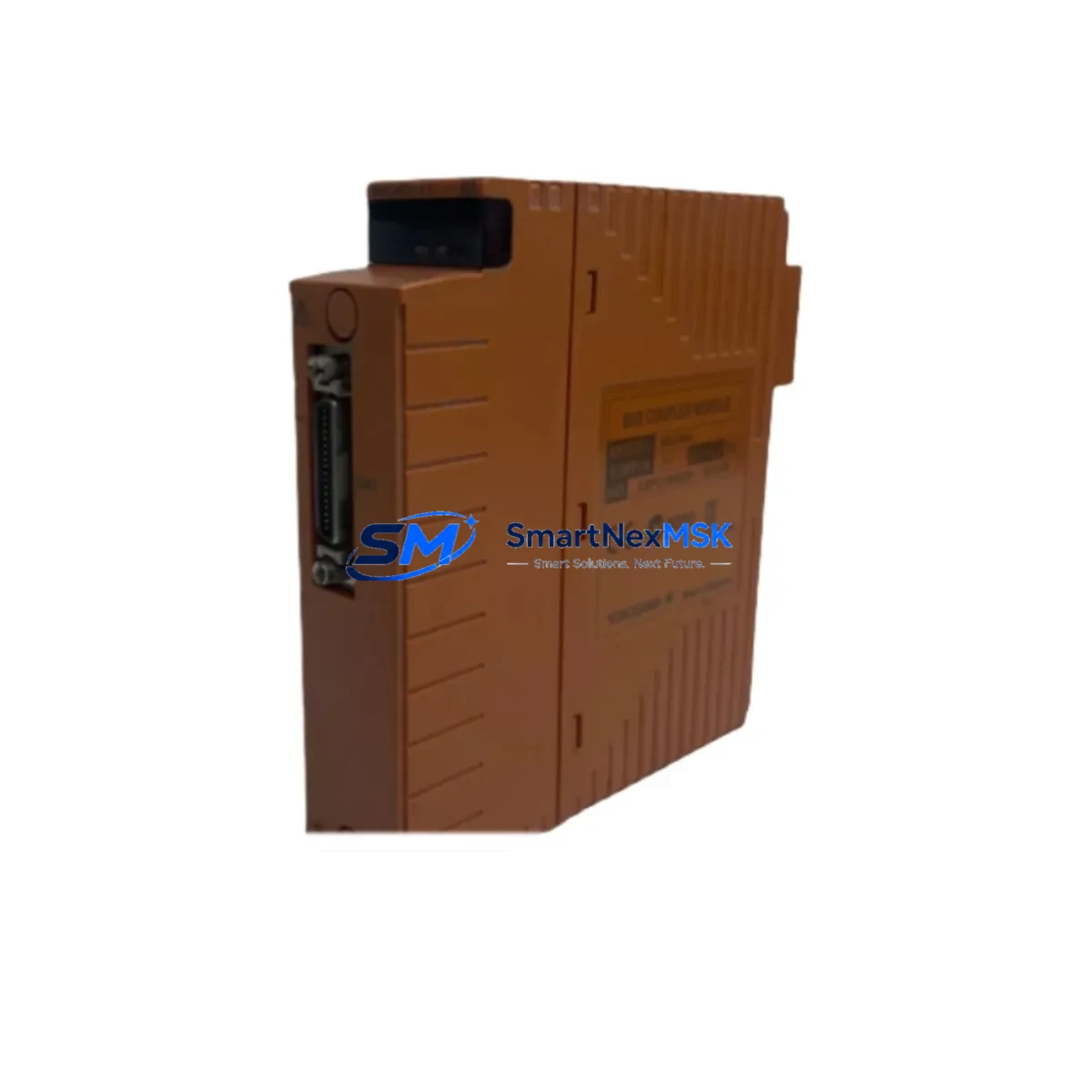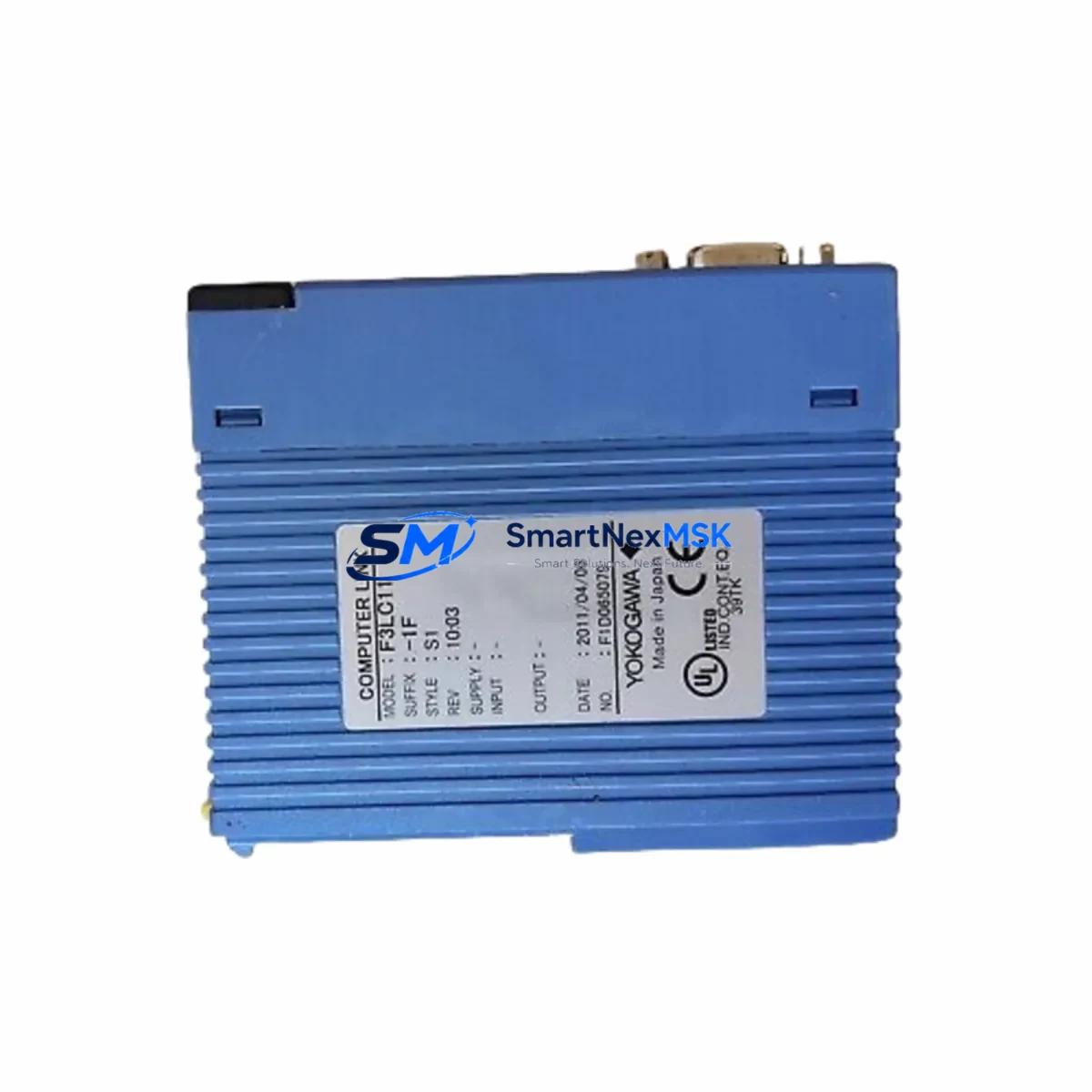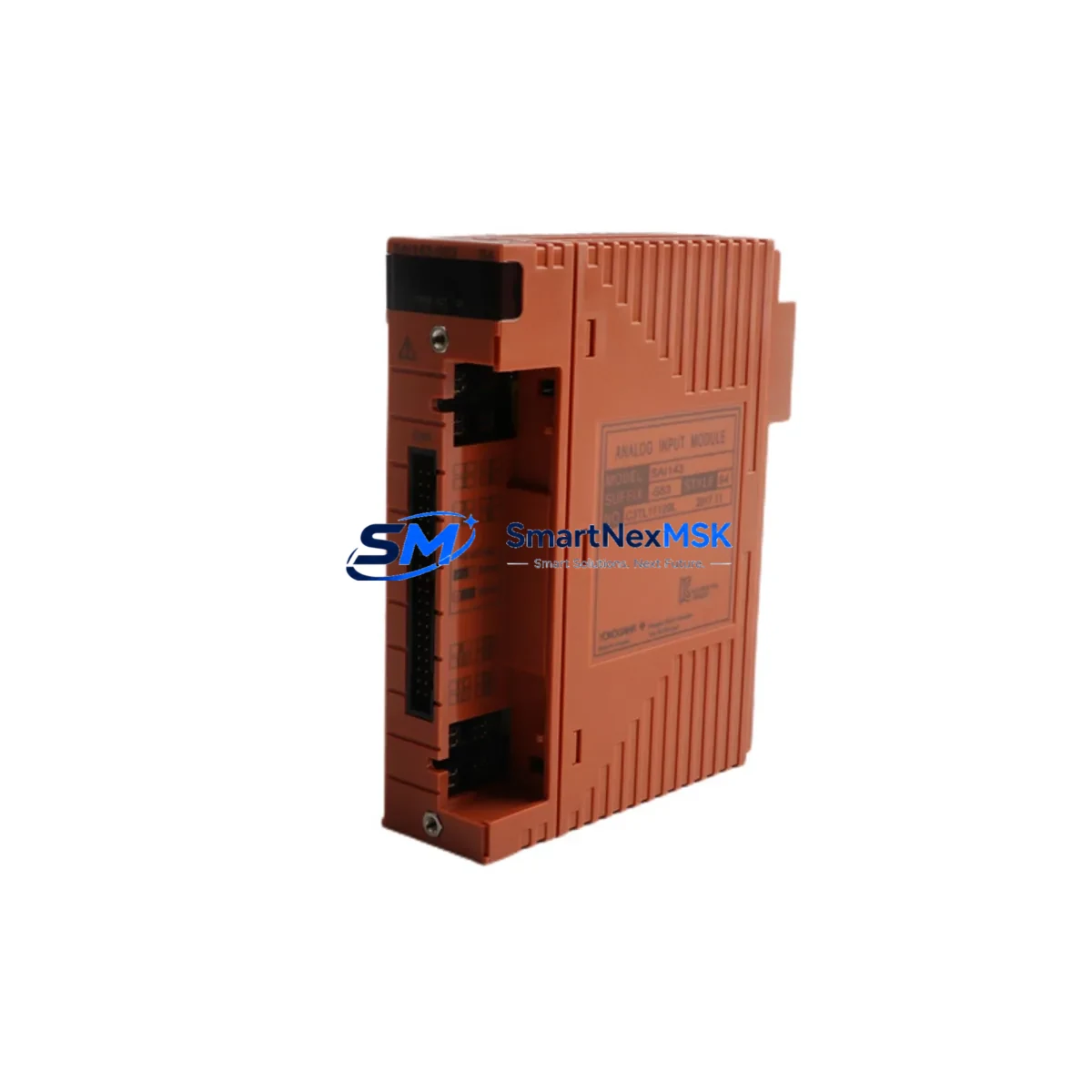
YOKOGAWA SAI143-S53 Retrofit-Ready Analog Input for CENTUM VP Control Systems
The YOKOGAWA SAI143-S53 is a multi-channel analog input module engineered for the CENTUM VP Distributed Control System — one of the most widely deployed DCS platforms in refining, petrochemical, power generation, and continuous process industries. As legacy CENTUM CS 3000 and early CENTUM VP installations approach end-of-life hardware cycles, the SAI143-S53 has become a critical retrofit component: it provides a direct, wiring-compatible upgrade path that allows maintenance and engineering teams to modernize field I/O infrastructure without redesigning the control strategy or replacing the entire I/O bus architecture.
Sourced as an original YOKOGAWA module, the SAI143-S53 is held in ready stock to support both planned upgrade projects and emergency replacement scenarios. Every unit is function-tested prior to shipment and covered by a 12-month warranty, giving procurement engineers the confidence to commit to a retrofit schedule without extended lead-time risk.
Upgrade Compatibility Table
| Parameter | Specification / Detail |
|---|---|
| Part Number | SAI143-S53 |
| Brand | YOKOGAWA |
| Series / Platform | CENTUM VP (compatible with CENTUM CS 3000 retrofit path) |
| Module Function | Multi-channel Analog Input (4–20 mA / 1–5 V field signals) |
| Channel Count | 16 channels (single-ended) / 8 channels (differential, S53 suffix) |
| Signal Range | 4–20 mA DC; 1–5 V DC; HART pass-through supported on select channels |
| Installation Interface | CENTUM VP I/O unit nest / node unit — direct slot replacement |
| Communication | Vnet/IP (internal DCS bus); compatible with ESB bus node architecture |
| Supply Voltage | 24 V DC via I/O unit backplane |
| Operating Temperature | 0 °C to +55 °C |
| Protection Rating | IP20 (panel-mount, control room / marshalling cabinet) |
| Origin | Japan (YOKOGAWA manufacturing) |
| Condition | Original, new or refurbished-to-spec |
| Pre-shipment Test | Function-tested: channel accuracy, signal range, bus communication |
| Retrofit Recommendation | Verify node address, I/O builder configuration, and field wiring polarity before hot-swap |
| Commissioning Focus | HART device registration, channel scaling in CENTUM VP builder, loop calibration |
| Warranty | 12 months from date of shipment |
Retrofit Planning for Existing Automation Systems
A SAI143-S53 retrofit is rarely a single-module swap. In a mature CENTUM VP installation, the analog input module sits at the intersection of field instrumentation, marshalling wiring, I/O bus communication, and the DCS control strategy — and each of these layers must be validated before and after the replacement to ensure a clean migration.
Begin with the I/O unit nest and node unit (such as the ANB10D or ANR10D node) that houses the SAI143-S53. Confirm the nest’s backplane power rail is within specification — a degraded 24 V DC power supply module (e.g., PW481 or PW482) feeding the I/O nest is a common root cause of intermittent analog input faults that are incorrectly attributed to the module itself. Inspect the power supply output voltage under load before committing to the module replacement.
Review the field terminal assembly (FTA) or marshalling cabinet wiring connected to the SAI143-S53. The S53 suffix designates a specific input configuration; verify that the field wiring polarity, loop power arrangement, and barrier or isolator type are compatible with the replacement module’s channel configuration. If the installation uses Zener barriers or galvanic isolators (such as MTL or P+F units) in the signal loop, confirm that the isolator output range matches the SAI143-S53 input impedance requirements.
On the software side, open the CENTUM VP System Builder (SENG) and locate the I/O module definition for the slot being replaced. Export the current I/O builder configuration and channel tag assignments before making any hardware changes. If migrating from a CENTUM CS 3000 AAI141-S03 or similar legacy analog input card, map the channel tag names and engineering unit scaling parameters carefully — differences in channel count or input range between old and new module types will require I/O builder updates and may affect associated function block (FBD) logic in the control domain.
Where the SAI143-S53 feeds signals to a CENTUM VP HMI (Human Interface Station) or historian, verify that trend displays, alarm setpoints, and faceplates referencing the affected tags remain valid after the module swap. For installations using HART communication, re-register HART field devices through the CENTUM VP HART DTM library after the replacement to restore device diagnostics and parameter access. Finally, inspect the ESB bus cable and termination on the node segment — a marginal bus connection is frequently exposed during a module replacement and can cause node communication errors that delay return-to-service.
Downtime Control During System Migration
Pre-work (Offline Preparation): Before the maintenance window opens, complete all software preparation in the CENTUM VP engineering environment. Export the I/O builder project, document all channel tag assignments, and prepare the replacement module configuration offline. If the CENTUM VP system supports online I/O replacement (hot-standby node architecture), confirm whether the target node supports non-interrupted swap — this can reduce process downtime to near zero for redundant node configurations.
Isolation Sequence: For non-redundant nodes, coordinate with the process control team to place affected control loops in manual mode at the Human Interface Station (HIS) before de-energizing the I/O nest slot. Document the current process values and setpoints for all affected tags. Notify the SCADA or DCS historian team to mark the maintenance window in the data record to prevent false alarm generation.
Module Swap: Remove the legacy module from the nest slot and seat the SAI143-S53 firmly. Verify the module address rotary switch or DIP switch setting matches the original slot assignment. Reconnect the field terminal assembly connector and confirm wiring integrity with a loop resistance check before re-energizing.
Commissioning and Return to Service: Power up the node and observe the SAI143-S53 status LEDs — a steady RUN indication with no ERR or ALM signals confirms successful bus initialization. From the CENTUM VP operator station, verify that all channel tags are reading correctly and that engineering unit values match expected process conditions. Perform a loop calibration check on at least two channels per module to confirm signal accuracy. Return control loops to automatic mode progressively, monitoring for any alarm conditions before releasing the system to normal operation. Document the replacement in the site maintenance management system with the new module serial number and warranty start date.
A well-prepared team can complete a SAI143-S53 retrofit in under 90 minutes for a non-redundant node, and under 15 minutes for a hot-standby configuration — minimizing production impact while fully restoring DCS analog input capability.
Retrofit Support FAQ
Q1: Is the SAI143-S53 a direct drop-in replacement for older CENTUM CS 3000 analog input modules?
The SAI143-S53 is designed for the CENTUM VP platform and shares the same I/O nest mechanical form factor as many CENTUM CS 3000 modules, making physical installation straightforward. However, software compatibility requires verification: channel count, input range, and HART support may differ between CS 3000 and VP module generations. We recommend providing your existing module part number and CENTUM VP system version when ordering so our technical team can confirm the migration path and flag any I/O builder reconfiguration requirements.
Q2: What pre-shipment testing is performed on each SAI143-S53 unit?
Every unit undergoes a multi-point functional test prior to dispatch, including power-on self-test, per-channel signal accuracy verification across the 4–20 mA input range, and bus communication handshake confirmation. Physical inspection covers connector integrity, module housing, and LED indicator function. Units are shipped in anti-static packaging with protective slot covers. A test record is available upon request.
Q3: What does the 12-month warranty cover, and how is a claim initiated?
The 12-month warranty covers manufacturing defects and functional failures under normal DCS operating conditions. It does not cover damage resulting from incorrect installation, overvoltage on field input channels, or environmental conditions outside the module’s rated specifications. To initiate a warranty claim, contact [email protected] with your order number, module serial number, and a description of the fault symptom. Replacement or repair is typically processed within 5–10 business days.
Q4: Can you supply multiple SAI143-S53 units for a phased plant-wide retrofit program?
Yes. We support bulk procurement for phased retrofit projects and long-term spare parts programs across multiple CENTUM VP nodes. Volume pricing is available for orders of 3 or more units. For large-scale migration projects requiring staged delivery or stock reservation across multiple maintenance windows, contact us to discuss a scheduled supply arrangement. Long-term availability of legacy and current-generation CENTUM VP I/O modules is a core part of our service offering.
© 2026 SMARTNEXMSK. All rights reserved.
Original Source: https://smartnexmsk.com
Contact: [email protected] | +86 18259474341